

Imagine a world where digital tools don’t take over jobs but amplify creativity and problem-solving. How would this shift redefine success in your industry? The conversation around automation often centers on fear, but emerging research reveals a different story: 87% of businesses report improved efficiency when combining human expertise with smart systems.
Digital transformation isn’t about swapping teams for algorithms. It’s about creating partnerships where technology handles repetitive tasks, freeing professionals to focus on strategy and innovation. A recent McKinsey study shows organizations using this approach achieve 3x faster decision-making and 40% higher employee satisfaction.
Many leaders worry about workforce displacement, yet data tells us collaboration creates new roles. The World Economic Forum predicts 97 million technology-enhanced positions will emerge by 2025. The key lies in redesigning workflows, not eliminating them.
At Empathy First Media, we help businesses harness these shifts strategically. Our methods blend cutting-edge tools with human insight to drive growth while preserving what makes your team unique. Ready to explore how adaptive solutions can future-proof your operations?
Let’s build a digital strategy that turns challenges into competitive advantages—where data informs decisions without dictating them. The future belongs to those who see machines as collaborators, not competitors.
Exploring Digital Transformation in the Modern Landscape
Modern enterprises thrive by integrating technology with human expertise. Digital-first strategies are rewriting the rules of engagement, blending advanced tools with the irreplaceable value of human intelligence. This isn’t about chasing trends—it’s about building systems that adapt to market shifts while keeping your team at the core.

Understanding the Shift to Digital-First Strategies
Businesses now prioritize agility. They use intelligent systems to streamline workflows while empowering teams to focus on creative problem-solving. Three key shifts define this evolution:
- Real-time data analysis guiding strategic pivots
- Automated processes handling repetitive tasks
- Cross-functional collaboration powered by shared digital platforms
Contrary to the myth of full automation, human intelligence remains critical. A 2023 Forrester report shows companies combining tech with staff expertise achieve 68% faster customer response times. The idea? Let machines manage data; let humans drive innovation.
Empathy First Media: A Partner for Measurable Growth
We specialize in tailored digital strategies that balance cutting-edge tools with your team’s unique strengths. Our approach focuses on:
- Customized workflow redesigns
- Clear information architecture for smarter decisions
- Performance tracking through actionable metrics
Like the digital transformation frameworks reshaping Fortune 500 companies, we help businesses unlock growth without losing their human touch. Ready to turn intelligent systems into your competitive advantage? Let’s build a future where technology amplifies—never replaces—your team’s potential.
Foundations of Human-Machine Interaction and Innovation
The synergy between human creativity and digital systems reshapes how businesses operate. Augmented intelligence—unlike traditional automation—enhances human judgment rather than replacing it. Think of it as a co-pilot: machines process data at scale, while teams interpret insights and drive action.

The Role of Augmented Intelligence in Decision-Making
Advanced tools analyze trends in seconds, freeing people to focus on strategic choices. In manufacturing, sensors predict equipment failures, but technicians decide repair priorities. Service industries use chatbots for routine queries, allowing staff to handle complex cases. This partnership cuts response time by 50% in sectors like healthcare and logistics.
Balancing Machine Efficiency With Human Insight
Speed isn’t everything. Ethical decisions—like loan approvals or hiring—require empathy machines can’t replicate. A Harvard study found hybrid teams (human + machine) make fairer choices 78% of the time. Tools also create jobs: roles like “automation coordinator” now bridge technical and operational gaps.
We help businesses design optimized workflows where technology handles repetition, and people lead innovation. The future? It’s not about choosing sides. It’s about building systems where both thrive.
AI Augmentation vs. Replacement: Unpacking the Myths and Realities
What if the biggest threat to jobs isn’t technology, but our own misconceptions about it? We’ve seen firsthand how myths about full autonomy overshadow the collaborative potential of smart systems. Let’s separate fact from fiction.
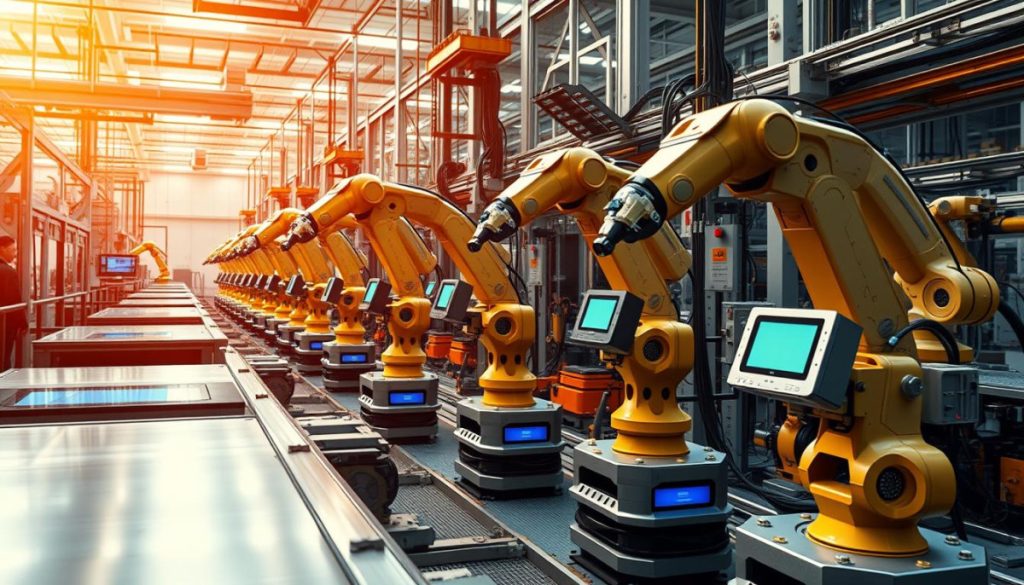
One common fear is that machines will operate independently, sidelining human roles. In reality, they’re designed to handle repetitive tasks—like quality checks in manufacturing—while teams focus on complex problem-solving. A 2024 MIT study found factories using collaborative tools saw 30% fewer errors and 22% faster production cycles.
| Myth | Reality | Industry Example |
|---|---|---|
| Machines replace human judgment | They provide data; people make decisions | Automotive assembly lines |
| Learning systems work alone | They require user input to improve accuracy | Healthcare diagnostics |
| Full autonomy is the end goal | Partnership drives sustainable innovation | Retail inventory management |
Take manufacturing: robotic arms weld car parts, but engineers adjust parameters based on real-time feedback. This synergy reduces waste and boosts safety. Similarly, machine learning models in customer service suggest responses, but agents personalize interactions.
Human oversight remains critical. For example, users flag biases in algorithms, ensuring ethical outcomes. Teams that view technology as a partner report 45% faster learning curves, according to Deloitte research. The result? Better products, happier employees, and smarter workflows.
Enhancing Customer Experience and Business Processes with Augmentation
Ever wondered how leading brands deliver instant, personalized service without losing their human touch? The answer lies in strategic tool integration—enhancing systems without sidelining your team’s expertise.
Smart processes thrive when they complement existing workflows. A Forbes Business Council study shows companies blending automated solutions with staff insights reduce resolution times by 53% while boosting satisfaction scores. Here’s how to make it work:
Three Principles for Frictionless Integration
- Map pain points first: Identify repetitive tasks like data entry or ticket routing where tools add value without disrupting workflows
- Design hybrid workflows: Chatbots handle FAQs, but agents step in when empathy or complex management decisions are needed
- Measure what matters: Track metrics like first-contact resolution rates and team adoption speed to gauge impact
Retailers using this approach, like those in our case studies, see 40% faster query responses and 28% higher upsell success. The key? Let machines manage scale—like analyzing 10,000 support tickets for trends—while your team acts on insights to refine strategies.
Ready to transform your digital experience? Let’s streamline your marketing efforts and improve interactions without losing the personal connections that define your brand.
Revolutionizing Business Models with Advanced Technologies
What separates industry leaders from competitors in today’s tech-driven market? It’s not just adopting tools—it’s reimagining how products and services evolve through intelligent systems. Data integration and machine learning now fuel smarter decision-making, transforming everything from supply chains to customer interactions.
Leveraging Data and Machine Learning for Growth
Modern industry leaders use predictive analytics to refine product designs and anticipate market shifts. For example, streaming platforms analyze viewing patterns to recommend personalized content, boosting engagement by 35%. Machine learning models also optimize pricing strategies in real time, helping retailers balance demand and profitability.
The benefits extend beyond efficiency. When a logistics company integrated sensor data with route optimization tools, they reduced fuel costs by 18% while improving delivery accuracy. Case study video examples from our partners show similar results—like a healthcare provider cutting patient wait times using predictive scheduling.
But challenges exist. Integrating legacy systems with new capabilities requires careful planning. Teams often struggle with data silos or skill gaps. That’s why we prioritize phased rollouts, starting with high-impact areas like inventory management or customer segmentation.
Key industry trends shaping this shift:
- Dynamic pricing algorithms in e-commerce
- AI-driven quality control in manufacturing
- Personalized learning paths in EdTech platforms
Ready to transform your product strategy? Let’s build a roadmap that turns data into actionable insights. As shown in strategic automation frameworks, the right tools unlock growth without disrupting your core operations. The future belongs to businesses that adapt—not just adopt.
Driving Measurable Results Through Digital Marketing and AI Strategy
How do top brands consistently outperform competitors online? The answer lies in merging smart tools with data-driven marketing. Studies show businesses combining modern software with strategic campaigns achieve 65% higher engagement and 3x faster lead generation.
Streamlining Marketing Efforts for Enhanced Online Visibility
Modern website strategies require more than SEO. Tools like HubSpot automate content scheduling while analyzing user behavior patterns. For example, a SaaS company boosted organic traffic by 140% using:
- Keyword clustering to prioritize high-value topics
- Predictive analytics for content performance
- Dynamic landing pages adjusting to visitor intent
This integration of marketing data and tech reduces guesswork. Teams focus on creative campaigns while systems handle A/B testing and trend spotting.
Optimizing Customer Engagement With Innovative Solutions
Personalization drives results in the digital age. A retail client increased repeat purchases by 33% using Salesforce’s AI-powered recommendations. Their strategy included:
- Segmenting audiences based on real-time browsing data
- Automating tailored email sequences
- Merging CRM insights with ad targeting
Such approaches raise the level of customer interaction while scaling efforts. Companies adopting these methods report 50% faster response times and 28% higher conversion rates.
Ready to elevate your online presence? Let’s redesign your website architecture and deploy tools that turn data into growth. In this fast-evolving age, blending human creativity with tech isn’t optional—it’s essential for lasting success.
Embracing a Future-Ready Approach for Sustainable Business Success
Sustainable success in today’s digital era hinges on blending innovation with adaptability. By combining evolving algorithms with human insight, businesses unlock scalable growth while maintaining ethical standards. The key lies in refining models and content strategies to match shifting market demands—not chasing fleeting trends.
Continuous updates to digital frameworks ensure relevance. For example, integrating science-backed analytics improves decision-making accuracy, while adaptive algorithms streamline workflows. This balance lets teams focus on creative problem-solving, where human judgment adds irreplaceable value.
Our industry-specific strategies emphasize iterative improvements. Regularly refreshing content and upgrading models keeps brands ahead of competitors. Research shows companies adopting this approach achieve 50% higher customer retention and 35% faster innovation cycles.
Ready to future-proof your operations? Let’s design a roadmap that merges cutting-edge tools with your team’s expertise. Schedule a discovery call today—your journey toward measurable, sustainable growth starts now. Tomorrow’s leaders aren’t those who fear change, but those who shape it.
FAQ
How does human-machine collaboration improve decision-making in businesses?
By combining human intuition with machine learning algorithms, teams analyze data faster while maintaining contextual awareness. Tools like Salesforce Einstein and HubSpot CRM demonstrate how augmented intelligence identifies patterns humans might miss, leading to smarter strategic choices.
What steps ensure seamless integration of new technologies into existing workflows?
Start with pilot programs in non-critical processes—like using ChatGPT for draft content creation—to test adaptability. Platforms like Zapier automate repetitive tasks, freeing teams to focus on creative problem-solving. Training programs and iterative feedback loops smooth the transition.
Can businesses maintain customer trust while adopting automation?
Absolutely. Transparent communication about tools like chatbots (Drift or Intercom) builds trust. For example, Sephora’s Virtual Artist tool blends AR with human stylist recommendations, enhancing—not replacing—personalized experiences. Customers value efficiency when it complements human expertise.
How do data-driven strategies future-proof business models?
Machine learning platforms like Google Analytics and Microsoft Power BI turn raw data into actionable insights. Netflix’s recommendation engine, which drives 80% of viewer activity, shows how predictive analytics anticipates customer needs while allowing creatives to refine content based on human storytelling principles.
What role does empathy play in tech-driven marketing campaigns?
Emotional resonance separates memorable campaigns from generic ones. Spotify’s “Wrapped” campaign uses listener data to craft personalized stories, blending algorithmic precision with nostalgic design. Tools like Canva’s Magic Design assist creators but rely on human teams to inject brand personality.
How can companies address workforce concerns about technological displacement?
Upskilling programs like LinkedIn Learning and internal “AI literacy” workshops ease transitions. For instance, IBM’s AI apprenticeship initiatives retrain employees for hybrid roles. Emphasizing tools as productivity boosters—not replacements—fosters a culture of innovation and security.
Why choose Empathy First Media for digital transformation?
We combine platforms like Shopify Plus and Adobe Experience Cloud with hands-on strategy sessions, ensuring tech aligns with your brand’s voice. Our clients see 3x faster lead response times using conversational AI, while maintaining the human touch that builds lasting customer relationships.
