

AI Marketing vs Traditional Marketing: The Scientific Approach to Choosing Your Strategy in 2025
Remember when marketing meant buying ad space and hoping for the best?
Those days feel like ancient history now. Today’s marketers face a choice that can make or break their business: embrace AI-powered marketing or stick with traditional methods that have worked for decades.
Here’s what’s really happening:
While 85% of marketers now use AI tools daily, traditional marketing still commands billions in spending. Television advertising alone generates over $296 billion globally, and print marketing continues to thrive in specific demographics and regions.
At Empathy First Media, we’ve helped dozens of businesses navigate this transition. Our founder Daniel Lynch approaches this challenge with an engineer’s precision—because choosing between AI and traditional marketing isn’t about following trends. It’s about understanding which approach delivers measurable results for your specific business goals.
The truth is more nuanced than most agencies will tell you…
Traditional marketing isn’t dead. AI isn’t a magic bullet. And the most successful businesses in 2025 are those that understand when to use each approach—or better yet, how to combine them strategically.
Think about it:
Your competitors are likely wrestling with the same decision right now. Some are going all-in on AI without understanding its limitations. Others are clinging to traditional methods while their market share erodes.
You need a smarter approach.
In this guide, we’ll cut through the hype and deliver a data-driven analysis of both marketing approaches. You’ll discover which strategy aligns with your business objectives, budget constraints, and target audience—backed by real numbers and proven methodologies.
Ready to make an informed decision about your marketing future? Let’s dive into the science behind both approaches.
Understanding Traditional Marketing in Today’s Digital World
Traditional marketing hasn’t disappeared—it’s evolved.
Despite the digital revolution, businesses still invest heavily in conventional channels. Print advertising maintains steady growth at $296 billion annually, while outdoor advertising has increased by 8% year-over-year.
But here’s what most marketers miss:
Traditional marketing’s strength lies not in its reach but in its psychological impact. A physical billboard creates a different neural response than a digital ad. Print materials engage tactile senses that screens simply can’t replicate.
The Core Components of Traditional Marketing
Traditional marketing encompasses several key channels that continue to deliver results:
Television and Radio Advertising Broadcast media reaches vast audiences instantly. A single Super Bowl ad can expose your brand to 100 million viewers simultaneously. Radio maintains strong engagement during commute times, with 83% of Americans tuning in weekly.
Print Media Newspapers, magazines, and direct mail offer tangibility that digital can’t match. Studies show that physical ads require 21% less cognitive effort to process than digital ones, leading to 70% higher brand recall.
Outdoor Advertising Billboards, transit ads, and signage provide unavoidable brand exposure. With strategic placement, outdoor advertising generates up to 497% ROI for local businesses.
Event Marketing and Trade Shows Face-to-face interactions build trust faster than any digital channel. B2B companies report that 40% of their leads come from trade show participation.
Where Traditional Marketing Still Dominates
Certain scenarios favor traditional approaches:
- Local Market Penetration: A neighborhood restaurant gains more from local newspaper ads than global Facebook campaigns
- Demographic Targeting: Reaching seniors often requires print and broadcast media
- Brand Credibility: Luxury brands use high-quality print to convey prestige
- Regulatory Industries: Healthcare and finance often require traditional channels for compliance
Our local marketing services help businesses leverage these traditional strengths while incorporating modern tracking methods.
The Hidden Costs of Traditional Marketing
Traditional marketing’s true expense extends beyond media buying:
Production Costs: Creating a TV commercial can cost $50,000-$500,000 before airtime
Limited Flexibility: Once printed or aired, campaigns can’t be modified
Measurement Challenges: Tracking actual ROI requires expensive market research
Waste Coverage: You pay to reach everyone, including non-prospects
Yet for the right business, these costs can be justified…
Traditional marketing builds brand awareness at scale. It creates memorable impressions that digital ads struggle to match. And for certain demographics, it remains the primary path to purchase.
The key is understanding when traditional methods serve your objectives—and when they’re holding you back.
The Rise of AI-Powered Marketing: More Than Just Automation
AI marketing isn’t just traditional marketing with better tools.
It’s a fundamental shift in how we understand, reach, and convert customers. Today, 88% of marketers use AI in their daily operations, but only 25.6% report that AI-generated content outperforms human-created content.
Why the disconnect?
Because most marketers treat AI as a faster way to do old tactics instead of embracing its transformative capabilities.
What AI Marketing Really Means
AI marketing leverages machine learning, natural language processing, and predictive analytics to create hyper-personalized customer experiences at scale.
Think beyond chatbots and auto-generated content:
Predictive Customer Intelligence AI analyzes millions of data points to predict customer behavior before it happens. Netflix’s recommendation engine drives 80% of watched content. Amazon’s anticipatory shipping patents literally ship products before you order them.
Dynamic Content Optimization AI doesn’t just A/B test—it creates thousands of variations and optimizes in real-time. Tools like Persado have increased conversion rates by 68% through AI-powered language optimization.
Autonomous Campaign Management Modern AI platforms adjust budgets, targeting, and creative elements without human intervention. Google’s Smart Bidding algorithms process 70 factors in real-time to optimize every ad impression.
The AI Marketing Technology Stack
Today’s AI marketing ecosystem includes:
Content Creation Tools
- Jasper and Copy.ai generate SEO-optimized content in minutes
- Synthesia creates video content with AI avatars
- Canva’s Magic Design produces branded visuals instantly
Analytics and Intelligence Platforms
- Predictive analytics tools forecast customer lifetime value
- Sentiment analysis monitors brand perception across channels
- Attribution modeling tracks multi-touch customer journeys
Automation and Personalization Engines
- Email platforms send behaviorally triggered campaigns
- Dynamic website content adapts to each visitor
- Chatbots handle 80% of customer inquiries instantly
Our AI marketing services integrate these tools into cohesive systems that drive measurable results.
Real-World AI Marketing Applications
Here’s how businesses are using AI today:
E-commerce Personalization Online retailers using AI-powered recommendations see 35% higher conversion rates. The technology analyzes browsing patterns, purchase history, and contextual data to present products customers actually want.
Predictive Lead Scoring B2B companies using AI lead scoring report 50% more sales-ready leads at 33% lower cost. The algorithms identify patterns human salespeople miss.
Content Optimization AI tools now optimize content for both search engines and human readers. They analyze top-performing content, identify gaps, and suggest improvements that increase organic traffic by 200-300%.
Ad Creative Generation Platforms like AdCreative.ai test hundreds of ad variations simultaneously, reducing cost per acquisition by 40% while scaling successful campaigns automatically.
The Limitations Few Discuss
AI marketing has constraints that vendors rarely mention:
- Data Dependency: AI requires massive, clean datasets to function effectively
- Context Blindness: Algorithms miss cultural nuances humans catch instantly
- Creative Boundaries: AI excels at optimization but struggles with breakthrough creativity
- Ethical Concerns: 63% of marketers worry about AI bias and data privacy
Understanding these limitations is crucial for successful implementation.
Head-to-Head Comparison: Traditional vs AI Marketing Performance
Let’s move beyond theory and examine real performance data.
The numbers tell a compelling story—but not the one you might expect.
ROI Analysis: Where Each Approach Wins
Traditional Marketing ROI
- Direct mail: 29% median ROI
- TV advertising: 71% average ROI for established brands
- Print advertising: 80% ROI for local businesses
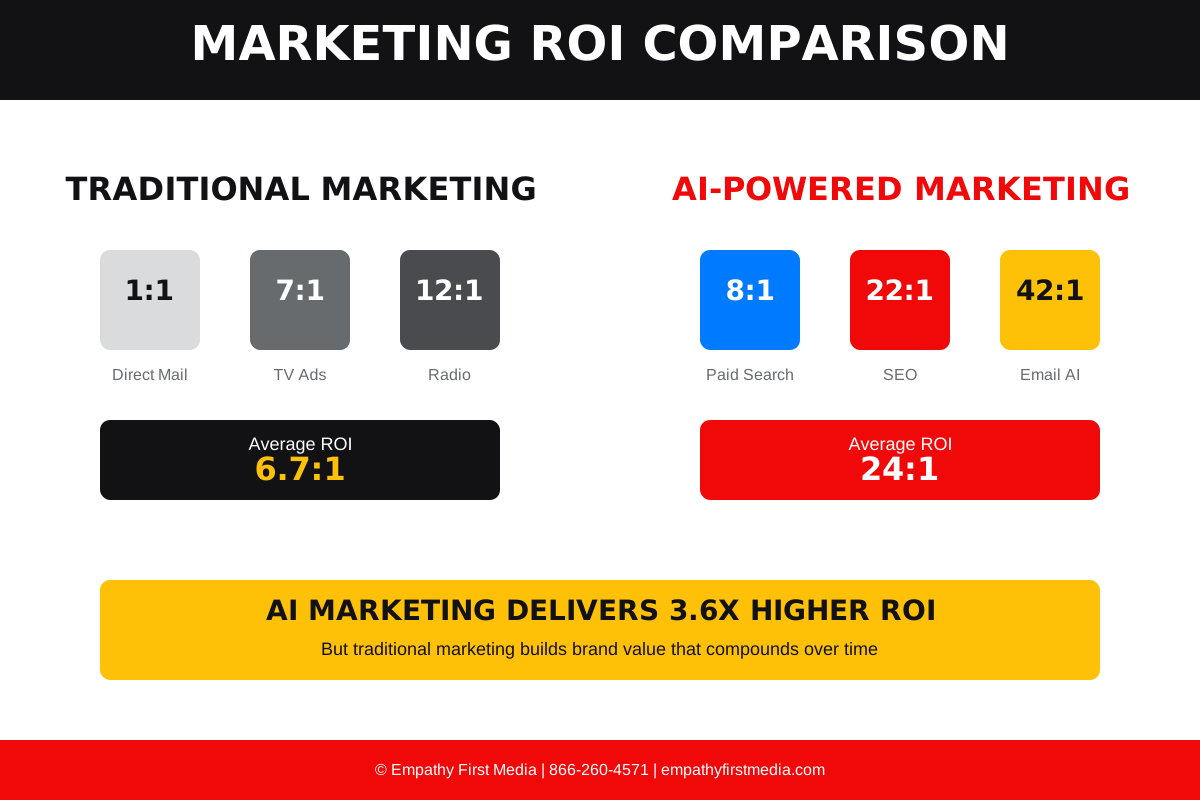
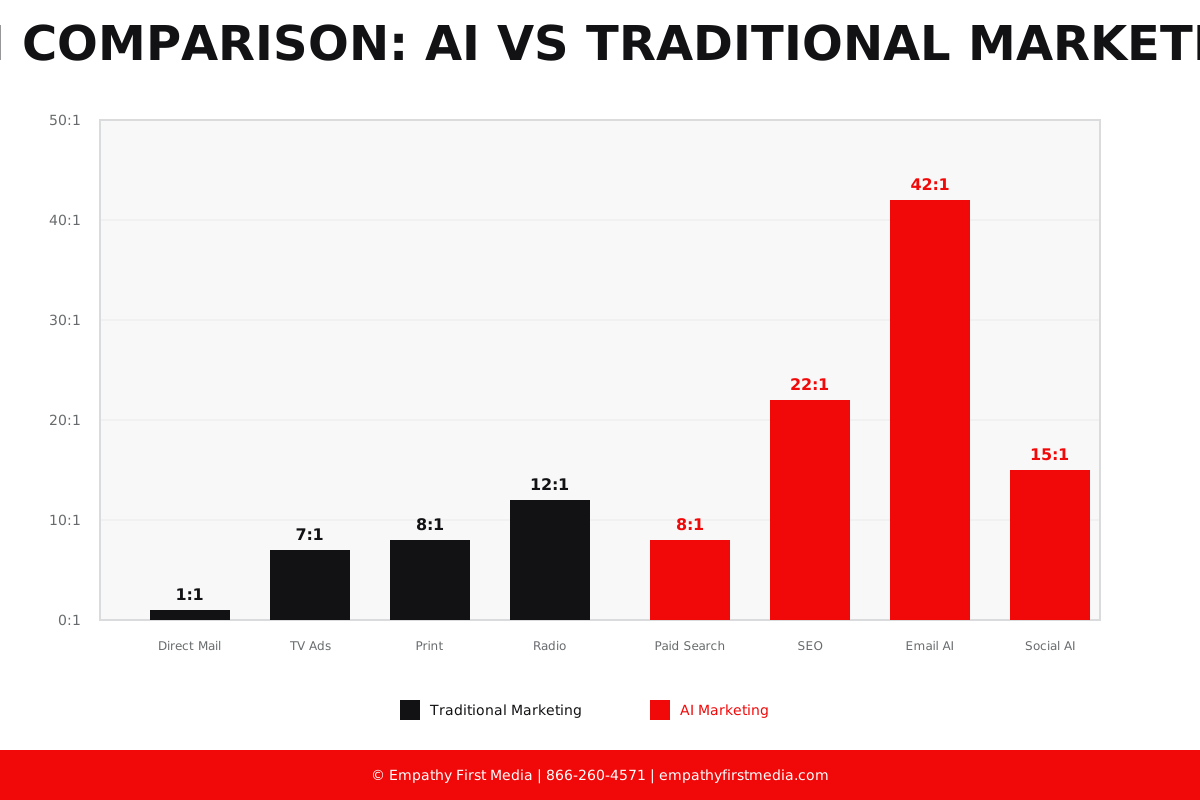
- Radio: 12:1 return for targeted campaigns
AI Marketing ROI
- Email marketing: 42:1 average ROI (4,200%)
- SEO: 22:1 average ROI
- Paid search: 8:1 average ROI with AI optimization
- Social media: 95% better performance with AI tools
But here’s what these numbers don’t reveal:
Traditional marketing ROI often includes intangible brand value that compounds over years. AI marketing ROI typically focuses on direct response metrics that may miss long-term impact.
Cost Comparison: Initial Investment vs Long-Term Value
Traditional Marketing Costs
- TV commercial production: $50,000-$500,000
- Prime time ad slot: $100,000+ per 30 seconds
- Full-page magazine ad: $20,000-$300,000
- Billboard rental: $1,500-$15,000 per month
AI Marketing Costs
- AI tools subscription: $100-$2,000 per month
- Implementation/training: $10,000-$50,000 initial
- Ongoing optimization: $2,000-$10,000 per month
- Data infrastructure: $5,000-$50,000 setup
The real difference?
AI marketing costs decrease over time as systems learn and improve. Traditional marketing costs remain constant or increase with inflation.
Speed and Agility: The Pace of Change
Traditional marketing moves at human speed:
- Campaign development: 2-6 months
- Creative approval: 2-4 weeks
- Market feedback: 30-90 days
- Campaign adjustments: Start over
AI marketing operates at machine speed:
- Campaign launch: 24-48 hours
- Real-time optimization: Continuous
- Performance data: Instant
- Adjustments: Automatic
This speed difference becomes critical during market shifts or competitive responses.
Targeting Precision: Spray and Pray vs Surgical Strikes
Traditional targeting relies on demographic assumptions:
- Geographic regions
- Age ranges
- Income brackets
- Media consumption habits
AI targeting uses behavioral intelligence:
- Purchase intent signals
- Micro-moment optimization
- Lookalike audience modeling
- Predictive lifetime value
Our data analytics services help businesses leverage this precision while maintaining human oversight.
Measurability and Attribution
This is where the gap becomes a chasm.
Traditional marketing measurement:
- Focus groups and surveys
- Sales correlation studies
- Brand lift research
- Estimated impressions
AI marketing measurement:
- Click-through rates
- Conversion tracking
- Multi-touch attribution
- Customer journey mapping
The challenge?
Measuring traditional marketing requires expensive research that delivers approximate results. AI marketing provides exact data but may overvalue last-touch interactions.
Scalability Factors
Traditional marketing scales through bigger budgets:
- More ad placements
- Larger geographic coverage
- Higher frequency
- Premium positioning
AI marketing scales through better algorithms:
- Improved targeting efficiency
- Higher conversion rates
- Automated optimization
- Compound learning effects
The result? AI marketing can 10x results without 10x budget—but only after initial learning periods.
The Human Factor: Challenges and Opportunities
Technology doesn’t exist in a vacuum.
The most significant barriers to AI adoption aren’t technical—they’re human. Meanwhile, traditional marketing’s greatest strength remains its human touch.
AI Adoption Challenges Most Businesses Face
The Knowledge Gap: 62% of businesses cite a lack of understanding as their primary barrier to AI adoption. It’s not just about learning new tools but fundamentally rethinking marketing processes.
Small businesses face unique hurdles:
- 47% of sole proprietors use AI vs 85% of larger companies
- Limited budgets restrict tool access
- Lack of technical expertise slows implementation
- Fear of complexity prevents exploration
Data Quality Issues: AI is only as good as its data. Most businesses discoverthat their data is:
- Incomplete or inconsistent
- Siloed across systems
- Lacking proper governance
- Not formatted for AI consumption
Integration Nightmares: 72% of AI adopters report integration challenges. Legacy systems weren’t built for AI connections. Marketing tech stacks become Frankenstein monsters of partially connected tools.
The Trust Deficit: Your team doesn’t trust AI because:
- They fear job displacement (59.8% worry AI will replace them)
- Black box algorithms hide decision logic
- Past tech promises went unfulfilled
- Results seem too good to be true
Our AI consulting services address these challenges through phased implementation and comprehensive training.
Traditional Marketing’s Skill Requirements
Traditional marketing demands different expertise:
Creative Mastery, Great traditional campaigns require:
- Compelling storytelling ability
- Visual design excellence
- Deep cultural understanding
- Emotional intelligence
Media Relations Success depends on:
- Industry connections
- Negotiation skills
- Timing intuition
- Relationship management
Production Management Executing campaigns needs:
- Project coordination
- Vendor management
- Quality control
- Budget discipline
These skills take years to develop and can’t be automated.
Building Effective Marketing Teams
The future belongs to hybrid teams that blend both approaches.
Traditional Expertise + AI Enhancement
- Creatives using AI for rapid prototyping
- Strategists leveraging predictive analytics
- Media buyers optimizing with algorithms
- Writers augmenting with content tools
New Roles Emerging
- AI prompt engineers
- Marketing data scientists
- Automation architects
- Algorithm auditors
Cultural Transformation Required Successful integration demands:
- Growth mindset cultivation
- Continuous learning programs
- Failure acceptance
- Experimentation encouragement
The organizations winning today invest in both human creativity and machine intelligence.
Industry-Specific Considerations
Your industry dramatically impacts which marketing approach delivers results.
Let’s examine how different sectors are navigating this choice—and what’s actually working.
B2B vs B2C Applications
B2B Marketing Realities B2B buyers aren’t searching for entertainment—they need solutions to business problems. This shapes everything:
AI Marketing in B2B:
- LinkedIn algorithms identify decision-makers with 76% accuracy
- Predictive lead scoring reduces sales cycles by 23%
- Account-based marketing platforms orchestrate multi-touch campaigns
- Content recommendation engines increase engagement 156%
Traditional Marketing in B2B:
- Trade publications maintain 67% readership among executives
- Industry conferences generate 40% of qualified leads
- Direct mail to C-suite achieves 5.3% response rates
- Webinars and white papers build necessary trust
B2C Marketing Dynamics Consumers make emotional decisions justified by logic:
AI Marketing in B2C:
- Personalization engines increase purchase rates by 49%
- Retargeting campaigns deliver 10x ROI
- Chatbots handle 80% of customer service inquiries
- Dynamic pricing optimizes revenue in real-time
Traditional Marketing in B2C:
- TV commercials create 71% stronger emotional connection
- In-store displays influence 82% of purchase decisions
- Radio reaches consumers during high-attention commutes
- Print catalogs drive 163% higher purchase values
Local Business Strategies
Local businesses face unique challenges that favor hybrid approaches.
When Traditional Wins Locally
- Community newspapers reach 69% of local residents
- Billboards near your location drive foot traffic
- Local radio sponsorships build name recognition
- Chamber of Commerce networking creates referrals
When AI Enhances Local
- Google My Business optimization increases calls 35%
- Geo-targeted social ads reduce cost per lead 43%
- Review management automation improves ratings
- Local SEO puts you ahead of chains
Our local SEO services combine both approaches for maximum impact.
Enterprise Marketing Requirements
Large organizations need sophistication at scale:
AI Advantages for Enterprises
- Process millions of customer data points
- Coordinate global campaigns automatically
- Ensure brand consistency across channels
- Optimize budgets across business units
Traditional Needs for Enterprises
- Maintain premium brand positioning
- Navigate complex approval processes
- Manage agency relationships
- Execute major sponsorships
Regulated Industry Constraints
Healthcare, finance, and legal face special requirements:
Compliance Considerations
- FDA/FTC advertising regulations
- HIPAA privacy requirements
- Financial disclosure rules
- Legal advertising restrictions
Traditional marketing often provides clearer compliance paths, while AI must be carefully configured to avoid violations.
Trust Building Requirements Regulated industries need deeper trust:
- Traditional: Professional journals, conferences, referrals
- AI: Compliant personalization, secure data handling, transparent practices
The key is understanding your industry’s specific dynamics and regulatory requirements before choosing your approach.
Building Your Optimal Marketing Strategy
Choosing between AI and traditional marketing is the wrong question.
The right question is: How can you strategically combine both approaches to maximize results?
When to Use Traditional Marketing
Traditional marketing excels in specific scenarios:
Brand Building Moments
- Launching into new markets
- Establishing premium positioning
- Creating emotional connections
- Building local community presence
Target Audience Alignment
- Reaching older demographics
- Engaging offline communities
- Connecting with luxury buyers
- Addressing B2B executives
Message Complexity
- Explaining nuanced value propositions
- Building trust in regulated industries
- Creating memorable brand stories
- Establishing thought leadership
Budget Considerations
- When you have large budgets for impact
- Need guaranteed reach numbers
- Want predictable outcomes
- Require simple execution
When to Leverage AI Marketing
AI marketing dominates when you need:
Performance Optimization
- Maximizing limited budgets
- Testing multiple strategies quickly
- Scaling successful campaigns
- Improving conversion rates
Data-Driven Decisions
- Understanding customer behavior
- Predicting future trends
- Personalizing at scale
- Measuring everything
Speed and Agility
- Responding to market changes
- Launching campaigns quickly
- Adapting in real-time
- Competing digitally
Resource Efficiency
- Automating repetitive tasks
- Reducing human error
- Scaling without hiring
- Improving over time
Creating Hybrid Campaigns
The most successful businesses combine both approaches strategically.
Traditional Foundation + AI Optimization Example: Launch with a TV campaign for awareness, then use AI to retarget viewers online with personalized messages based on their engagement.
AI Testing + Traditional Scaling Example: Use AI to test 100 message variations online, then deploy winners in traditional channels for mass reach.
Segmented Channel Strategy Example: Traditional marketing for brand building among executives, AI marketing for lead nurturing and conversion.
Sequential Integration Example: Trade show presence (traditional) captures leads, AI-powered email sequences nurture them, direct mail (traditional) closes deals.
Our integrated marketing services design these hybrid strategies based on your specific objectives.
Measurement and Optimization
Success requires measuring both approaches correctly:
Unified Attribution Models
- Track customer journeys across channels
- Assign appropriate credit to touchpoints
- Understand interaction effects
- Calculate true ROI
Balanced KPIs
- Brand metrics for traditional
- Performance metrics for AI
- Business outcomes for both
- Long-term value calculations
Continuous Improvement Process
- Establish baseline metrics
- Test channel combinations
- Analyze interaction effects
- Optimize budget allocation
- Scale winning formulas
Regular Strategy Reviews
- Monthly performance analysis
- Quarterly strategy adjustments
- Annual approach evaluation
- Competitive landscape monitoring
The key is remaining flexible while maintaining strategic focus.
Future-Proofing Your Marketing Approach
The marketing landscape won’t stop evolving.
By 2030, AI will be as fundamental to marketing as websites are today. Yet traditional channels will persist in evolved forms. Smart businesses prepare for both realities.
Emerging Trends Shaping Marketing’s Future
AI Evolution Accelerating The next wave brings:
- Autonomous AI agents managing entire campaigns
- Predictive analytics with 90%+ accuracy
- Real-time content generation matching individual preferences
- Voice and visual search optimization
Traditional Channel Transformation Classic channels are adapting:
- QR codes bridge print to digital
- Connected TV enables targeted broadcast
- Digital out-of-home responds to environmental data
- Experiential marketing incorporates AR/VR
Privacy-First Marketing Both approaches must adapt to:
- Cookie-less tracking environments
- Increased data protection regulations
- Consumer privacy expectations
- First-party data requirements
Preparing Your Business for What’s Next
Build Foundational Capabilities Regardless of the channel mix:
- Invest in data infrastructure
- Develop analytical competencies
- Create content systems
- Establish testing frameworks
Maintain Strategic Flexibility Avoid over-commitment to either approach:
- Allocate 70% to proven channels
- Reserve 20% for optimization
- Dedicate 10% to experimentation
- Review allocation quarterly
Develop Talent Pipeline Future success requires:
- Hiring for adaptability
- Training in both approaches
- Encouraging experimentation
- Rewarding innovation
Our digital transformation services help businesses build these capabilities systematically.
Avoiding Common Pitfalls
Learn from others’ mistakes:
Over-Automation Trap Don’t let AI eliminate human connection:
- Maintain personal touchpoints
- Review AI-generated content
- Monitor customer sentiment
- Preserve brand voice
Traditional Stubbornness Don’t ignore digital transformation:
- Accept changing media consumption
- Acknowledge measurement importance
- Embrace data-driven decisions
- Adopt helpful technologies
Integration Failures Don’t create channel silos:
- Align messaging across channels
- Share data between systems
- Coordinate campaign timing
- Measure holistic impact
Skills Gap Ignorance Don’t assume teams will adapt:
- Invest in training programs
- Hire complementary skills
- Partner with specialists
- Build learning culture
Success comes from thoughtful integration, not wholesale adoption of either approach.
Making the Decision: Your Next Steps
You’ve seen the data. You understand the trade-offs.
Now it’s time to move from analysis to action.
Conducting Your Marketing Audit
Start with honest assessment:
Current State Analysis
- What’s working in your marketing?
- Where are you losing opportunities?
- Which metrics matter most?
- What resources are available?
Competitive Landscape
- How do competitors market?
- What channels do they prioritize?
- Where are they vulnerable?
- What can you do differently?
Customer Insights
- Where do customers find you?
- How do they make decisions?
- What influences their choices?
- Which messages resonate?
Internal Capabilities
- What skills exist internally?
- Which tools are available?
- What budget is realistic?
- How fast can you move?
Setting Realistic Goals
Transform insights into objectives:
Performance Targets
- Increase qualified leads by X%
- Reduce cost per acquisition by Y%
- Improve conversion rates by Z%
- Grow customer lifetime value by N%
Timeline Considerations
- AI impact: 3-6 months
- Traditional impact: 6-12 months
- Hybrid optimization: 12-18 months
- Full transformation: 18-24 months
Resource Allocation
- Technology investments
- Team development
- Agency partnerships
- Testing budgets
Building Your Implementation Roadmap
Success requires systematic execution:
Phase 1: Foundation (Months 1-3)
- Audit current performance
- Select initial channels
- Implement measurement
- Begin testing
Phase 2: Optimization (Months 4-6)
- Analyze results
- Refine targeting
- Expand successful tactics
- Eliminate failures
Phase 3: Integration (Months 7-12)
- Connect channels
- Unify messaging
- Coordinate campaigns
- Measure interactions
Phase 4: Scale (Months 12+)
- Increase investment in winners
- Automate proven processes
- Expand to new channels
- Maintain innovation
Our marketing strategy services guide businesses through this transformation.
Conclusion: The Path Forward
The debate between AI and traditional marketing misses the point.
Success in 2025 doesn’t come from choosing one over the other—it comes from understanding when and how to use each approach strategically.
Here’s what the data tells us:
AI marketing excels at optimization, personalization, and efficiency. It turns data into insights and insights into action faster than humans ever could. For businesses seeking measurable results with limited budgets, AI provides unprecedented leverage.
Traditional marketing builds brands, creates emotional connections, and reaches audiences that digital can’t touch. For businesses needing credibility, community presence, or premium positioning, traditional channels remain irreplaceable.
But the real winners?
They’re the businesses that thoughtfully combine both approaches. They use AI to test and optimize, then scale winners through traditional channels. They build awareness through mass media, then nurture leads with AI precision.
At Empathy First Media, we’ve helped dozens of businesses navigate this transition successfully. Our scientific approach eliminates guesswork and delivers measurable results.
Ready to build your optimal marketing strategy?
Don’t let competitors gain an advantage while you debate which approach to take. The answer isn’t either/or—it’s both/and, applied strategically.
Schedule a discovery call with our team to:
- Analyze your current marketing performance
- Identify optimal channel mix for your business
- Create a roadmap for implementation
- Start generating better results
The future of marketing is already here. The question is: Will you lead or follow?
Contact us today at 866-260-4571 or [email protected] to start your transformation.
Frequently Asked Questions
What’s the average ROI difference between AI and traditional marketing?
AI marketing typically delivers 3-10x higher ROI than traditional marketing when measuring direct response metrics. Email marketing with AI achieves 42:1 ROI compared to direct mail’s 1:1 average. However, traditional marketing builds long-term brand value that’s harder to quantify but equally important for business growth.
How much should a small business budget for AI marketing tools?
Small businesses should budget $500-2,000 monthly for AI marketing tools, plus $5,000-15,000 for initial setup and training. This covers essential tools like content creation, email automation, and analytics. Compare this to traditional marketing where a single newspaper ad might cost $5,000 with no ongoing optimization.
Can traditional marketing still work without any digital integration?
Pure traditional marketing without digital integration becomes less effective each year. Even traditional channels now require digital components—QR codes on print ads, social media hashtags on billboards, and online landing pages for TV commercials. The question isn’t whether to integrate, but how deeply.
What are the biggest mistakes businesses make when adopting AI marketing?
The top mistakes include: implementing too many tools at once (causing integration chaos), neglecting data quality (garbage in, garbage out), eliminating human oversight (losing brand voice), and expecting immediate results (AI needs learning time). Success requires phased implementation with clear objectives.
Which industries should stick with traditional marketing?
Industries serving older demographics, luxury brands requiring prestige positioning, local service businesses, and heavily regulated sectors often see better results from traditional marketing. However, even these industries benefit from AI-enhanced targeting and measurement when combined with traditional channels.
How long does it take to see results from AI marketing vs traditional?
AI marketing can show initial results within 30-60 days as algorithms optimize. Full optimization typically takes 3-6 months. Traditional marketing requires 6-12 months to build awareness and measure impact. The key difference: AI results improve over time while traditional results remain relatively stable.
Is AI marketing just for large companies with big budgets?
No. AI marketing actually levels the playing field for smaller businesses. While enterprise companies spend millions on traditional advertising, small businesses can access the same AI tools for hundreds of dollars monthly. The democratization of AI makes sophisticated marketing accessible to any size business.
What skills do marketing teams need for AI implementation?
Modern marketing teams need: data analysis capabilities, prompt engineering skills, strategic thinking, creative oversight, and continuous learning mindsets. Technical coding skills aren’t required—most AI tools feature user-friendly interfaces. The key is understanding how to guide AI toward business objectives.
How do you measure brand building in AI marketing?
AI marketing measures brand building through: sentiment analysis tracking, share of voice monitoring, branded search volume trends, and customer lifetime value calculations. While traditional marketing relies on surveys and focus groups, AI provides real-time brand health metrics through automated analysis.
What’s the future of traditional marketing agencies?
Traditional agencies must evolve or become obsolete. Successful agencies are transforming into hybrid consultancies that blend creative excellence with AI capabilities. They’re hiring data scientists alongside creative directors and using AI to enhance rather than replace human creativity. Agencies that resist this evolution face declining relevance.
External References on AI Marketing vs Traditional Marketing
McKinsey Global Survey on AI – Comprehensive analysis of AI adoption trends across industries with specific insights on marketing transformation and value capture from artificial intelligence implementation.
Statista AI Marketing Report – Detailed statistics on global AI market growth, projected to reach $826.70 billion by 2030, with breakdown of marketing-specific applications and adoption rates.
Harvard Business Review: The Future of Marketing – Strategic insights on how leading companies are successfully integrating AI and traditional marketing approaches for competitive advantage.
Gartner Marketing Technology Survey – Analysis of marketing technology adoption trends, including AI tool implementation challenges and success factors across different business sizes.
MIT Sloan Management Review: AI in Marketing – Research on the organizational changes required for successful AI adoption in marketing departments and the evolution of marketing roles.
Salesforce State of Marketing Report – Industry benchmark data showing 32% of marketing organizations have fully implemented AI, with insights on adoption barriers and benefits.
Content Marketing Institute – Best practices for content marketing in the AI era, including frameworks for balancing automated and human-created content.
Search Engine Journal: E-E-A-T Guidelines – Google’s expertise, experience, authoritativeness, and trustworthiness guidelines and their impact on content marketing strategies.
Nielsen Marketing Effectiveness Report – Comparative analysis of ROI across traditional and digital marketing channels with methodology for attribution modeling.
Deloitte Digital Marketing Trends – Executive perspectives on AI transformation in marketing, including investment priorities and organizational readiness factors.
