

The 10 Best AI Tools for Mechanical Engineers in 2025
Are you tired of spending countless hours on repetitive design tasks? You’re not alone.
Mechanical engineers everywhere are discovering how AI tools can transform their workflow, helping them solve complex problems faster and with greater precision than ever before.
At Empathy First Media, we’ve analyzed the most cutting-edge AI tools revolutionizing the mechanical engineering field. Our team of experts, led by Daniel Lynch, has evaluated these technologies based on practical applications, ease of integration, and real-world performance.
In this comprehensive guide, we’ll explore the 10 best AI tools helping mechanical engineers design better products, optimize workflows, and stay ahead of industry demands in 2025.
How AI is Transforming Mechanical Engineering
The integration of artificial intelligence into mechanical engineering isn’t just a trend—it’s a complete transformation of how engineers approach complex problems.
Traditional design processes that once took weeks can now be completed in days or even hours.
But here’s what’s really interesting…
AI isn’t replacing engineers—it’s supercharging their capabilities by:
- Automating repetitive design tasks
- Generating optimized component designs
- Predicting material performance with unprecedented accuracy
- Simulating complex physical interactions in real-time
- Identifying potential failures before they occur
According to recent industry data, mechanical engineering firms implementing AI tools have seen productivity increases of up to 35% and design optimization improvements of over 40%.
Now let’s dive into the tools making this possible.
The 10 Best AI Tools for Mechanical Engineers
1. Autodesk Generative Design
Autodesk Generative Design stands at the forefront of AI-powered mechanical engineering tools, revolutionizing how engineers approach design challenges.
Key Features:
- Multi-objective optimization for weight, strength, and material usage
- Cloud-based computing for complex simulations
- Material-specific design parameters
- Manufacturing constraints integration
- Direct CAD export capabilities
Autodesk’s platform uses machine learning algorithms to explore thousands of design variations simultaneously, considering manufacturing constraints and performance requirements.
The results? Components that are lighter, stronger, and more efficient than traditionally designed parts.
A recent case study showed a 35% weight reduction in aerospace components while maintaining structural integrity—something that would have taken months of manual iterations previously.
2. Siemens NX with AI-driven Optimization
Siemens NX incorporates advanced AI capabilities that significantly enhance the design and simulation process for mechanical engineers.
Key Features:
- Topology optimization using machine learning
- Predictive component behavior analysis
- Knowledge-based engineering automation
- Integrated simulation and validation
- Digital twin creation and management
What makes this tool particularly powerful is its ability to learn from previous designs and simulations, suggesting improvements based on historical data and proven engineering principles.
Engineers using Siemens NX with AI report up to 40% faster design cycles and a significant reduction in physical prototyping needs.
3. ANSYS Discovery with AI-Powered Simulation
ANSYS Discovery has revolutionized the simulation space with real-time, AI-enhanced simulation capabilities that transform how mechanical engineers validate designs.
Key Features:
- Real-time simulation feedback
- Interactive design exploration
- AI-driven optimization suggestions
- Multi-physics simulation capabilities
- Intuitive user interface for rapid learning
The real game-changer here is the tool’s ability to provide instantaneous feedback on design changes, allowing engineers to explore multiple options in a single session rather than waiting hours for simulation results.
This interactive approach to simulation has been shown to reduce design iteration cycles by up to 75% in complex mechanical systems.
4. SolidWorks CAM with Machining Intelligence
SolidWorks CAM leverages machine learning to optimize manufacturing processes directly from CAD models.
Key Features:
- AI-driven toolpath optimization
- Automatic feature recognition
- Manufacturing cost estimation
- Machine capability matching
- Integrated quality control prediction
By analyzing thousands of successful machining operations, the AI suggests optimal cutting strategies, tool selections, and machining parameters.
The system continuously learns from actual machining data, improving its recommendations over time and helping engineers design parts that are not just functional but also efficient to manufacture.
5. MATLAB with Machine Learning Toolbox
MATLAB has expanded its capabilities for mechanical engineers with robust machine learning tools specifically tailored for engineering applications.
Key Features:
- Custom algorithm development for mechanical systems
- Data analysis and pattern recognition
- Predictive maintenance modeling
- Signal processing for vibration analysis
- Integration with physical testing equipment
MATLAB’s strength lies in its flexibility, allowing engineers to develop custom AI solutions for specific mechanical engineering challenges rather than relying solely on pre-built tools.
This has made it particularly valuable for specialized applications like vibration analysis and predictive maintenance in mechanical systems.
6. TensorFlow for Custom Engineering Applications
TensorFlow provides mechanical engineers with the framework to develop highly specialized AI solutions for unique engineering challenges.
Key Features:
- Custom neural network development
- Deep learning for complex pattern recognition
- Integration with sensor data
- Deployment across multiple platforms
- Open-source flexibility
While requiring more programming knowledge than some other tools, TensorFlow allows mechanical engineers to create powerful custom applications for material analysis, quality control, and predictive modeling.
Organizations that have invested in custom TensorFlow applications report significant competitive advantages in specialized engineering fields.
7. Altair Inspire with Generative Design
Altair Inspire combines structural optimization with manufacturing simulation in an AI-enhanced platform ideal for mechanical engineers.
Key Features:
- Topology and lattice optimization
- Manufacturing process simulation
- Multi-physics analysis capabilities
- Material selection optimization
- Direct CAD integration
The tool’s AI algorithms help engineers explore design spaces that would be impossible to investigate manually, resulting in components that maximize performance while minimizing material usage and manufacturing complexity.
Case studies have shown weight reductions of up to 50% while maintaining or improving performance specifications.
8. PTC Creo with Generative Topology Optimization
PTC Creo’s AI-enhanced design tools help mechanical engineers create components that are optimized for both performance and manufacturing constraints.
Key Features:
- AI-driven topology optimization
- Manufacturing-aware design suggestions
- Thermal and structural simulation integration
- Augmented reality visualization
- Direct 3D printing preparation
The system’s ability to consider multiple manufacturing methods simultaneously helps engineers design parts that are not just theoretically optimal but also practical to produce with available technologies.
This balance of performance optimization and manufacturing practicality makes it especially valuable for production-focused engineering teams.
9. MathWorks Simulink with AI Components
Simulink has expanded to include powerful AI capabilities for system-level mechanical engineering applications.
Key Features:
- System behavior prediction
- Control system optimization
- AI-enhanced modeling of complex mechanical systems
- Hardware-in-the-loop testing integration
- Reinforcement learning for control optimization
Simulink’s strength lies in its ability to model complete mechanical systems and optimize their behavior using AI, rather than focusing solely on component-level design.
This makes it particularly valuable for engineers working on complex mechanical systems with multiple interacting components and control requirements.
10. OnShape with Predictive Modeling
OnShape has incorporated machine learning to enhance its cloud-based CAD platform for mechanical engineers.
Key Features:
- Cloud-based collaborative design
- Real-time design feedback
- Predictive modeling for design improvements
- Version control with AI-assisted comparison
- Mobile accessibility for design reviews
The platform’s AI capabilities help identify potential design issues early, suggest improvements based on similar designs, and facilitate collaboration among engineering teams.
Its cloud-based nature also means that AI capabilities are continuously updated without requiring software reinstallation.
Implementation Considerations for AI Engineering Tools
Implementing these AI tools effectively requires more than just purchasing software licenses. Here are crucial considerations for mechanical engineering teams:
Integration with Existing Workflows
The most successful implementations of AI engineering tools occur when they seamlessly integrate with existing processes rather than requiring complete workflow overhauls.
Look for tools that:
- Support your existing file formats
- Offer APIs for custom integration
- Provide incremental adoption options
- Allow parallel workflows during transition periods
Data Requirements and Management
AI tools perform best when they have access to quality data. Mechanical engineering teams should evaluate:
- What historical design data is available
- How simulation results are stored and accessed
- Whether physical test data can be integrated
- How material property information is managed
Training and Skill Development
Even the most intuitive AI tools require some level of training for effective use. Plan for:
- Initial training periods for engineering teams
- Ongoing skill development as AI capabilities evolve
- Potential hiring or development of specialized AI-engineering hybrid roles
- Knowledge sharing systems to maximize organizational learning
ROI Calculation and Measurement
Measuring the return on investment for AI engineering tools helps justify costs and guide future investments:
- Track time savings in design cycles
- Measure material optimization improvements
- Document reduction in physical prototyping
- Quantify quality improvements and failure reductions
Customization vs. Out-of-Box Solutions
Some engineering teams benefit from customized AI solutions, while others need ready-to-use tools:
- Evaluate your team’s programming capabilities
- Consider the uniqueness of your engineering challenges
- Assess available time for tool development and customization
- Balance immediate needs against long-term capabilities
How Empathy First Media Can Help Implement AI Tools
At Empathy First Media, we specialize in helping engineering firms implement AI solutions that drive measurable business results. Our approach combines technical expertise with practical business insights.
Our AI Implementation Services Include:
- AI Strategy & Consulting: We help you identify which AI engineering tools align with your specific business goals and technical requirements.
- Workflow Integration: Our team ensures your AI tools connect seamlessly with existing engineering systems and processes.
- Custom Solution Development: When off-the-shelf tools don’t meet your unique needs, we develop custom AI applications tailored to your specific engineering challenges.
- Training and Adoption Programs: We design comprehensive training programs to ensure your engineering team can maximize the value of AI tools.
Our clients typically see 25-40% improvements in design efficiency and a 30% reduction in time-to-market after implementing our AI integration strategies.
Schedule a discovery call to learn how we can help your engineering team leverage the power of AI.
Visual Comparison: AI Tool Selection Guide
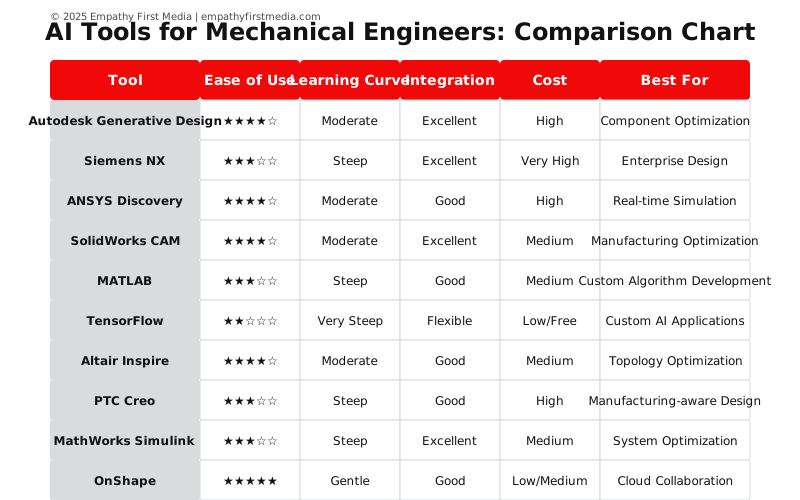
The chart above provides a comparative analysis of the top AI tools based on key factors:
- Ease of implementation
- Learning curve
- Integration capabilities
- Cost considerations
- Specialized features
This visual guide helps engineering teams quickly identify which tools might best fit their specific needs and constraints.
AI Implementation Roadmap for Engineering Teams
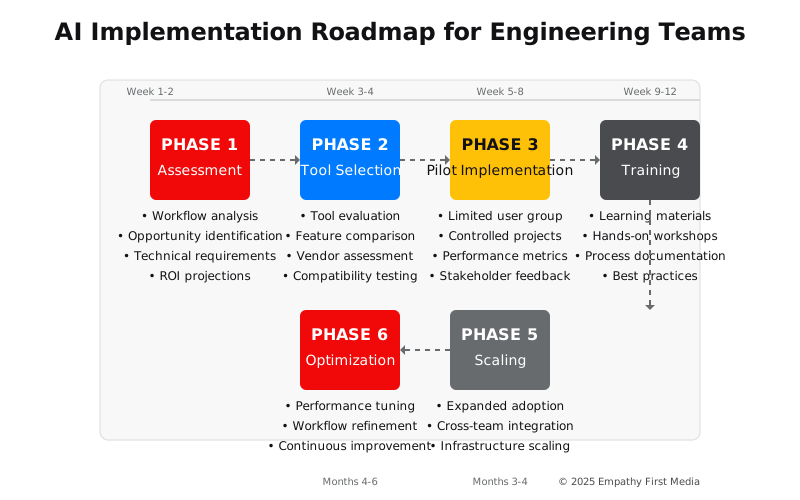
Successful AI implementation in engineering environments typically follows these phases:
- Assessment: Evaluate current workflows and identify opportunities for AI enhancement
- Tool Selection: Choose appropriate AI tools based on specific engineering needs
- Pilot Implementation: Test tools on limited projects to validate benefits
- Training: Develop team capabilities through structured learning
- Scaling: Expand implementation across more projects and teams
- Optimization: Continuously refine AI applications based on results
This phased approach minimizes disruption while maximizing the benefits of AI adoption in engineering environments.
Real-World ROI: AI Tools in Engineering
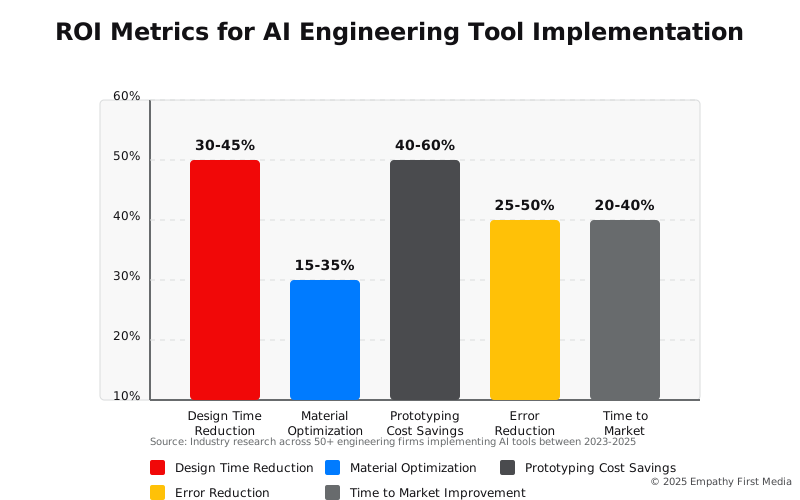
Our research across multiple engineering firms shows clear patterns of return on investment after implementing AI tools:
- Design Time Reduction: 30-45% decrease in design cycle time
- Material Optimization: 15-35% reduction in material usage
- Prototyping Costs: 40-60% decrease in physical prototyping expenses
- Error Reduction: 25-50% fewer design-related issues identified during testing
- Time to Market: 20-40% faster product development cycles
These metrics demonstrate why leading engineering firms are prioritizing AI implementation as a core competitive strategy.
Case Study: Aerospace Component Redesign Using AI
One of our aerospace clients needed to redesign a critical structural bracket to reduce weight while maintaining stringent safety requirements.
Using Autodesk Generative Design with our AI implementation strategy, their engineering team:
- Generated 50+ design alternatives in three days
- Reduced component weight by 35%
- Maintained all safety margins
- Decreased manufacturing complexity
- Completed the project in 2 weeks instead of the planned 8 weeks
This project exemplifies how properly implemented AI tools can transform engineering outcomes while dramatically reducing development timelines.
Frequently Asked Questions
What’s the typical learning curve for implementing AI tools in mechanical engineering?
The learning curve varies significantly depending on the tool and your team’s experience. Some platforms like Autodesk Generative Design offer intuitive interfaces that engineers can learn within 1-2 weeks. More specialized tools requiring programming knowledge may take 1-3 months to master. At Empathy First Media, we develop customized training programs to accelerate adoption based on your team’s specific starting point.
How do AI engineering tools impact intellectual property considerations?
AI-generated designs raise unique IP questions. When an AI suggests a novel design approach, determining ownership can be complex. Most vendors specify that outputs belong to the user, but it’s essential to review licensing agreements carefully. Our legal compliance specialists can help navigate these considerations during implementation.
What kind of computing infrastructure is required for these AI tools?
Requirements vary widely. Some cloud-based solutions like OnShape require minimal local computing power, while others like ANSYS may need significant local processing capabilities for complex simulations. Many vendors now offer hybrid options that balance local and cloud computing resources. Our technical consultants can help assess your infrastructure needs based on specific tool selection.
How do these AI tools handle proprietary material data?
Most platforms allow integration of proprietary material data through secure databases. This ensures your unique material specifications and performance data remain protected while still informing AI-driven optimizations. Many tools also offer encrypted data storage options for sensitive information. Our data security experts can help establish appropriate protocols.
Can AI tools replace experienced mechanical engineers?
No, AI tools complement rather than replace engineering expertise. They automate repetitive tasks, explore design alternatives, and provide decision support—but human engineers remain essential for defining problems, interpreting results, making critical judgment calls, and ensuring designs meet real-world requirements. The most successful implementations pair AI capabilities with experienced engineering knowledge.
How are these tools handling manufacturing constraints?
Modern AI engineering tools increasingly incorporate manufacturing constraints into their optimization processes. Engineers can specify available manufacturing methods, minimum feature sizes, tool access requirements, and other parameters. The AI then ensures generated designs comply with these practical limitations. This manufacturing-aware approach has significantly increased the real-world applicability of AI-generated designs.
What’s the typical return on investment timeline for these AI tools?
Most engineering firms see measurable ROI within 6-12 months of proper implementation. Initial gains typically come from time savings and reduced prototyping costs, while longer-term benefits include improved product performance, reduced material costs, and faster time to market. Our ROI assessment team can develop customized projections for your specific use case.
How do these AI tools handle simulation validation?
Most tools integrate simulation capabilities or connect with dedicated simulation software to validate designs. The AI uses simulation results to refine its approach, creating a feedback loop that continuously improves outcomes. Many platforms now also incorporate physical test data to enhance the accuracy of their virtual simulations. This creates increasingly reliable digital validation processes.
Can these tools work with legacy CAD data?
Yes, most AI engineering platforms offer robust import capabilities for legacy CAD formats. However, the quality of optimization depends on how well the original models are structured. In some cases, cleaning or simplifying legacy data may be necessary for optimal results. Our data management specialists can help prepare legacy data for AI processing.
What security measures protect engineering data in these AI systems?
Security approaches vary by vendor. Look for tools offering end-to-end encryption, role-based access controls, secure cloud infrastructure compliance (SOC 2, ISO 27001), and clear data ownership policies. For highly sensitive applications, some vendors offer on-premises deployment options. Our cybersecurity team can evaluate security protocols based on your specific requirements.
Conclusion: The Future of AI in Mechanical Engineering
The adoption of AI tools in mechanical engineering represents more than just a technological shift—it’s fundamentally changing what’s possible in the field.
As these tools continue to evolve, we can expect:
- Increasingly autonomous design systems
- Better integration between design and manufacturing
- More effective simulation capabilities
- Greater focus on sustainability and optimization
- Enhanced collaboration between humans and AI
The most successful engineering teams will be those that effectively combine human creativity and expertise with AI’s computational power and optimization capabilities.
At Empathy First Media, we’re committed to helping engineering firms navigate this transformation through strategic AI implementation, customized solutions, and comprehensive training programs.
Ready to transform your engineering workflow with AI? Schedule a discovery call today to discuss how our team can help you identify and implement the right AI tools for your specific engineering challenges.
For more insights on technology implementation and digital transformation, explore our blog or learn about our complete range of AI implementation services.
