

Did you know that 73% of residents support local projects when businesses communicate early and clearly? Cranes in the sky aren’t just symbols of progress—they’re promises to neighborhoods. 🏗️
Smart planning turns skepticism into advocacy. Hybrid meetings, multilingual materials, and job fairs make engagement accessible. This builds relationships and strengthens reputations.
As community PR experts note, transparency prevents misinformation. Projects thrive when they align with local priorities like sustainability and economic growth.
Want your next initiative to earn trust? Empathy First Media crafts strategies that connect businesses with communities through meaningful communication.
Why Community-Focused Construction PR Matters
Nearly 7 in 10 construction delays happen because locals push back—but proactive engagement flips the script. When companies listen early, projects move faster. The benefits? Lower costs, happier neighbors, and a legacy of trust.
Mitigating Opposition Through Transparency
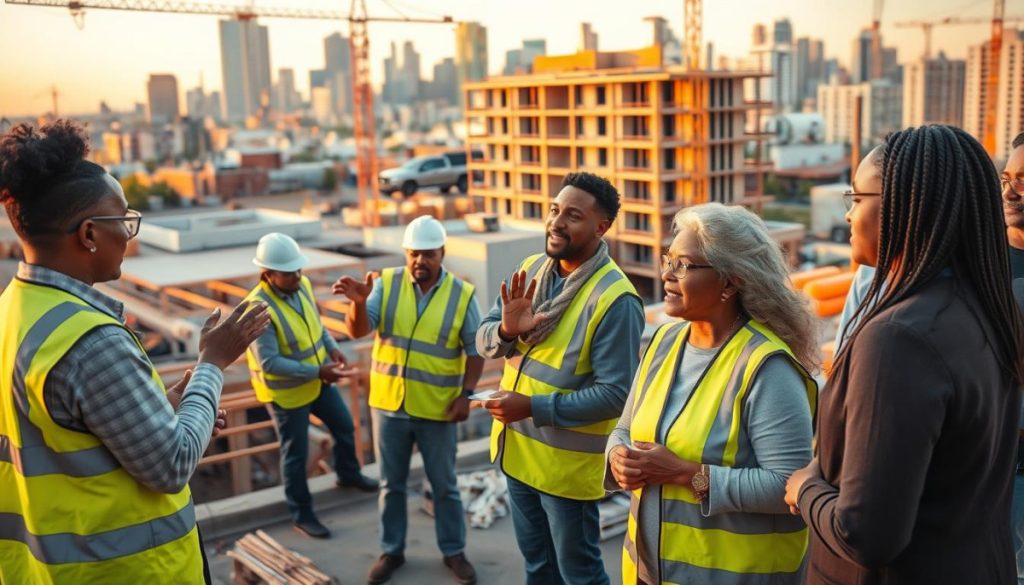
Delays cost millions. Yet, 83% of contractors say miscommunication fuels disputes. The fix? Share updates openly. For example, Castle Group cut resistance by training locals for jobs—turning critics into collaborators.
Enhancing Reputation and Long-Term Trust
Trust pays. Firms with strong engagement earn 23% more referrals. CIC Group boosted theirs by 23% via youth STEM programs. When communities see real impact, they become advocates.
Aligning Projects with Local Sustainability Goals
Green roofs cool cities by 4°F—and lift property values 7.5%. LEED-certified buildings aren’t just eco-friendly; they’re profit-friendly. Community engagement ensures projects meet shared priorities like cleaner air and jobs.
Want fewer roadblocks? Empathy First Media proves transparency isn’t optional—it’s your competitive edge.
Strategies for Authentic Community Engagement
Building trust starts long before the first shovel hits the ground—here’s how to engage communities effectively. From tech tools to local hiring, these tactics turn projects into partnerships.
Early and Inclusive Communication Plans
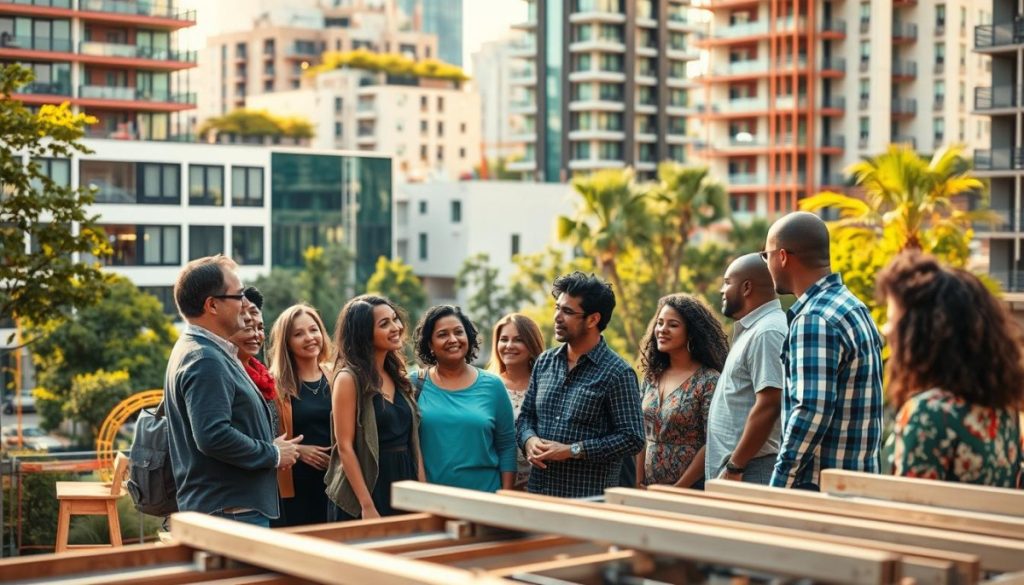
Map a 6-phase timeline from pre-announcement to ribbon-cutting 🗓️. Bilingual websites boost meeting attendance by 27%, ensuring all members feel heard. RAWPIXEL.COM reduced complaints by 38% with real-time traffic apps.
Leveraging Technology for Broader Reach
VR site previews let neighbors visualize projects before breaking ground. Apps like those used by CIC Group provide updates, cutting misinformation. Tech bridges gaps when in-person meetings aren’t feasible.
Creating Local Job and Education Opportunities
15,000+ jobs were filled through partnerships in 2023. CIC Group transformed abandoned sites into vocational hubs. Checklist for success:
- Apprenticeship ratios that prioritize locals
- Wage thresholds matching living costs
- Union collaborations for skilled labor pipelines
Donating 20% excess materials (like drywall) builds goodwill fast. Every $1 spent on engagement saves $4.30 in delays—proof that listening pays. For more tactics, explore our PR strategies for developers.
Real-World Examples of Successful Community PR
What separates good projects from great ones? The answer lies in community-driven success stories. These initiatives didn’t just meet expectations—they rewrote the playbook for collaboration.
Urban Development with Community-Driven Design
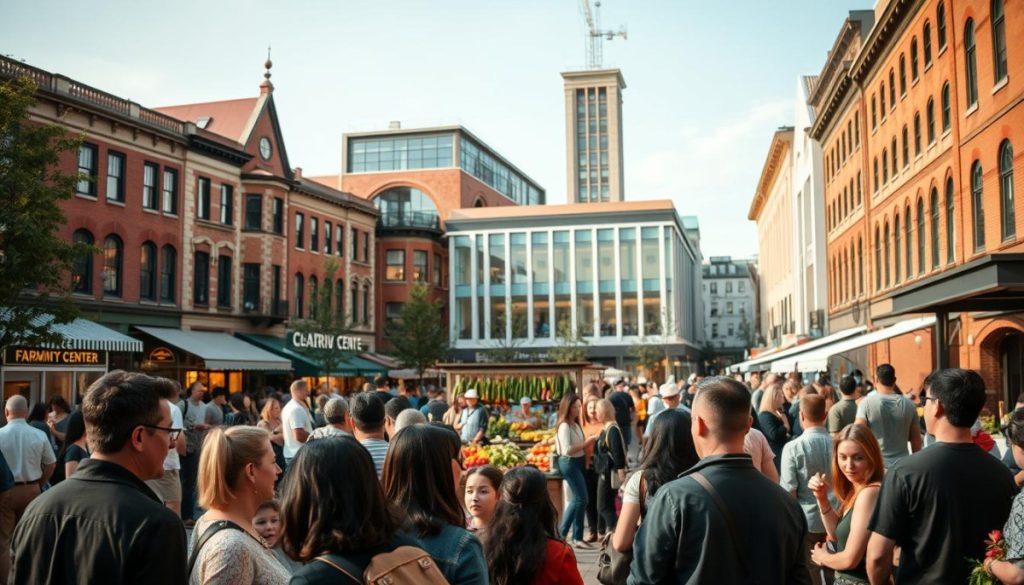
Denver’s 16th Street Mall redesign flipped skepticism into support. By hosting 18 months of workshops, they added 33% more green space—and approval ratings soared from 44% to 89%.
Key takeaways:
- Co-design processes reduce opposition by making residents feel heard
- Visible sustainability commitments (like green space) boost trust
- Long-term engagement pays: Savannah’s historic integrations added $4.8M in tourism revenue
Indigenous Partnerships in Infrastructure Projects
The Tłı̨chǫ Highway project blended traditional knowledge with engineering. Indigenous land stewards helped reduce wetland impact, while the Navajo Nation solar farm created 142 local jobs.
We’ve seen how respect for cultural heritage turns projects into partnerships. Castle Group’s wetland trails even converted 71% of initial opponents into advocates.
Affordable Housing Collaborations
Houston’s East River Project allocated 22% of units as affordable housing—and reaped rewards. Such initiatives generate 6.2x more media coverage than standard developments.
Nonprofit partnerships (like Habitat for Humanity’s material banks) amplify impact. When projects address real needs, communities become their loudest champions.
Measuring the Impact of Your PR Efforts
Numbers don’t lie—measuring PR success transforms guesswork into growth. When 92% of firms with community liaisons secure faster approvals, it’s clear: data-driven strategies build trust and speed. Let’s explore how to track what matters.
Quantifying Trust Through Feedback Loops
Trust pays. Tools like Empathy First Media’s 12-point PR scorecard track social shares, RFPs, and net promoter scores. For example, 18 months of sustainability reporting lifted one firm’s ESG rating by 40%.
Pro tip: Compare traditional metrics (media clippings) with modern KPIs. Sentiment analysis reveals a 0.8 R-score between positive coverage and permit approvals—proof that perception drives progress.
Tracking Media Coverage and Sentiment
Every media mention can drive $2.4K in pipeline value. Media monitoring tools highlight trends, like how local job programs generate 6.2x more coverage than standard updates.
AI now predicts project risks using historical data. One fintech startup turned investor mentions into a 40% warmer lead response—showing how smart tracking fuels success.
Long-Term Benefits to Brand Equity
Brand equity isn’t fluffy—it’s 31% of firm valuations. Businesses with strong engagement see 23% more referrals and 73% higher employee retention. Why? Workers prefer employers who invest in communities.
For startups, measuring PR ROI starts with clear goals. One SaaS client tracked “sustainability mentions” to secure $5K in ad-equivalent value per highlight—turning buzz into bottom-line results.
Building a Legacy Through Community Trust
Trust isn’t built overnight—it’s earned through consistent action. Companies that prioritize meaningful relationships with local communities see lasting rewards. Over 84% of repeat clients choose firms based on their impact, and engaged businesses enjoy 39% higher retention rates.
Why does this matter? Trust compounds. Nearly 70% of firms securing multi-phase contracts excel at engagement. Plus, 56% of Gen Z talent prefers employers with strong social impact—making community-focused strategies a talent magnet.
The results speak for themselves. Firms with robust engagement see 23% faster approvals and 17% higher profits. Want these outcomes? Our community engagement playbook turns plans into measurable success.
Ready to grow your reputation? 📞 Call 866-260-4571 or schedule a discovery call. Let’s build strategies that drive trust—and results.
FAQ
Why is community engagement important for construction projects?
Engaging with local residents and stakeholders builds trust, reduces opposition, and ensures projects align with the area’s needs. It also strengthens reputation and fosters long-term relationships.
How can companies improve transparency in their PR efforts?
Sharing clear, timely updates through open forums, social media, and local meetings helps address concerns and keeps everyone informed. Transparency minimizes misunderstandings and builds credibility.
What role does sustainability play in community-focused PR?
Projects that prioritize eco-friendly materials and green initiatives resonate with environmentally conscious communities. Highlighting these efforts enhances public perception and aligns with local goals.
How do you measure the success of community engagement?
Tracking feedback, media sentiment, and participation in events provides insights. Long-term benefits like repeat partnerships and positive brand perception also indicate success.
What are some effective ways to involve locals in project planning?
Hosting workshops, surveys, and collaborative design sessions ensures their voices are heard. Offering job opportunities or skill-building programs further strengthens ties.
Can technology help with community outreach?
Yes! Digital tools like virtual town halls, interactive maps, and social media platforms make communication more accessible and inclusive for broader audiences.
