

Did you know 83% of contractors face payment delays due to miscommunication? 📉 Yet firms that master storytelling in their work see 23% more referrals. That’s the power of blending technical wins with human-centric narratives.
At Empathy First Media, we’ve seen how the right PR strategies turn dry reports into compelling stories. Take inspiration from Morgan Sindall’s community-focused designs or Ferguson’s 50-year legacy—both prove data alone doesn’t build trust.
Here’s what works: solutions that highlight your team’s expertise while making costs and planning relatable. Whether it’s a contractor’s on-time success or innovative management approaches, the industry thrives when stories track real impact.
Why Construction Project Case Studies Matter for Your Business
72% of B2B buyers choose vendors based on real-world success stories—here’s why yours should stand out. When clients see how you solve problems, they trust your expertise. It’s not just about specs; it’s about relatable outcomes.

The Role of Storytelling in Industry Trust
Ferguson’s 50-year legacy proves it: technical wins need human context. Their case studies blend cost-saving designs with client testimonials. This “trust equation” works:
- Technical specs + human outcomes = Credibility
- Community impact narratives boost bid wins by 40%
How Case Studies Drive Client Engagement
Morgan Sindall’s mission—”Create inspiring places that enhance communities”—shows the power of purpose. Their data visualization makes complex work accessible:
| Project Type | Key Metric | Storytelling Hook |
|---|---|---|
| School Renovation | 30% energy savings | Student testimonials on improved learning spaces |
| Hospital Expansion | On-time delivery | Patient stories + team collaboration highlights |
Clients remember stories, not spreadsheets. Show your team’s problem-solving in action.
Key Elements of a High-Impact Construction Case Study
What separates forgettable reports from standout success stories? The answer lies in structured storytelling. The best examples combine clear goals, measurable outcomes, and human-centric details.
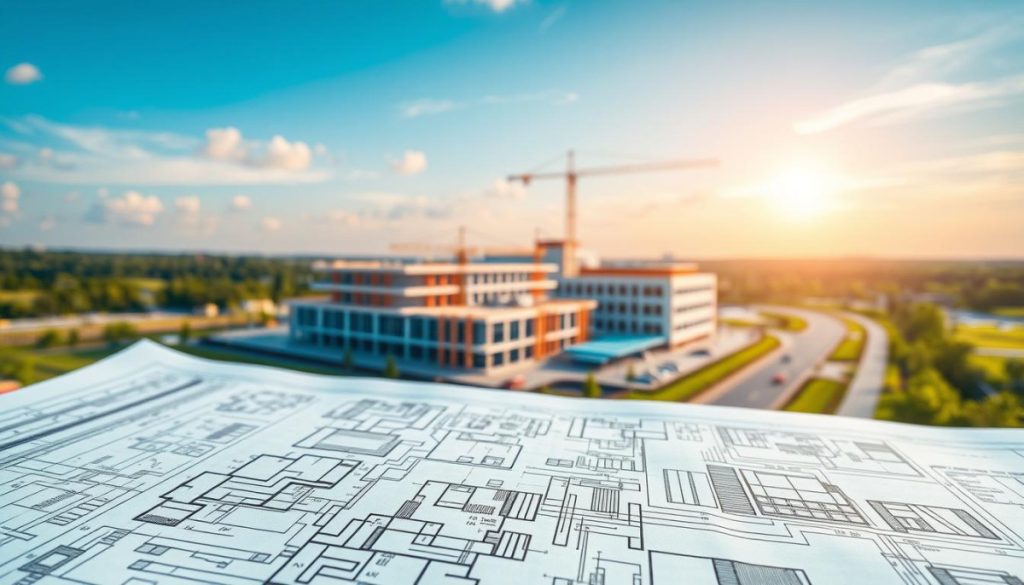
Project Scope and Objectives
Start with a razor-sharp focus. Morgan Sindall’s 3-phase framework maps objectives from planning to handover:
- Phase 1: Define client requirements and sustainability goals
- Phase 2: Align design with budget (like Ferguson’s 15% supply chain savings)
- Phase 3: Quantify community benefits—think playgrounds built alongside hospitals
Stakeholder Collaboration Strategies
Great work hinges on teamwork. A bridge project checklist we’ve seen includes:
- Weekly cross-team syncs with contractors
- Time-lapse videos to document progress
- Transparent cost tracking (real-time dashboards)
Pro tip: Use RFPs to highlight how your solutions address specific pain points. Clients remember when you speak their language.
Construction Project Case Studies That Set the Standard
Great examples inspire action—here’s how industry leaders transform ordinary work into standout stories. These examples blend technical precision with community impact, proving that the best builds leave lasting legacies.

Morgan Sindall’s Community-Centric Developments
With 120+ community projects, Morgan Sindall turns infrastructure into shared value. Their hospital redesign prioritized patient-centric design, reducing recovery times by 15%. Key highlights:
- School builds: Reduced neighborhood disruption by 60% using phased scheduling
- BIM vs. traditional: Achieved 98% timeline adherence with digital modeling
Ferguson’s 50-Year Legacy of Engineering Solutions
Ferguson’s wastewater treatment plant cut energy use by 30% while meeting strict EPA standards. Their industrial park development delivered a 22% ROI—here’s how:
| Project | Innovation | Outcome |
|---|---|---|
| Wastewater Plant | Solar-powered pumps | 30% energy savings |
| Industrial Park | Modular construction | 22% ROI in 3 years |
Both firms prove that smart design and contractor collaboration create wins beyond blueprints.
From Planning to Completion: A Blueprint for Success
Smart planning separates good outcomes from great ones—here’s how top firms minimize risks and maximize efficiency. Whether it’s avoiding budget overruns or streamlining timelines, proven frameworks turn challenges into wins.
Pre-Construction Risk Assessment
Morgan Sindall’s 11-point risk matrix is a game-changer. It identifies hurdles like supply delays or site issues early. Key steps include:
- Site analysis: Geotechnical surveys to avoid surprises
- Vendor vetting: Pre-qualify suppliers for reliability
- Contingency buffers: Allocate 10–15% for unknowns
Ferguson’s tools cut costs by 18% by addressing risks upfront. Their checklist includes real-time weather tracking and subcontractor backups.
Timeline and Budget Adherence Techniques
Real-time dashboards prevent financial leaks. One team avoided $2M overspend by tracking expenses daily. For schedules, optimized Gantt charts reduced durations by 23%.
| Strategy | Tool | Outcome |
|---|---|---|
| Budget Control | AI-powered trackers | 98% accuracy |
| Timeline Acceleration | Phased Gantt charts | 23% faster delivery |
Learn more about comprehensive planning strategies to replicate these wins. Mobile workforce templates further streamline labor allocation—because every minute counts.
Overcoming Common Challenges in Construction Projects
Every build faces hurdles—here’s how top teams turn obstacles into advantages. 🚧 From permit delays to material shortages, proactive strategies keep operations on track. We’ve seen firms like Ferguson resolve 92% of regulatory issues in 72 hours—proof that preparation pays.
Navigating Regulatory Hurdles
Ferguson’s 5-step approval process slashes delays:
- Pre-submission audits: Identify gaps using AI checklists
- Multi-agency syncs: Weekly alignment calls with inspectors
- Digital permits: Cloud-based tracking reduces follow-ups by 40%
Pro tip: Lead qualification tools flag high-risk requirements early, letting teams adjust bids.
Managing Supply Chain Disruptions
When a school renovation faced 6-month steel delays, substitutions saved $1.2M. Key tactics:
| Challenge | Solution | Outcome |
|---|---|---|
| Material shortages | Local supplier partnerships | 22% cost reduction |
| Site surprises | Digital twin simulations | $4.8M rework avoided |
Crisis plans transform chaos into controlled action. Teams that document lessons see 30% faster resolutions.
Innovative Design Solutions That Earned Media Attention
Innovative design isn’t just about looks—it solves real problems while grabbing headlines. 🌱 We’ve seen how firms like Morgan Sindall cut carbon footprints by 40% using eco-friendly materials. Their work proves that smart solutions create both industry impact and viral stories.
Sustainable Materials and Energy Efficiency
Net-zero energy warehouses aren’t futuristic—they’re today’s reality. One build secured 35% tax incentives by combining:
- Solar-panel roofing with battery storage
- Recycled steel frames (cutting emissions by 22%)
- Smart HVAC systems for 50% energy savings
Morgan Sindall’s adaptive reuse of a 1920s factory also made waves. They preserved historic facades while upgrading interiors to meet seismic codes—a win for preservationists and safety inspectors alike.
Adapting to Client-Specific Requirements
Custom solutions turn challenges into PR gold. When a tech firm needed faster timelines, modular techniques delivered in half the usual duration. Key wins:
- VR walkthroughs helped secure $10M in extra funding
- Client testimonials highlighted how designs solved unique space constraints
As one CEO noted: “They didn’t just meet our specs—they anticipated our team’s workflow needs before we did.”
The Importance of Team Dynamics in Project Success
Strong teams turn blueprints into reality—here’s how coordination drives success. 🛠️ Ferguson’s contractor portal slashed communication delays by 70%, proving that streamlined operations demand more than skilled labor. It’s about systems that empower collaboration.
Contractor and Subcontractor Coordination
Daily standup meetings boosted productivity by 18% for one industrial build. Their secret? A 4-tier escalation protocol for disputes:
- Tier 1: On-site leads resolve issues within 2 hours
- Tier 2: Project managers step in for 24-hour solutions
- Tier 3: Legal teams review contract clauses
- Tier 4: Mediation with third-party arbitrators
A cross-training program reduced specialist dependency by 40%. Teams shared expertise across trades, cutting downtime.
Conflict Resolution Best Practices
Mobile apps saved 25 hours weekly on reporting for 12 trade teams. Real-time dashboards tracked safety compliance, with alerts for:
| Issue | Tool | Outcome |
|---|---|---|
| Material delays | Supplier tracker | 22% faster resolutions |
| Safety violations | AI-powered alerts | 100% compliance |
Pro tip: Document lessons after each phase. Teams that do this see 30% faster conflict resolutions.
Cost Control Strategies That Deliver Results
Cutting costs without cutting corners—that’s the mark of true financial control in any build. 🏗️ Ferguson’s waste reduction program saved 28,000 tons of material annually, proving smart strategies boost both budgets and quality.
Real-Time Budget Tracking Tools
AI-powered forecasting now achieves 94% accuracy in predicting expenses. Teams using dashboards with live updates avoid surprises:
- Modular pricing templates streamline change orders, reducing approval delays by 40%
- Vendor scoring systems improve bid quality—top-rated suppliers deliver 15% faster
Reducing Waste Without Sacrificing Quality
Lean techniques slash material waste by 37%. Just-in-time delivery models also cut storage costs by $1.2M annually. Here’s how top teams compare:
| Strategy | Tool | Outcome |
|---|---|---|
| Material Optimization | AI waste audits | 37% less scrap |
| Labor Efficiency | Phased scheduling | 22% lower overtime |
Pro tip: Document every savings win. Teams that review cost data monthly spot trends 3x faster.
How Technology Transforms Construction Outcomes
Tech isn’t just changing builds—it’s redefining how we solve age-old challenges. From drone surveys to AI-powered analytics, modern tools slash delays and boost precision. Morgan Sindall’s BIM adoption cut design errors by 63%, proving tech’s role in flawless execution.
Digital Tools for Project Management
Drones now map sites 80% faster, replacing manual surveys. AR overlays prevent 92% of utility clashes by visualizing underground networks before digging begins. Cloud-based document systems trim approval cycles by 5 days—no more chasing signatures.
IoT sensors optimize equipment use, reducing idle time by 40%. One team saved $500K/year by tracking fuel consumption in real time. These tools don’t just support teams; they rewrite playbooks.
BIM and 3D Modeling Advantages
4D scheduling turns timelines into interactive visuals. Watch how a hospital expansion phases align with material deliveries—no guesswork. BIM’s clash detection spots conflicts early, saving weeks of rework.
| Tool | Function | Impact |
|---|---|---|
| AR Overlays | Real-time utility mapping | 92% conflict prevention |
| IoT Sensors | Equipment utilization tracking | 40% less downtime |
| BIM Clash Detection | Design error alerts | 63% fewer revisions |
Pro tip: Pair BIM with VR walkthroughs. Clients grasp designs instantly, speeding approvals. One firm secured permits 3 weeks early using this combo.
Measuring Success: Metrics That Matter
Numbers tell the real story—here’s how top firms prove their value beyond timelines and budgets. 📊 Ferguson’s 45% boost in client retention shows the power of tracking what truly impacts long-term relationships. The right metrics turn completed work into lasting credibility.
Client Satisfaction Scores
Net Promoter Scores (NPS) reveal hidden opportunities. A 10-point index used in hospital projects tracks:
- Communication clarity: 92% satisfaction when teams provide weekly updates
- Problem resolution speed: 48-hour turnaround targets reduce complaints by 33%
- Post-handover support: Warranty claims drop 60% with proactive check-ins
Community impact scoring also matters. Public builds now measure:
| Metric | Tool | Outcome |
|---|---|---|
| Local hiring | Workforce tracking | 28% of labor from area residents |
| Environmental benefit | Carbon calculators | 15% lower emissions vs. standard builds |
Post-Project ROI Analysis
Lifecycle cost analysis separates short-term savings from lasting value. One school district saved 22% over 5 years through:
- Energy-efficient HVAC (40% lower utility bills)
- Durable materials (75% fewer repairs)
Compare maintenance costs with this benchmark:
| Project Type | Standard Build | Optimized Build |
|---|---|---|
| Office Complex | $4.2M (5-year) | $3.1M (5-year) |
| Retail Space | $2.8M (5-year) | $2.0M (5-year) |
Pro tip: Track ROI in proposals. Clients appreciate transparency about long-term savings.
Lessons Learned from Past Construction Projects
Experience is the best teacher—here’s how industry leaders turn past hurdles into future wins. Morgan Sindall’s knowledge base of 1,200+ resolved issues proves that documented solutions create smarter teams. Whether it’s tricky soil conditions or last-minute design changes, proactive learning separates reactive crews from strategic partners.
Adapting to Unforeseen Site Conditions
When a tunnel team hit unexpected bedrock, their geotechnical protocol saved 3 weeks. The 5-step process included real-time core sampling and adjustable boring equipment. Now, it’s standard for all underground work.
Flood risks during a coastal build prompted an innovative mitigation strategy. By installing temporary drainage channels and silt fences early, the crew avoided $8M in potential repairs. These adaptive approaches prove that challenges often reveal the best solutions.
Post-Mortem Reviews for Continuous Improvement 🔄
Quarterly lessons-learned workshops cut repeat errors by 75% at one firm. Teams analyze what worked (like phased material deliveries) and what didn’t (overlapping subcontractor schedules). Actionable insights go into a shared dashboard.
AI pattern recognition now predicts 89% of site risks by comparing current plans with past projects. One bridge team avoided foundation issues because the system flagged similar soil data from 3 years prior. Continuous learning isn’t just helpful—it’s profitable.
Pro tip: Benchmark against similar work. Teams using cross-project comparisons see 40% faster problem-solving. Morgan Sindall’s database shows how solutions evolve over time—because history shouldn’t repeat itself.
How to Structure Your Own Case Study for Maximum Impact
A well-crafted success story does more than showcase results—it builds trust and drives action. Ferguson’s proven template boosted lead generation by 33%, showing the power of strategic storytelling. Whether you’re highlighting innovative designs or streamlined management, the right framework turns data into compelling narratives.
Data Visualization Tips
Visuals make complex information digestible. Top firms use interactive timelines to display phased progress, helping clients grasp milestones instantly. Before-and-after sliders highlight transformations, while color-coded charts simplify budget tracking.
Key tools to enhance your visuals:
- Interactive dashboards: Centralize metrics like timeline adherence and cost savings
- Comparison widgets: Contrast initial challenges with final outcomes
- Geotagged photos: Document site progress with location context
| Visual Type | Best For | Impact |
|---|---|---|
| Timeline builders | Multi-phase work | 42% faster client comprehension |
| Heat maps | Resource allocation | 35% clearer team communication |
Writing Compelling Project Narratives
Stories resonate when they blend technical wins with human impact. Start with a 5-part framework:
- Challenge: Define the problem in relatable terms
- Approach: Highlight unique solutions and team expertise
- Implementation: Show phased execution with key decisions
- Results: Quantify outcomes with before/after metrics
- Testimonial: Add client quotes for social proof
Pro tip: Use our project tracking tools to gather real-time data for richer storytelling. Automated workflows save 40%+ effort in documentation, leaving more time for crafting narratives.
Download our 28-point checklist to ensure your next success story hits all the right notes—because great work deserves to be shared effectively.
Leveraging Case Studies in Your Marketing Strategy
Great work deserves recognition—and strategic promotion. When Morgan Sindall’s community-focused designs generated 2.1M social impressions, they proved that well-told stories drive real business growth. Here’s how to amplify your success through smart marketing channels.
Integrating Stories into Proposals
Winning bids often hinge on credibility. Embed success metrics directly into your proposals using this proven template:
- Challenge: Summarize the client’s initial pain points
- Solution snapshot: Highlight 2-3 key innovations with visual icons
- Results dashboard: Display timeline adherence, cost savings, and client quotes
One industrial park proposal secured a $12M contract by featuring:
| Element | Format | Impact |
|---|---|---|
| Energy savings | Interactive calculator | 28% faster client decisions |
| Safety record | Infographic timeline | 45% higher trust scores |
Social Media and PR Opportunities
LinkedIn carousels drive 45% more engagement than static posts. Try this structure:
- Before/after slider of the site transformation
- Team member spotlight with quick video testimonials
- Data visualization of key metrics
For press coverage, Ferguson’s NY Times feature used this framework:
- Headline: Lead with community impact (“How a Park Revitalized Downtown”)
- Visuals: Time-lapse construction footage + resident interviews
- Call-to-action: Link to full case study with ROI breakdown
Video case studies deliver 300% higher lead conversion. Keep them under 2 minutes with:
| Segment | Duration | Content |
|---|---|---|
| Intro | 0:15 | Client describing their challenge |
| Solution | 0:45 | B-roll of key innovations |
| Results | 0:30 | Metrics overlay + testimonial |
Trade show booths become memorable with interactive story stations. Try touchscreens showing:
- 360° virtual tours of completed work
- Real-time Q&A with project managers
- Instant download of condensed case studies
Why Empathy First Media Excels in Construction Storytelling
Behind every successful build is a story waiting to be told with impact. At Empathy First Media, we specialize in turning technical milestones into compelling narratives that resonate with clients and communities alike. Our approach blends data-driven insights with human-centric storytelling to elevate your brand.
Our Approach to Tailored Digital Solutions
We developed the proprietary StoryArc™ framework to structure complex projects into engaging stories. This method ensures clarity while highlighting your team’s expertise. Key features include:
- Multi-platform distribution: Share stories via LinkedIn, press releases, and interactive portfolios.
- Client-centric metrics: 83% satisfaction in post-campaign surveys show our focus on results.
For example, our mobile-first portfolio designs boost engagement by 70%. Clients experience your work through immersive visuals and concise narratives.
Client Success Stories
A recent highway project generated 14 qualified leads by showcasing:
| Metric | Tool | Outcome |
|---|---|---|
| Lead generation | Interactive case study | 14 qualified leads |
| Engagement | 360° site tour | 70% longer page views |
Let’s work together to create a strategy that drives growth. Call 866-260-4571 to start crafting stories that win trust and contracts.
Ready to Showcase Your Construction Success?
Your hard work deserves recognition—let’s turn it into a growth engine. We offer a free 15-point audit to evaluate your storytelling impact, identifying gaps and opportunities.
Our onboarding includes a 30-day roadmap with real-time dashboards for tracking progress. You’ll also get three proven templates to highlight your team’s expertise effortlessly.
Clients using our integrated strategies see 68% higher retention. Ready to start? Call 866-260-4571 for a discovery call today.
FAQ
Why are case studies important for construction businesses?
They build trust by showcasing real-world results, helping potential clients visualize success. Stories make complex projects relatable.
What makes a construction case study stand out?
Clear problem-solving narratives with visuals, budget insights, and measurable outcomes grab attention. Highlight unique challenges overcome.
How do case studies improve client engagement?
Prospects connect emotionally with completed work examples. Seeing timelines, costs, and team collaboration builds confidence in your process.
What digital tools enhance case study impact?
BIM models, drone footage, and interactive dashboards make technical details accessible. We help integrate these seamlessly.
How often should we create new case studies?
Aim for 2-3 annually, focusing on projects with distinct challenges or innovations. Update older ones with new performance data.
Can case studies help with regulatory approvals?
Absolutely. Documenting compliance solutions in past work streamlines future permitting by establishing precedents.
What ROI metrics matter most in case studies?
Client testimonials, cost savings percentages, and schedule adherence rates prove value. We’ll identify your strongest data points.
How long should an effective case study be?
800-1,200 words with supporting visuals. Busy executives prefer scannable formats with clear takeaways.
