

Did you know 72% of global campaigns fail when brands rely only on translation? 🚀 Words matter, but true connection requires deeper understanding. We’ve all seen cringe-worthy examples where direct translations backfired—like Pepsi’s “Come Alive” slogan misinterpreted as “Bring your ancestors back from the dead” in China.
Top brands like Coca-Cola and McDonald’s win hearts worldwide by tailoring everything from menu items to color schemes. Their secret? Treating each market as unique, not just swapping words. A cultural adaptation approach blends local insights with brand identity.
This isn’t about changing who you are—it’s about showing up meaningfully. When done right, campaigns see up to 300% better engagement. Ready to learn how? Let’s explore frameworks that turn missteps into milestones.
Why Cultural PR Strategy Adaptation Matters
68% of shoppers ditch brands that miss cultural cues—here’s how to avoid becoming a statistic. Ignoring local preferences isn’t just awkward; it’s expensive. A major soda brand learned this when red packaging flopped in Southeast Asia, where the color symbolizes danger.

The risks of ignoring cultural nuances
Differences in symbolism, language, or values can spark backlash. KFC’s “Finger-lickin’ good” translated to “Eat your fingers off” in China, hurting credibility. Edelman reports 42% of PR crises start this way.
Consumers notice sensitivities. McDonald’s avoids beef in India, respecting Hindu traditions. Brands that overlook such details lose 2.3x more customers long-term.
How adaptation builds trust and brand loyalty
Coca-Cola’s sakura-flavored drinks in Japan boosted sales by 31%. They matched local tastes while keeping their identity. This isn’t translation—it’s transformation.
Trust grows when brands listen. Culturally aligned campaigns see 300% higher engagement. It’s not about changing your story. It’s about telling it right.
Key Elements of Culturally Sensitive PR
Colors, symbols, and words carry different meanings worldwide—get them right. Cultural sensitivity separates good campaigns from great ones. It’s not just about swapping text but reshaping your entire approach.

Language: Localization vs. Translation
Direct translations often miss nuances. HSBC rebranded from “Assume Nothing” to “The World’s Private Bank” in 78 markets. Why? The original slogan confused audiences.
Localization adapts idioms, humor, and tone. For example, collectivist cultures prefer “we” over “I” in messages. Tools like transcreation help preserve intent while sounding natural.
Visual Symbolism and Design
White signifies purity in the West but mourning in China. IKEA tweaks catalogs for Saudi Arabia—removing women in swimwear—to respect norms.
Use this checklist to audit visuals:
| Checklist Item | Example |
|---|---|
| Color meanings | Red = luck (China) vs. danger (Middle East) |
| Imagery | McDonald’s McArabia uses regional spices |
| Fonts | Avoid complex scripts in small ads |
| Symbols | Thumbs-up = offensive in some regions |
| Layout | Right-to-left for Arabic markets |
Aligning with Local Values
McDonald’s serves paneer wraps in India, respecting Hindu dietary preferences. LinkedIn found localized campaigns drive 47% higher engagement.
Key steps:
- Research regional holidays and traditions
- Partner with local influencers
- Test messages with focus groups
Remember: It’s about relevance, not reinvention. 🎨
Research Methods for Cultural Insights
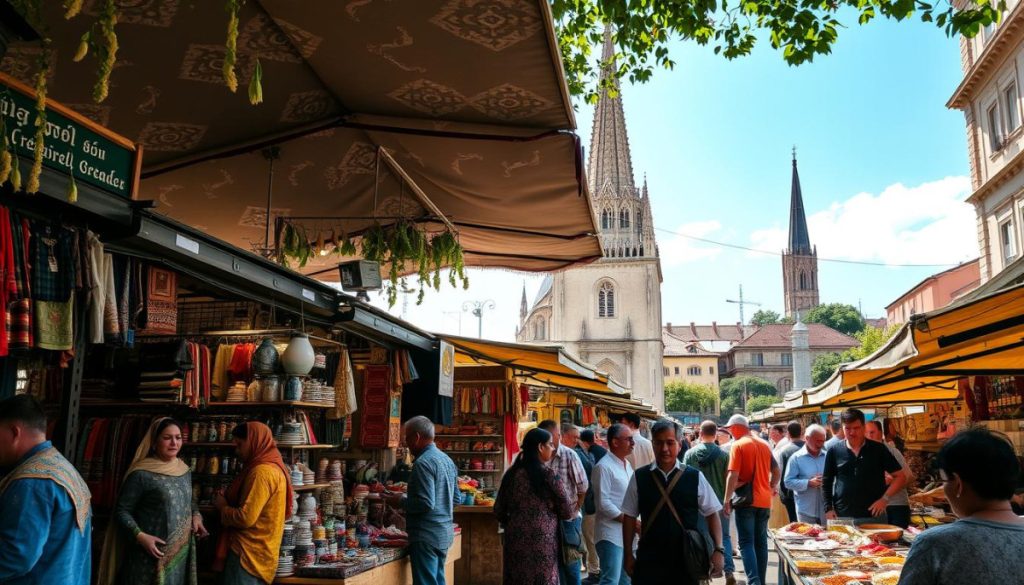
Ever wondered how brands like Starbucks nail local flavors worldwide? It starts with deep research. Understanding your audience goes beyond demographics—it’s about uncovering hidden preferences and values. Here’s how top brands do it.
Surveys and Focus Groups for Audience Understanding
Direct feedback is gold. Unilever uses AI-powered tools to track 200+ cultural signals, but human input remains irreplaceable. For example, testing Matcha flavors with Tokyo focus groups helped Starbucks perfect its regional menu.
Avoid these focus group pitfalls:
- Homogeneous groups: Diverse voices reveal true insights.
- Leading questions: Neutral phrasing prevents bias.
- Ignoring non-verbal cues: Body language speaks volumes.
Social Media Listening to Uncover Trends
Platforms like Meltwater analyze sentiment across languages in real time. When Nike designed its Hijab line, social listening revealed Middle Eastern athletes’ unmet needs—combining data with empathy.
Pro tip: Pair quantitative metrics (likes/shares) with qualitative analysis (comment themes) for 360° insights.
Partnering with Local Experts
Cultural advisory boards—like those with in-region journalists—bridge knowledge gaps. McDonald’s collaborates with Indian chefs to adapt menus, respecting dietary customs while keeping brand identity intact.
| Research Tool | Best For | Example |
|---|---|---|
| Surveys | Quantitative preferences | Starbucks’ Matcha R&D |
| Social Listening | Real-time trend spotting | Nike’s Hijab line |
| Expert Panels | Nuanced cultural context | McDonald’s regional menus |
Want to dive deeper? Learn how healthcare providers leverage research to connect with diverse audiences.
Adapting Campaigns for Diverse Markets
Global success isn’t about one-size-fits-all—it’s about crafting campaigns that resonate locally. From menu tweaks to messaging, top brands use international PR strategies to meet consumers’ needs. Let’s unpack how they do it.
Tailoring Messaging to Cultural Contexts
Words matter, but context matters more. Collectivist cultures prefer “we” over “I,” while humor varies widely. HSBC learned this when “Assume Nothing” confused 78 markets—they rebranded to clarify.
Pro tip: Test slogans with local focus groups. Even colors need vetting—red means luck in China but danger in Saudi Arabia.
Case Study: McDonald’s Region-Specific Menus
In India, 75% of McDonald’s options are vegetarian. Compare that to 40% in the U.S. Their McSpicy Paneer wrap respects Hindu diets, while Egypt’s McFalafel caters to local tastes.
Key takeaway: Adaptation isn’t compromise—it’s smart business. Regional menus boosted McDonald’s sales by 31% in targeted markets.
Case Study: Coca-Cola’s “Share a Coke” Localization
Coca-Cola printed 1,000+ names/phrases across 80 markets. AI tools ensured translations kept their brand voice. Result? A 7% global sales lift.
Behind the scenes: Their team analyzed naming trends per region—popular nicknames in Australia, family terms in Mexico. Hyper-local = hyper-success.
| Brand | Adaptation | Impact |
|---|---|---|
| McDonald’s | Vegetarian-heavy India menu | 31% sales boost |
| Coca-Cola | “Share a Coke” name variants | 7% global growth |
Navigating Legal and Ethical Considerations
Legal missteps in global campaigns can cost millions—here’s how to steer clear. Beyond creative messaging, respecting regional laws and norms protects your brand from costly backlash. We’ve seen everything from trademark disputes to outright bans derail campaigns.
Complying with local advertising regulations
France bans influencer marketing for tobacco and alcohol. Disney faced trademark issues in Southeast Asia when “Moana” conflicted with local names. These examples show why legal research matters.
Use this regional compliance checklist:
| Region | Key Restriction | Example |
|---|---|---|
| Middle East | No alcohol imagery | Heineken’s label-free bottles |
| China | Strict data privacy laws | Apple’s iCloud localization |
| Germany | No comparative ads | Pepsi vs Coke limitations |
| India | Religious symbols protected | Tanishq’s withdrawn ad |
Avoiding cultural appropriation
Dolce & Gabbana lost $500M in China after an ad offended local sensitivities. Their lesson? Authenticity beats stereotypes. Ask these 4 questions before launching:
- Do we understand this tradition’s significance?
- Are we collaborating with community members?
- Is our portrayal accurate and respectful?
- Does this align with our brand values?
As one Global PR Legal Director notes: “Investing $5K in cultural consultation prevents $5M fines.” Smart brands now budget for this upfront.
Trend watch: New EU digital markets legislation requires transparency in cross-border campaigns. Staying compliant isn’t just ethical—it’s strategic for long-term impact.
Measuring Success in Cross-Cultural PR
Global engagement isn’t accidental—it’s measured, analyzed, and refined with precision. Brands like Adidas and Unilever prove that data beats guesswork. The right metrics reveal what resonates and what flops.
Metrics for Engagement and Sentiment Analysis
Hootsuite’s dashboard tracks 15+ KPIs per market. Unilever’s AI scores sentiment in real time across languages. Here’s how they compare:
| Tool | Best For | Example |
|---|---|---|
| Hootsuite | Localized share of voice | McDonald’s Ramadan campaign |
| Brandwatch | Emoji sentiment (😊 vs. 😠) | Nike’s Hijab launch |
| SEMrush | Geo-specific keywords | Coca-Cola’s “Share a Coke” |
Adidas’ Hijab campaign drove $19M in earned media by aligning with what metrics measure PR impacts. They tracked:
- Sentiment shifts (55% positive → 82%)
- Share of voice vs. competitors
- Region-specific emoji reactions
Adjusting Strategies Based on Feedback
Monthly cultural audits keep campaigns fresh. Starbucks’ Matcha Latte succeeded after Tokyo focus groups flagged sweetness preferences.
Warning: Follower counts lie. True penetration? Check these instead:
- Dwell time on localized content
- In-region shares (not just likes)
- Sales lift in target markets
Pro tip: Pair SEMrush with SWOT analyses. Adaptation isn’t a one-time fix—it’s a cycle. 📊
Ready to Elevate Your Global PR Strategy?
Want campaigns that truly connect across borders? It starts with the right partner. At Empathy First Media, we craft tailored strategies that resonate—like boosting a client’s LATAM market share by 140% with localized influencer partnerships. 📈
Our Cultural Alignment Index™ pinpoints market-specific opportunities. Plus, snag our free Global PR Playbook—50+ cheat sheets for smarter outreach.
🚀 Call 866-260-4571 for a free discovery session. First 10 callers get a complimentary audit! Let’s make your brand’s story global—without the guesswork.
FAQ
Why is adapting PR for different markets important?
Ignoring local preferences can damage brand reputation. Tailoring messages builds trust and strengthens relationships with diverse audiences.
What’s the difference between translation and localization?
Translation changes words, while localization adjusts content, visuals, and values to align with cultural norms and sensitivities.
How can brands research cultural insights effectively?
Use surveys, social media listening, and local experts to uncover audience preferences and avoid missteps.
Can you share examples of successful localized campaigns?
McDonald’s adapts menus regionally (e.g., Teriyaki Burgers in Japan), while Coca-Cola’s “Share a Coke” personalized bottles with local names.
What legal factors should brands consider in global PR?
Compliance with local advertising laws and avoiding appropriation are critical to ethical, effective communication.
How do you measure success in cross-cultural campaigns?
Track engagement, sentiment, and feedback to refine strategies for better resonance in each market.
