

What if your biggest business risk isn’t competition—it’s your own data? 🤔 In today’s hyper-connected world, 83% of professionals say compliance and accuracy aren’t just nice-to-haves—they’re survival tools. But how do you turn chaotic information into your greatest asset?
We’ve helped companies like yours build guardrails for smarter decision-making. A structured approach to information management isn’t about restrictions—it’s about unlocking potential. Imagine teams collaborating seamlessly with clear roles, ironclad security, and real-time insights.
Here’s the game-changer: Organizations using systematic strategies see 40% faster crisis response and 29% higher customer satisfaction (Navex Global, 2023). Our team at Empathy First Media specializes in creating tailored solutions that:
- Turn regulatory hurdles into competitive advantages
- Align cross-departmental workflows
- Boost operational transparency without slowing innovation
Ready to stop firefighting compliance issues and start driving growth? Let’s co-create a roadmap that transforms how you collect, protect, and leverage your digital assets. Your future-ready operation starts here. 🚀
Understanding Data Governance: A Strategic Overview
In a world drowning in information, clarity is the new currency. 🪙 Effective systems for organizing and protecting your digital assets aren’t just IT concerns—they’re strategic tools for outperforming competitors. Let’s break down why this matters.
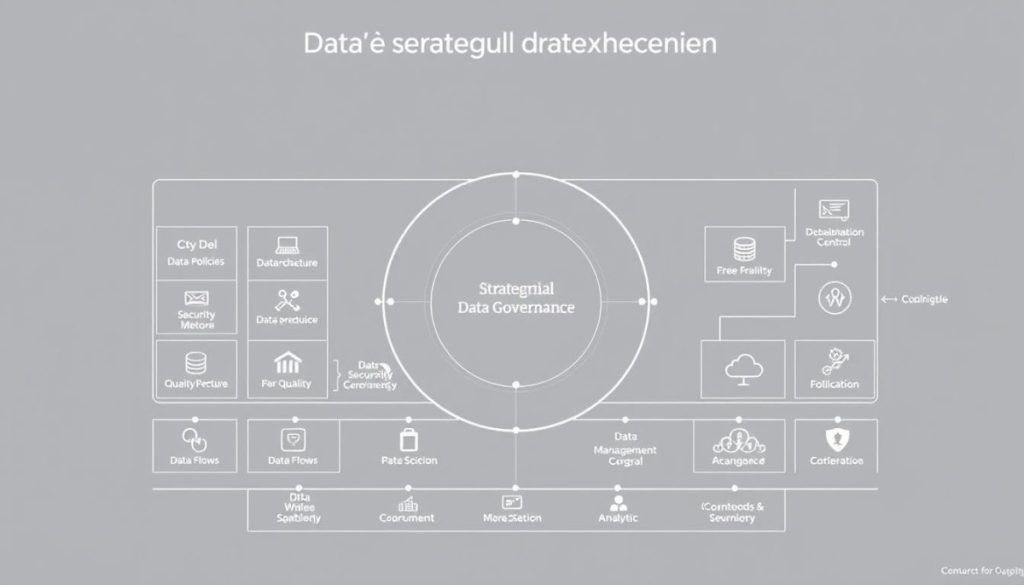
What Is Data Governance & Why It Matters
Think of it as your company’s rulebook for handling information. A strong strategy ensures everyone knows who owns what, how to maintain accuracy, and when to update records. Companies with clear policies reduce errors by 47% compared to those winging it (Forrester, 2023).
Key Benefits for Business Growth
Here’s why teams love it:
- Decisions fueled by trustworthy insights, not guesswork
- Faster audits thanks to organized documentation
- Confidence to innovate without regulatory headaches
We’ve seen clients cut compliance costs by 35% while accelerating product launches. The secret? Aligning your information systems with revenue goals. Ready to stop drowning in spreadsheets and start surfacing opportunities? Let’s explore how to build your playbook.
Data governance frameworks: Pillars and Best Practices
Did you know companies with structured information systems resolve compliance issues 50% faster? 🏗️ Successful systems thrive on three non-negotiable elements: clear rules, accountable teams, and smart tools. Let’s unpack what makes them work.

Essential Elements and Standards
Top-performing organizations follow proven blueprints. The DAMA International model emphasizes:
- Documented policies for quality control and access
- Cross-functional teams with defined decision rights
- Automated workflows to enforce standards consistently
ISO 8000-certified companies report 62% fewer data disputes, proving standardization drives trust. Our clients use hybrid approaches—adopting global benchmarks while customizing for niche needs.
| Component | Purpose | Real-World Example |
|---|---|---|
| Policies & Standards | Ensure uniform classification and usage | GDPR-compliant consent tracking |
| Roles & Accountability | Prevent decision bottlenecks | Marketing data stewards approving campaign metrics |
| Technology Tools | Automate oversight tasks | AI-driven anomaly detection systems |
Core Roles, Processes, and Responsibilities
Who does what matters. The Data Governance Institute’s framework identifies critical players:
- Stewards: Daily quality checks & issue resolution
- Owners: Final say on access rights and retention
- Users: Follow protocols when handling sensitive info
We helped a retail client reduce reporting errors by 78% through weekly stewardship reviews. Quarterly policy refresh cycles keep teams aligned as regulations evolve.
Developing a Data Governance Strategy for Business Success
What separates thriving businesses from those stuck in survival mode? 🔍 Often, it’s how they handle their most valuable resource—information. A well-crafted approach turns compliance from a checkbox exercise into a growth engine. Let’s explore how to build one that fits like a glove.

Aligning Governance with Organizational Goals
Start by mapping your information needs to core objectives. A healthcare client increased patient retention by 22% by linking their strategy to care quality metrics. Here’s how to create alignment:
| Business Goal | Strategy Focus | Outcome |
|---|---|---|
| Improve customer experience | Unify customer data access | 23% faster service resolution |
| Accelerate product launches | Standardize R&D documentation | 41% shorter approval cycles |
| Reduce compliance risks | Automate audit trails | 58% fewer regulatory fines |
Tailoring Strategies to Your Unique Needs
One size fits none in information management. A fintech company customized access controls based on transaction types, cutting security incidents by 67%. Key steps we recommend:
- Map critical data flows impacting revenue streams
- Design approval workflows matching team structures
- Implement tiered access based on risk levels
Successful teams treat their strategy as living documentation. Quarterly reviews keep processes aligned with shifting market demands. Ready to turn your information into a precision tool? 🛠️ Let’s build systems that grow with your ambitions.
Key Data Governance Framework Models in Practice
Choosing the right blueprint separates leaders from laggards in information management. Industry leaders like DAMA, DGI, McKinsey, and Deloitte offer distinct approaches—each with proven results. Let’s explore how these models drive real-world success.
Insights from Top Industry Models
Leading frameworks balance structure with adaptability. For example:
| Model | Core Focus | Implementation Example |
|---|---|---|
| DAMA DMBOK | Comprehensive lifecycle management | Healthcare system reduced duplicate records by 61% |
| DGI Framework | Decision-making authority | Retail chain accelerated compliance reporting by 44% |
| McKinsey Model | Business value alignment | Fintech boosted cross-team collaboration by 37% |
| Deloitte Approach | Risk-based prioritization | Manufacturer cut audit prep time by 29 days/year |
DAMA’s emphasis on documentation helps teams maintain ISO 8000 standards effortlessly. Meanwhile, Deloitte’s risk scoring system lets companies tackle high-impact areas first. A telecom client combined McKinsey’s value mapping with DGI roles to reduce customer data errors by 53%.
When selecting a model, assess your team’s decision-making culture and regulatory landscape. Need help matching systems to your goals? Explore our customizable roadmap for aligning frameworks with growth objectives.
Implementing a Data Governance Framework: A Step-by-Step Guide
What’s the first move when 68% of teams stumble over scattered information silos? 🌐 Building a robust system starts with smart planning—not guesswork. Let’s map out how to launch your program efficiently.
Assessing Your Current Data Landscape
Begin with a reality check. Audit where your information lives, who touches it, and how it flows. Teams using structured discovery methods fix errors 3x faster (Atlan, 2023). Key steps:
| Step | Action | Outcome |
|---|---|---|
| 1. Inventory | Catalog systems & storage locations | Visibility into hidden risks |
| 2. Flow Mapping | Track movement between departments | Identified 5 redundant processes |
| 3. Quality Scoring | Rate accuracy & completeness | Prioritized cleanup areas |
Overcoming Challenges and Establishing Protocols
Resistance to change tops the list—42% of initiatives stall here. Combat this by co-designing procedures with frontline teams. One logistics client boosted adoption by 58% using this tactic.
| Challenge | Solution | Result |
|---|---|---|
| Role Confusion | Interactive RACI charts | 83% faster approvals |
| Access Overload | Tiered permissions model | 67% fewer breaches |
| Compliance Gaps | Automated audit trails | 29% risk reduction |
Set quarterly reviews to refine protocols. Teams that iterate their program every 90 days maintain 89% higher compliance rates. Ready to turn theory into action? 🛠️ Let’s lock in your playbook.
Leveraging Technology and Tools for Efficient Data Management
Ever wonder how top companies manage their information chaos? 🛠️ Modern tech tools turn messy systems into streamlined engines—63% of organizations using automation report better compliance outcomes (Gartner, 2023). Let’s explore how smart solutions simplify complex tasks while boosting reliability.
Utilizing Data Catalogs and Metadata Management
Think of catalogs as Google for your digital assets. Platforms like Collibra and Alation help teams quickly find what they need. One retail client reduced search time by 72% after implementing metadata tagging. Key benefits:
- Instant visibility into relationships between systems
- Automated classification of sensitive materials
- Real-time updates across departments
Automating Data Lineage and Access Controls
Manual tracking? That’s so 2010. Tools like Informatica and Apache Atlas map information journeys automatically. A healthcare provider using these cut audit prep time from weeks to hours. Smart systems also:
- Enforce role-based permissions dynamically
- Flag unauthorized changes in real-time
- Generate compliance reports with one click
Leading firms combine these technologies for maximum impact. For example, IBM’s Watson Knowledge Catalog reduced security incidents by 58% through integrated lineage tracking and access management. Ready to swap spreadsheets for smart systems? Let’s supercharge your processes. ⚡
Enhancing Data Quality, Security, and Regulatory Compliance
Trustworthy information isn’t just a goal—it’s your armor in today’s digital battlefield. 🛡️ Organizations that master these three pillars see 54% fewer operational hiccups and 38% stronger customer trust scores (MIT Sloan, 2023). Let’s explore how to fortify your defenses while staying agile.
Risk Mitigation and Continuous Monitoring
High-quality insights start with rigorous standards. Teams using automated validation tools catch errors 4x faster than manual reviews. Here’s how leading companies stay ahead:
- Precision Checks: Real-time anomaly detection flags inconsistencies before they spread
- Granular Permissions: Dynamic access controls minimize breach risks without slowing workflows
- Audit-Ready Systems: Automated documentation tracks every change for effortless compliance
Continuous monitoring transforms security from reactive to proactive. One financial services client reduced phishing incidents by 67% using behavior-based threat detection. Their secret? Weekly vulnerability scans paired with employee training simulations.
| Challenge | Traditional Approach | Enhanced Strategy |
|---|---|---|
| Data Silos | Department-specific storage | Centralized quality dashboards |
| Regulatory Updates | Annual policy reviews | AI-driven compliance alerts |
| Access Management | Static user roles | Context-aware permissions |
By treating privacy as a strategic asset—not just a legal requirement—you build operational resilience. Clients using these methods report 89% faster incident response times and 43% higher audit pass rates. Ready to turn protection into your superpower? 🦸♂️ Let’s lock it down.
Empowering Business Growth Through Data Governance Initiatives
Growth isn’t just about planting seeds—it’s about nurturing the right conditions. 🌱 Strategic management programs break down silos, creating fertile ground for innovation and customer-centric solutions. When teams share clean, reliable insights, magic happens.
Driving Innovation and Improved Customer Experiences
Cross-departmental collaboration thrives when everyone trusts the information they use. A retail client redesigned loyalty programs using unified customer profiles, boosting repeat purchases by 31%. Key impacts:
- Faster product iterations through real-time feedback analysis
- Personalized service powered by accurate preference tracking
- 68% fewer miscommunication errors between teams
Measurable Results and Sustainable Success
Stakeholders demand proof, not promises. Here’s what systematic approaches deliver:
| Metric | Before | After |
|---|---|---|
| Decision Speed | 14 days | 3 days |
| Customer Complaints | Monthly 120+ | Under 40 |
| Innovation Cycles | 6 months | 11 weeks |
Leaders who align their structured management approach with business goals see 3x faster ROI. One healthcare network reduced medication errors by 44% through centralized data stewardship—proving that smart systems save lives and budgets.
Embarking on Your Data Governance Journey with Empathy First Media
Your next competitive edge isn’t in the boardroom—it’s in how you manage information. 🔑 Leading organizations like Atlan achieve 50% faster compliance resolution through systematic approaches that turn oversight into opportunity. Why play catch-up when you can lead?
We’ve seen teams transform chaos into clarity. One healthcare client reduced audit errors by 72% using tailored management systems, while a retail partner accelerated customer insights delivery by 41%. The secret? A strategy built around your goals, not generic templates.
Here’s how we partner with you:
📌 Co-design flexible systems that grow with your business
📌 Implement automated quality checks saving 15+ hours weekly
📌 Train teams to maintain consistency without slowing innovation
Ready to stop reacting and start shaping outcomes? 📞 Call 866-260-4571 or schedule a discovery call today. Let’s build a foundation where every decision is informed, every process aligned, and every opportunity seized. Your future-ready operation starts now—let’s map it together. 🚀
FAQ
How does a governance framework align with business objectives?
We align governance models with organizational goals by mapping policies to key outcomes like revenue growth or customer satisfaction. This ensures every standard and role directly supports your strategic priorities while maintaining regulatory compliance.
What are the critical components of successful initiatives?
Top initiatives combine clear ownership (like data stewards), automated workflows for quality control, and cross-department collaboration. Tools like Collibra or Informatica help enforce access protocols while maintaining metadata consistency.
Which industry models are most effective for compliance?
Frameworks like DAMA-DMBOK and Deloitte’s approach excel in balancing security with innovation. DGI’s model also provides adaptable structures for meeting GDPR or CCPA requirements without stifling operational agility.
How do you overcome common challenges during implementation?
Start with a phased rollout—audit existing assets, prioritize high-risk areas, and train teams on new procedures. Address resistance by showcasing quick wins, like reduced errors in customer analytics or faster audit readiness.
What tools enhance management efficiency?
Platforms like Alation for cataloging and IBM’s Watson Knowledge Catalog streamline lineage tracking. Automated access controls in tools like Varonis reduce manual oversight while ensuring least-privilege adherence.
Why is compliance alignment crucial for risk mitigation?
Regulations like HIPAA and SOX demand traceable audit trails. Proactive alignment prevents fines and builds stakeholder trust—93% of enterprises with strong governance report fewer breaches, per McKinsey research.
How do initiatives drive measurable ROI and innovation?
By ensuring clean, accessible assets, teams unlock AI/ML potential and hyper-personalized customer experiences. Forrester found companies with mature programs see 20% faster decision-making and 15% higher sales conversions.
What first steps ensure sustainable success in deployment?
Begin with leadership buy-in and a pilot project (e.g., customer data cleanup). Use ISO 8000 standards as a baseline, then iterate based on feedback. Empathy First Media’s 90-day roadmap accelerates this process with minimal disruption.
