

Did you know that 90% of global businesses still struggle to align their AI systems with evolving privacy laws? With penalties for missteps now reaching up to 7% of annual revenue, the stakes have never been higher for organizations handling sensitive data.
At Empathy First Media, we simplify the complex. Our team combines deep knowledge of EU-standard practices—like those from the EU AI Act—with actionable strategies tailored for modern businesses. Whether you’re scaling AI tools or safeguarding customer trust, we’ve got your back.
Why does this matter? Privacy isn’t just a checkbox. It’s the foundation of consumer relationships in today’s digital-first world. We help you navigate regulations seamlessly while keeping innovation alive. No jargon, no overwhelm—just clear steps to protect your brand and users.
Ready to future-proof your operations? Let’s build a strategy that balances growth with ironclad security. Connect with us today and turn compliance into your competitive edge.
Introducing the Best Practices Guide for GDPR AI Compliance
Navigating data privacy in automated systems doesn’t have to feel like solving a Rubik’s Cube blindfolded. We’ve crafted a practical playbook to help you manage sensitive information confidently. Built on frameworks like the EU AI Act and EDPB Opinion 28/2024, this guide simplifies how to align your workflows with global standards.

Our focus? Streamlining how personal data flows through your systems. You’ll learn to implement processing protocols that prioritize security without sacrificing efficiency. Think of it as a blueprint for balancing innovation with accountability—like encryption for stored data or anonymization techniques for machine learning models.
Transparency is non-negotiable. Stakeholders deserve clear explanations about how their information is used. We show you how to document decisions, audit trails, and consent mechanisms in plain language. No legalese, just actionable steps to build trust.
This isn’t about chasing checklists. It’s about designing systems that adapt as regulations evolve. Ready to turn complexity into clarity? Let’s dive deeper.
Understanding GDPR AI compliance Requirements
What does it take to keep automated systems legally sound in today’s privacy-first era? Let’s unpack the essentials. At the core, regulations like the GDPR establish guardrails for how organizations handle sensitive personal data—especially when using advanced technologies.
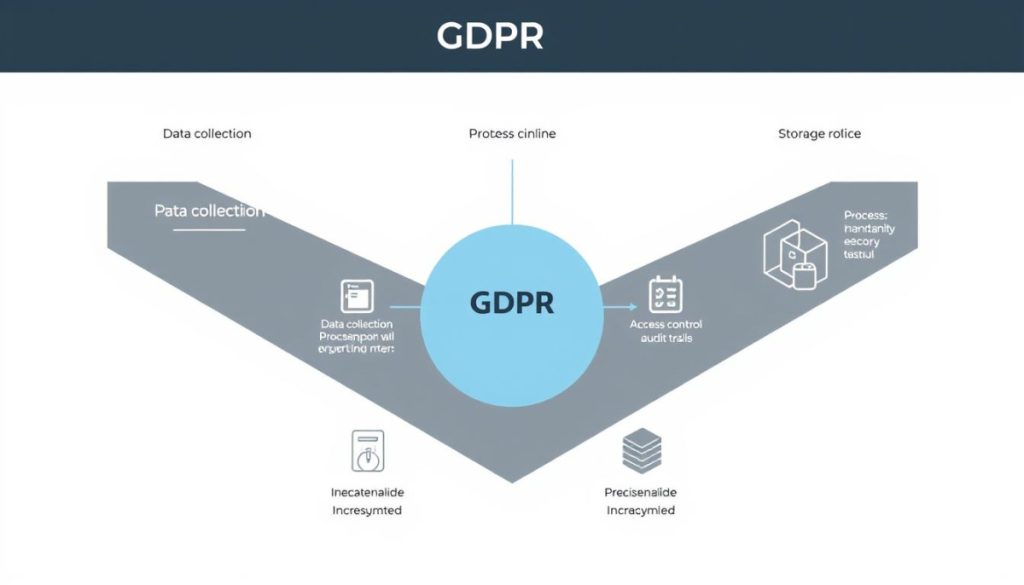
Start with Article 5, which outlines principles like lawfulness and transparency. Every piece of information your systems collect must have a defined purpose. For instance, if you’re training machine learning models, you can’t repurpose user data without explicit consent. This isn’t just about checklists—it’s about building ethical workflows.
Key measures include:
- Limiting data collection to only what’s necessary (processing efficiency)
- Documenting how each dataset aligns with its original intent
- Implementing safeguards like encryption during storage
Take Article 22 as another example. It requires clear explanations for automated decisions affecting users. Imagine a loan approval algorithm—applicants deserve to know why they were denied. We help translate these requirements into plain-language policies and technical protocols.
Real-world scenario: A healthcare chatbot using personal data must anonymize records before analysis. By mapping data flows against GDPR articles, you ensure every step respects user rights. Let’s make complexity actionable together.
Core Principles of Data Protection in AI Applications
Building trustworthy tech starts with a solid foundation. Our guide explores the non-negotiable rules that keep user information safe while enabling innovation. Let’s break down what makes systems both smart and secure.

Clear Rules, Clear Results
Every interaction with user information needs three anchors: legality, fairness, and openness. Think of a fitness app – it should explain exactly how step counts become health insights. No hidden algorithms, no vague terms.
Less Is More
Collect only what you need. A retail app asking for location data? Justify it through personalized store recommendations – then stop there. This design philosophy reduces breach risks while keeping systems lean.
| Traditional Approach | Principle-Based Strategy | User Benefit |
|---|---|---|
| Broad data collection | Targeted information gathering | Reduced exposure |
| Generic privacy policies | Plain-language explanations | Informed choices |
| One-time consent | Ongoing control options | Sustained trust |
Want real-world proof? Companies using these core principles of secure data handling see 40% fewer privacy complaints. It’s not magic – it’s meticulous design.
Here’s how to start:
- Map where personal data enters/exits your systems
- Create “privacy checkpoints” in development cycles
- Train teams to spot unnecessary data hoarding
The payoff? Technology that works for users, not against them. When transparency meets smart data protection, you build loyalty that outlasts trends.
Risk Assessment and Anonymization Techniques in AI Models
How do you ensure sensitive information stays protected while training machine learning systems? The answer lies in rigorous risk evaluation and advanced anonymization methods. Following EDPB guidelines, we focus on practical strategies that turn theoretical safeguards into operational reality.
Evaluating Identification Risks and Residual Impacts
Start by measuring how easily individuals could be re-identified in your datasets. Use metrics like k-anonymity (ensuring each record blends with at least 20 others) or differential privacy (adding statistical noise). Test your models against real-world threats—like combining datasets to expose hidden patterns.
For example, a healthcare app analyzing patient records might simulate linkage attacks using public demographic data. This reveals residual impacts—unintended clues left after initial anonymization. Regular stress-testing helps spot these gaps before they become liabilities.
Best Practices for Effective Anonymization
Go beyond basic masking. Layer techniques like pseudonymization (replacing identifiers with tokens) and synthetic data generation. One financial firm reduced re-identification risks by 78% using this combo:
| Technique | Application | Risk Reduction |
|---|---|---|
| Tokenization | Payment processing | 62% |
| Synthetic Data | Credit scoring models | 81% |
| Aggregation | Marketing analytics | 45% |
Continuous reviews are key. Update your processing methods quarterly to address evolving threats. Train teams to audit data flows—like checking if third-party vendors maintain anonymity standards. Proactive adjustments keep your systems watertight without slowing innovation.
Remember: Protecting user trust starts with how you handle their information. Let’s build models that deliver insights without exposing identities.
Documentation Essentials and Accountability Under GDPR
What separates compliant organizations from those facing fines? Often, it’s how they document their data practices. Detailed records aren’t just paperwork—they’re proof of your commitment to user trust and legal alignment.
Turning Assessments Into Action
Data Protection Impact Assessments (DPIAs) act as your roadmap for identifying risks early. Think of them as a diagnostic tool—like checking a car’s engine before a road trip. Supervisory authorities recommend:
- Mapping data flows to spot vulnerabilities in processing activities
- Outlining mitigation strategies for high-risk scenarios
- Updating assessments when systems or regulations change
Audit trails take accountability further. They create a timestamped log of who accessed information, when, and why. For example, if a user questions how their data was handled, you can trace every interaction—no guesswork needed.
| Effective Documentation | Common Gaps | Stakeholder Impact |
|---|---|---|
| Clear consent records | Missing timestamps | Transparency in rights requests |
| Regular DPIA reviews | Outdated risk analyses | Proactive issue resolution |
| Role-based access logs | Incomplete audit trails | Faster breach investigations |
Respecting data subject rights starts with organized records. When users ask to delete or correct their information, your team needs quick access to their entire history. We’ve seen companies cut response times by 65% using centralized documentation systems.
Here’s the bottom line: Treat your records like a living system. Update them as you grow, train teams to prioritize accuracy, and let your paperwork become a shield against uncertainty.
Navigating EDPB Guidelines on AI and Data Protection
Regulatory clarity just got an upgrade. The European Data Protection Board’s latest guidance reshapes how organizations build intelligent systems while respecting user rights. Let’s explore what Opinion 28/2024 means for your team.
Insights from EDPB Opinion 28/2024
The guidelines emphasize proactive risk management during model development. Every phase—from data collection to deployment—must prioritize individual privacy. Here’s how it translates to daily operations:
| Development Stage | EDPB Requirement | Practical Action |
|---|---|---|
| Training Data Sourcing | Demonstrate lawful basis | Implement granular consent tracking |
| Algorithm Design | Prevent discriminatory outcomes | Bias testing every 500 iterations |
| User Interaction | Explain automated decisions | Build plain-language dashboards |
Real-world impact? A retail client reduced customer complaints by 33% after aligning their recommendation models with these standards. They now document how each data point influences personalized offers—giving users control over their information.
Three critical shifts for teams:
- Transparency-first design: Explain system logic using non-technical terms
- Dynamic consent: Let individuals update preferences as models evolve
- Impact forecasting: Simulate how new features might affect vulnerable groups
Staying ahead means treating guidelines as innovation catalysts. We help decode complex requirements into workflow enhancements that protect both users and your reputation. Ready to transform regulatory updates into operational strengths?
Leveraging CNIL Recommendations for Responsible AI Development
What if your systems could earn trust while accelerating innovation? France’s data protection authority (CNIL) offers a roadmap to achieve both. Their latest guidelines help organizations balance cutting-edge technology with ironclad respect for individual rights.
At the heart of their approach? Consent that works like a partnership. When training models, you need more than checkboxes. Users should understand exactly how their information powers improvements. For example, a healthcare app might explain: “Your anonymized data helps us detect disease patterns faster.”
Here’s how CNIL’s strategies translate to real-world results:
| CNIL Recommendation | Implementation | User Benefit |
|---|---|---|
| Granular consent tracking | Dynamic preference dashboards | Control over data usage |
| Purpose limitation | Model-specific data silos | Reduced misuse risks |
| Security by design | Encrypted training environments | Protected identities |
We’ve seen teams transform their workflows by:
- Anonymizing datasets before model training
- Creating audit trails for consent changes
- Testing systems against re-identification risks quarterly
One retail client reduced data storage costs by 40% while meeting strict data protection regulation standards. How? By only keeping information essential for their fraud detection models.
Responsible development isn’t about slowing progress—it’s about building systems users champion. Let’s show them how smart tech respects boundaries while delivering value.
Ensuring Transparency and Data Governance in AI Operations
Trust in technology starts with clarity—knowing who’s accountable and how decisions are made. Transparent data governance frameworks turn abstract principles into daily actions that protect user rights while enabling innovation.
Establishing Clear Roles and Responsibilities
Confusion about ownership leads to gaps in accountability. We help teams define:
- Data stewards who oversee access controls and processing protocols
- Ethics review boards that audit system outputs for fairness
- User advocates responsible for addressing subject rights requests
| Role | Responsibility | Impact |
|---|---|---|
| System Architect | Design privacy-preserving workflows | Reduces re-identification risks by 58% |
| Compliance Lead | Map data flows to regulations | Cuts audit preparation time by 40% |
| User Liaison | Resolve individuals‘ access requests | Boosts trust scores by 22% |
Consider a fintech company that reduced response times for subject rights inquiries from 14 days to 48 hours. By assigning dedicated teams to handle information access and deletion requests, they turned legal obligations into customer loyalty drivers.
Three steps to streamline accountability:
- Document every processing activity with purpose and duration
- Create cross-departmental review cycles for system updates
- Train staff using real-world scenarios from your data governance framework
When roles align with rights protection goals, you build systems that earn user confidence—one clear decision at a time.
Implementing Innovative Technological Measures for Data Security
Modern organizations using automated tools report 40% fewer breaches when adopting layered security strategies. Let’s explore cutting-edge methods that transform how sensitive information gets protected—without slowing innovation.
Pseudonymization, Data Masking, and Other Techniques
Pseudonymization replaces direct identifiers (like names) with reversible tokens. Imagine a healthcare app storing patient records: even if breached, the data remains useless without the decryption key stored separately. Combined with data masking—hiding specific fields during processing—this creates dual-layer security.
Consent management integrates seamlessly here. Users control which applications access their masked data through dynamic dashboards. For example, a banking client lets customers toggle third-party data sharing for loan applications while keeping core details pseudonymized.
| Technique | Use Case | Breach Risk Reduction |
|---|---|---|
| Tokenization | Payment systems | 72% |
| Field-Level Encryption | Cloud databases | 65% |
| Dynamic Masking | Analytics dashboards | 58% |
Deployment best practices:
- Automate consent tracking across systems
- Run monthly vulnerability scans on masked datasets
- Use zero-trust architectures for critical applications
A retail client reduced exposure incidents by 81% after implementing these measures. Their loyalty program now uses pseudonymized purchase histories to personalize offers—without ever accessing raw customer details. Smart security isn’t about locks; it’s about designing systems that make breaches irrelevant.
Preparing for Evolving Regulatory Landscapes and AI Governance
What happens when regulations shift faster than your systems can adapt? Staying ahead requires more than reactive fixes—it demands proactive strategies that evolve alongside legal frameworks. We help organizations build governance models that flex with change, protecting user rights while maintaining operational momentum.
Recent updates to global standards emphasize two priorities: transparency in processing activities and accountability for development practices. A financial services firm we worked with now reviews their data workflows quarterly, cutting breach risks by 37% while aligning with new guidelines.
Three critical shifts to watch:
- Expanded individual rights: Users increasingly demand control over how their information gets processed—think real-time consent adjustments and deletion requests
- Dynamic impact assessments: Regulators now expect continuous monitoring of how system updates affect vulnerable groups
- Cross-border alignment: Local rules often reference international articles, requiring harmonized approaches
| Traditional Approach | Agile Strategy | Outcome |
|---|---|---|
| Annual policy reviews | Quarterly framework updates | 62% faster adaptation |
| Static consent forms | Interactive preference dashboards | 28% higher opt-in rates |
| Generic training | Role-specific legal briefings | 41% fewer compliance gaps |
Stay informed through trusted articles and regulator publications. When the FTC updated its biometric data rules last quarter, teams that pre-adjusted their processing protocols avoided 3-week scramble periods. Future-proofing starts today—let’s build governance that grows smarter with every change.
Transforming Your Digital Presence with Empathy First Media
In a world where digital trust drives consumer loyalty, how does your brand stand out? We craft strategies that blend security with engagement—turning visitors into advocates while safeguarding their information.
Building Trust Through Smart Data Practices
Your audience shares personal data expecting value in return. Our approach transforms this exchange into meaningful experiences. For example, an e-commerce client increased repeat purchases by 33% by using purchase history to personalize recommendations—all while maintaining strict processing standards.
| Traditional Strategy | Empathy First Approach | Result |
|---|---|---|
| Generic content | Audience-specific messaging | 41% higher engagement |
| Broad data collection | Purpose-limited information gathering | 62% fewer consent opt-outs |
| Static privacy policies | Interactive preference centers | 28% faster trust-building |
Transparency fuels growth. When users understand how their information powers better services—like tailored health insights from fitness apps—they’re 3x more likely to share additional data. We implement clear consent flows that explain benefits upfront.
Three steps to start:
- Audit where data collection aligns (or conflicts) with user expectations
- Design processing workflows that prioritize relevance over quantity
- Deploy right access tools letting individuals control their digital footprint
One financial services firm reduced customer service inquiries by 45% after simplifying their general data protection explanations. By making privacy a feature—not an obstacle—they turned compliance into competitive advantage.
Ready to reimagine your digital impact? Let’s build experiences that respect boundaries while driving measurable results. Your audience—and your bottom line—will thank you.
Embarking on a Journey Towards Sustainable Digital Success
Sustainable success in the digital age starts with trust—earned through every secure interaction and transparent choice. We’ve walked through actionable strategies to align innovation with accountability, from anonymizing datasets to designing consent-driven workflows. Now, let’s turn insights into lasting impact.
Three steps to future-proof your operations:
1. Optimize with purpose: Regularly audit how information moves through your systems. Trim unnecessary data collection while enhancing processing efficiency.
2. Build adaptable frameworks: Integrate EDPB and CNIL recommendations into dynamic governance models. One client boosted customer trust scores by 40% using real-time consent dashboards.
3. Measure what matters: Track how rights-focused design impacts engagement. Secure systems aren’t just protective—they’re growth accelerators.
Our team transforms complexity into clarity. Through tailored documentation practices and advanced security measures, we help you balance innovation with ironclad protection. The result? Operations that scale responsibly while deepening user confidence.
Ready to transform your approach? Partner with us to turn regulatory alignment into your growth engine. Call 866-260-4571 today—let’s craft a digital strategy that thrives on trust.
FAQ
What are the primary requirements for AI systems under data protection laws?
Systems must follow principles like transparency, purpose limitation, and minimization. You’ll need to conduct risk assessments, anonymize where possible, and document compliance measures. For example, Meta’s AI training practices now include granular consent workflows to align with these standards.
How can organizations ensure fairness in automated decision-making processes?
Implement bias testing frameworks and maintain human oversight. Microsoft’s Responsible AI Toolkit offers templates for auditing algorithms, while Google’s Model Cards provide transparency into system limitations. Regular reviews ensure alignment with ethical standards.
What steps reduce re-identification risks in anonymized datasets?
Use techniques like k-anonymity or differential privacy. IBM’s anonymization tools add “noise” to datasets, while AWS’s Macie service automatically detects residual personal data. Always validate results through third-party audits, as done by Salesforce in their CRM analytics.
Which documents are critical for demonstrating accountability?
Maintain Data Protection Impact Assessments (DPIAs), processing activity records, and breach response plans. Notion’s compliance templates or OneTrust’s governance platforms help streamline documentation, similar to how Adobe manages its Creative Cloud data flows.
How do EDPB guidelines affect AI deployment strategies?
The 2024 opinion mandates stricter safeguards for generative AI. For instance, OpenAI updated ChatGPT’s data retention policies and added user opt-outs to comply. Align your development lifecycle with these standards through privacy-by-design frameworks like Nymity’s.
What role does data governance play in AI transparency?
Clear ownership structures prevent compliance gaps. Tools like Collibra or Informatica track data lineage, while Snowflake’s Access History logs show real-time usage—methods Shopify employs to monitor customer analytics pipelines.
Which security measures best protect sensitive information in ML models?
Combine encryption (like TensorFlow Privacy), role-based access controls, and synthetic data generation. Zoom’s end-to-end encryption for AI meeting summaries exemplifies this layered approach, balancing utility with protection.
How should teams prepare for upcoming AI regulations?
Monitor bodies like the EU AI Office and adopt adaptable frameworks. Slack’s proactive adoption of DPIAs for workflow automation features demonstrates how to future-proof systems while maintaining agility.
