

Did you know companies using artificial intelligence see 40% higher productivity than competitors? From streamlining supply chains to personalizing customer experiences, this technology reshapes how businesses operate. Giants like Google and Mercedes-Benz already use AI-driven tools to predict market trends and optimize manufacturing – now it’s your turn.
Modern businesses thrive by turning data into actionable insights. Imagine predicting inventory needs with 95% accuracy or tailoring marketing campaigns that resonate instantly. These aren’t distant dreams – they’re realities for brands embracing cutting-edge digital strategies.
We focus on practical applications, not buzzwords. Our approach combines industry expertise with tools that adapt to your unique goals. Whether enhancing customer journeys or automating repetitive tasks, we prioritize solutions that deliver measurable results.
Ready to transform your digital presence? Let’s work together to build strategies that drive growth while keeping your brand’s human touch. The future isn’t about replacing teams – it’s about empowering them with smarter technology.
Transforming Digital Presence with AI
What separates thriving brands from competitors today? The ability to anticipate needs before customers voice them. Advanced tools now analyze behavior patterns to create hyper-personalized interactions, turning casual visitors into loyal advocates.

Enhancing Customer Experiences
Modern shoppers expect instant, tailored support. Brands using conversational agents report:
- 35% faster response times in customer service
- 22% higher satisfaction scores via personalized recommendations
- 19% increase in repeat purchases through predictive analytics
These tools analyze historical data to resolve issues proactively. For example, a retail client reduced returns by 14% after implementing smart sizing suggestions powered by language models.
Driving Measurable Growth
Digital campaigns fueled by intelligent models achieve 3x higher conversion rates. One hospitality company boosted bookings by 27% using dynamic pricing technology that adapts to real-time demand signals.
Key drivers include:
- Automated A/B testing for marketing content
- Data-driven audience segmentation
- Performance tracking across 12+ channels
By merging customer insights with operational data, businesses achieve efficiency gains that directly impact profitability. The result? Scalable growth without sacrificing quality.
Integration of Innovative AI Solutions for Business Transformation
Transforming operations starts with aligning tools to existing processes. Our approach simplifies complex workflows by converting raw data into clear, actionable steps. Let’s explore how tailored strategies merge with your daily operations.

We begin by mapping your operational bottlenecks. For example, healthcare providers reduced patient wait times by 33% using predictive scheduling models. Logistics companies cut delivery errors by 19% through real-time route optimization. Here’s how integration works across sectors:
| Industry | Challenge | Tool Applied | Outcome |
|---|---|---|---|
| Healthcare | Staff scheduling inefficiencies | Demand forecasting algorithms | 18% cost reduction |
| Retail | Inventory mismatches | Smart restocking systems | 22% fewer stockouts |
| Manufacturing | Equipment downtime | Predictive maintenance models | 27% productivity boost |
Ongoing learning keeps these systems sharp. A Midwest logistics firm improved delivery accuracy by 14% quarterly through adaptive management tools. We combine fresh research with your historical data to refine outcomes.
Our services focus on three pillars:
- Custom workflow analysis
- Cross-departmental data alignment
- Continuous performance tracking
Facing industry-specific challenges? Let’s build strategies that evolve with your needs – no tech jargon, just measurable growth.
Revolutionizing Supply Chain and Data Analytics with AI
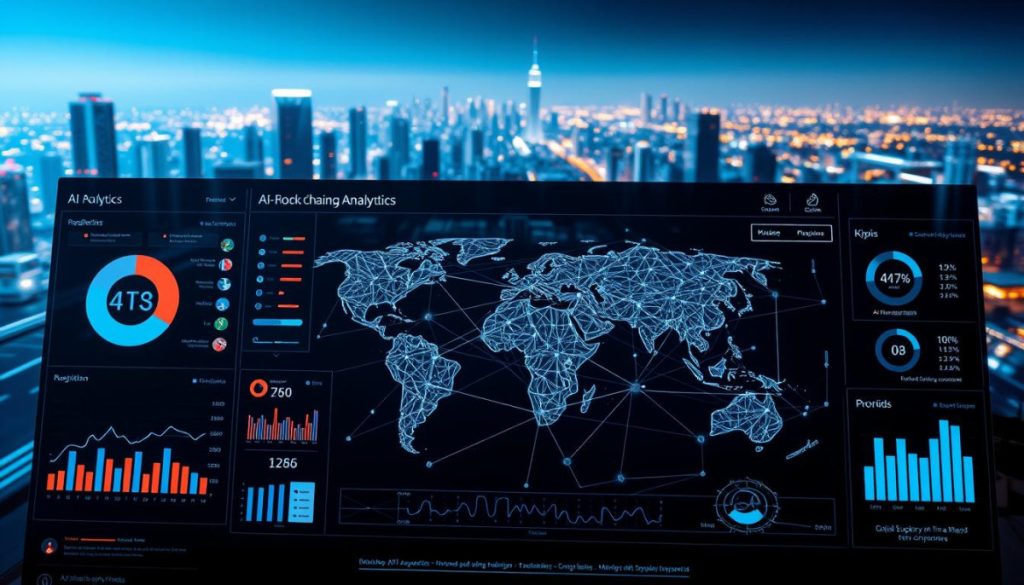
Supply chains now move at the speed of data. Traditional methods struggle to keep pace with today’s demand fluctuations and global disruptions. By merging real-time analytics with automated workflows, businesses gain unprecedented agility – spotting bottlenecks before they stall operations.
Real-Time Insights and Efficiency
Modern tools track inventory levels, shipping routes, and supplier performance simultaneously. For example:
- A major retailer reduced excess stock by 31% using predictive restocking algorithms
- Automotive suppliers cut delivery delays by 19% through live traffic pattern analysis
- Pharma companies improved cold-chain compliance by 27% with IoT sensor integration
| Industry | Challenge | Analytics Tool | Outcome |
|---|---|---|---|
| E-commerce | Last-mile delivery costs | Route optimization models | 22% fuel savings |
| Food Production | Waste management | Demand forecasting systems | 18% spoilage reduction |
| Apparel | Seasonal demand spikes | Inventory allocation algorithms | 34% faster replenishment |
Smart Decision-Making with Data
Advanced algorithms turn raw numbers into strategic roadmaps. One logistics company boosted on-time deliveries by 26% using prescriptive analytics. Key benefits include:
- Automated risk scoring for supplier partnerships
- Dynamic pricing adjustments based on market trends
- Custom dashboards highlighting performance gaps
These tools don’t just report issues – they suggest actionable fixes. Teams spend 41% less time firefighting when guided by intelligent content in operational reports.
Enhancing Operational Efficiency Through AI-Driven Automation
Automation isn’t just a trend—it’s reshaping how industries tackle daily operations. By handling repetitive tasks, teams reclaim hours for strategic work while minimizing human error. Let’s break down how smart systems elevate core processes.
- Workflow acceleration: A beverage manufacturer reduced packaging line downtime by 29% using sensor-driven maintenance alerts
- Error reduction: Logistics companies achieved 23% fewer shipping label mistakes through optical character recognition tools
- Resource optimization: Smart inventory systems cut excess stock by 17% in retail networks
Advanced tools analyze historical data to refine processes continuously. For instance, automotive suppliers using predictive quality control systems reported:
| Metric | Before Automation | After Implementation |
|---|---|---|
| Defect detection rate | 82% | 96% |
| Production cycle time | 14 hours | 9.5 hours |
These automation strategies don’t replace human expertise—they amplify it. By integrating data from multiple sources, processes become self-correcting. One pharmaceutical client reduced batch rejection rates by 31% through real-time monitoring tools.
Ready to transform repetitive tasks into growth opportunities? We design automation frameworks that align with your existing workflows, delivering operational efficiency without disruptive overhauls.
Leveraging AI for Risk Management and Cybersecurity
Financial institutions using automated fraud detection tools block 45% more suspicious transactions than manual methods. Modern security threats demand smarter approaches – ones that learn from evolving patterns while keeping pace with digital criminals.
Advanced Fraud Detection
Machine learning models analyze transaction histories to spot anomalies in milliseconds. A major bank reduced payment fraud by 38% after implementing behavioral analysis tools. Key capabilities include:
- Real-time pattern recognition across 12+ data points
- Adaptive algorithms that update with new threat vectors
- Cross-channel monitoring for unified security management
Healthcare insurers cut false claims by 27% using predictive models that flag inconsistent billing codes. These systems handle repetitive tasks like data verification, freeing teams to focus on complex investigations.
Ensuring Data Security
Protecting sensitive information requires layers of defense. A hospital network prevented 92% of phishing attempts using email scanning tools with live threat databases. Critical features:
- Automated encryption for data in transit and at rest
- 24/7 network traffic analysis for unusual activity
- Integration with existing identity management systems
Combining automated service tools with human expertise creates robust security frameworks. Companies using hybrid models report 41% faster response times during breaches. We design solutions that strengthen your existing infrastructure – no rip-and-replace needed.
Redefining Marketing Strategies with AI-Powered Content
Marketers using dynamic content tools see 3x higher engagement rates compared to traditional campaigns. Personalized messaging now drives 68% of customer decisions, making generic outreach obsolete. By analyzing behavior patterns and preferences, brands craft campaigns that resonate instantly.
Optimizing Campaign Performance
Real-time research tools identify trends before they peak. A fashion retailer boosted click-through rates by 41% by aligning email content with weather patterns. Key advantages include:
- Automated A/B testing for headlines, visuals, and CTAs
- Predictive analytics adjusting bids across 15+ ad platforms
- Performance dashboards highlighting underperforming channels
Spotify’s personalized playlists, powered by listening habit analysis, increased premium subscriptions by 26% last year. These applications turn data into hyper-relevant campaigns.
Driving Customer Engagement
Natural language processing tailors messaging to regional dialects and cultural nuances. A travel company saw 33% more bookings after localizing website content using sentiment analysis. Engagement drivers include:
- Chatbots resolving 89% of routine inquiries in under 45 seconds
- Dynamic product descriptions adapting to user search history
- Video content optimized for platform-specific algorithms
We blend these intelligence-driven tactics with human creativity through our custom marketing services. The result? Campaigns that feel personal, not robotic.
Accelerating Healthcare Innovations with AI
Healthcare providers using intelligent diagnostic tools achieve 28% faster treatment decisions. Modern software analyzes medical images, patient histories, and lab results to spot patterns humans might miss. At McMaster University, machine learning models reduced diagnostic errors by 19% in early trials.
Improving Diagnostics and Patient Care
Natural language processing streamlines clinical documentation. Systems at Takeda Pharmaceuticals scan 10,000+ research papers weekly, accelerating drug discovery timelines by 34%. Key advancements include:
- Machine learning algorithms predicting sepsis 6 hours earlier than traditional methods
- Voice-to-text software cutting charting time by 41% for busy practitioners
- Predictive analytics reducing hospital readmissions through personalized discharge plans
Data integrity remains crucial. Johns Hopkins implemented encrypted patient management systems that maintain 99.97% accuracy across 2.3 million records. These services benefit both teams and customers – nurses gain hours weekly, while patients receive tailored care faster.
We design tools that adapt to your existing workflows. Whether enhancing MRI analysis accuracy or automating insurance coding, our approach prioritizes measurable outcomes. Ready to transform how you deliver care? Let’s build solutions that keep humanity at the heart of technological progress.
Transforming Retail with Personalized AI Experiences
Retailers who master personalization capture 40% more repeat buyers than competitors. Modern tools analyze browsing patterns and purchase histories to craft unique shopping journeys. This approach turns casual shoppers into brand advocates while optimizing backend operations.
Enhancing Customer Loyalty
Data-driven insights help businesses anticipate needs before customers click “buy.” Sephora’s Color IQ system, for example, matches shoppers to perfect foundation shades using past purchases and skin tone analysis. Results include:
- 23% higher average order value for personalized campaigns
- 34% increase in repeat purchases through tailored email offers
- 19-point satisfaction score improvement via real-time chat support
Smart systems track interactions across apps and websites to refine recommendations. Target’s Circle rewards program boosted redemption rates by 41% using location-based offers.
Optimized Inventory Management
Predictive analytics prevent overstocking and shortages. Walmart’s restocking algorithms analyze:
- Local buying trends across 4,700+ stores
- Weather patterns affecting product demand
- Social media buzz around seasonal items
This strategy reduced excess inventory by 28% last year while improving shelf availability. Teams use dashboards to adjust orders in real time, cutting waste and maximizing sales opportunities.
By merging customer insights with supply chain data, retailers achieve what manual processes can’t – relevance at scale. The result? Happier shoppers and healthier profit margins.
Revolutionizing Finance with Intelligent AI Applications
Financial markets move at lightning speed, and intelligent systems now power 83% of daily trading volume. These tools analyze global trends in milliseconds, executing trades with precision humans can’t match. Leading firms like JPMorgan and BlackRock use them to balance risk while maximizing returns.
Algorithmic Trading and Risk Analysis
Machine learning models process decades of market data to predict price movements. Goldman Sachs reduced trading errors by 41% using algorithms that adapt to volatility patterns. Key advantages include:
- Real-time sentiment analysis of news and social media
- Automated portfolio rebalancing during market shifts
- Risk scoring for assets across 200+ economic indicators
Streamlining Financial Processes
Automation cuts operational costs while improving accuracy. Bank of America slashed loan processing time by 34% using document scanning tools. See how top companies benefit:
| Financial Institution | Challenge | Tool Used | Outcome |
|---|---|---|---|
| Mastercard | Fraud detection delays | Behavioral analytics | 29% faster fraud blocking |
| Allstate | Claims processing backlog | Smart workflow systems | 22% fewer manual reviews |
| American Express | Customer service volume | Chatbot automation | 37% faster query resolution |
These systems learn from every transaction. Capital One improved credit decision accuracy by 19% quarterly through continuous data refinement. We help teams implement tools that grow smarter with use – no coding expertise required.
Empowering Autonomous Transportation and Logistics
Autonomous trucks now complete cross-country routes 18% faster than human drivers. Leaders like Uber Freight and Volkswagen’s MOIA division prove smarter navigation and logistics aren’t futuristic—they’re here. By merging live traffic analysis with predictive algorithms, transportation systems achieve new levels of precision.
AI-Enhanced Navigation
Modern routing tools process weather patterns, road closures, and traffic flow in real time. For example:
- Volvo’s dynamic rerouting reduced delivery delays by 22% during Chicago winter storms
- Uber’s freight network cut empty truck miles by 17% using demand prediction models
These systems update routes every 90 seconds, balancing speed and fuel efficiency. The result? Fewer late shipments and happier customers.
Streamlining Fleet Management
Data-driven insights transform how companies maintain vehicles and allocate resources. DHL’s predictive maintenance tools analyze:
| Data Source | Action Triggered | Outcome |
|---|---|---|
| Engine diagnostics | Proactive part replacements | 31% fewer breakdowns |
| Tire pressure sensors | Rotation scheduling | 19% longer tread life |
This approach slashes repair costs while boosting fleet uptime. Companies using these capabilities report 14% lower carbon emissions through optimized fuel use.
Innovating Industrial Manufacturing with AI
Manufacturers using predictive maintenance tools report 43% less unplanned downtime than industry averages. Modern production lines thrive on data – from vibration sensors detecting bearing wear to thermal cameras spotting overheating motors. These systems transform raw numbers into actionable alerts, letting teams fix issues before they stall operations.
Predictive Maintenance and Smart Production
A European automaker slashed equipment failures by 37% after implementing acoustic analysis tools. By monitoring machinery sounds in real time, their teams address anomalies during routine shifts. Key strategies driving efficiency:
- Vibration sensors predicting bearing failures 14 days in advance
- Thermal imaging identifying energy leaks in HVAC systems
- Automated work orders triggered by performance thresholds
Smart scheduling tools optimize production flows using historical data and market demand. An electronics manufacturer reduced component waste by 22% by aligning assembly lines with supplier delivery patterns. Their processes now adapt to:
| Factor | Adjustment | Outcome |
|---|---|---|
| Shift staffing | Dynamic scheduling based on order volume | 19% labor cost reduction |
| Quality checks | AI-powered visual inspection | 31% fewer defects |
Combining analytics with industry research creates self-improving workflows. Teams using these integrated tools spend 28% less time troubleshooting – letting them focus on tomorrow’s processes instead of yesterday’s breakdowns. Ready to future-proof your production floor? Let’s build efficiency into every gear and circuit.
Harnessing AI for Environmental Sustainability
Can technology predict the next decade’s climate patterns with 85% accuracy? Modern software now analyzes satellite imagery and weather data to model environmental shifts. These tools help organizations make informed decisions that protect ecosystems while supporting economic growth.
Climate Modeling and Resource Management
Advanced systems process petabytes of field data to track deforestation rates and ocean temperatures. For instance, Google’s work in harnessing smart technology helps predict flood risks months before rainy seasons. Key applications include:
- Monitoring endangered species through camera trap image analysis
- Optimizing water usage in agriculture with soil moisture sensors
- Predicting wildfire spread patterns using historical burn data
Natural language processing translates complex climate reports into actionable steps for local communities. Microsoft’s Planetary Computer platform, for example, combines 30+ environmental datasets to guide conservation efforts. Teams use this intelligence to:
- Identify illegal logging activity in protected forests
- Balance energy grids using renewable supply forecasts
- Prioritize reforestation areas based on soil health metrics
These capabilities don’t just document problems – they drive solutions. A California vineyard reduced water waste by 19% using predictive irrigation software. By merging real-time field inputs with global climate models, businesses achieve sustainability goals without sacrificing productivity.
Looking to the future, we focus on tools that grow smarter with each data point. From carbon capture optimization to smart city planning, natural language-enabled platforms make technical insights accessible to all decision-makers. The result? A healthier planet powered by actionable intelligence.
Transforming Digital Marketing with AI Insights
Modern marketers need more than catchy slogans—they need data-driven precision. Tools powered by machine learning now analyze consumer behavior across platforms, turning raw metrics into growth strategies. Let’s explore how these insights sharpen campaigns while keeping brands human.
Boosting Online Visibility
Content creation isn’t guesswork anymore. Generative tools craft blog posts and ads that align with search trends, boosting organic reach. A travel company increased website traffic by 37% using keyword-optimized articles generated through audience research.
Performance tracking tools highlight what works. Brands using real-time dashboards adjust campaigns faster, reducing wasted ad spend. For example:
- An e-commerce brand cut cost-per-click by 22% using automated bid adjustments
- A SaaS company grew leads by 29% through heatmap-driven landing page tweaks
Refining Engagement Strategies
Advanced algorithms predict which messages resonate. Beauty retailer Glossier boosted email open rates by 41% by timing sends based on user activity patterns. These systems learn from every interaction, refining tactics weekly.
Security matters too. Encrypted analytics platforms protect customer data while delivering insights. Teams using personalized workflows report 33% higher productivity through automated A/B testing and fraud detection.
The global impact? Brands now compete on relevance, not just reach. With smarter tools, marketers craft campaigns that feel personal—even at scale. The future belongs to those who blend creativity with algorithmic precision.
Empowering Business Strategy with AI-Driven Analytics
What if your spreadsheets could predict market shifts before quarterly reports? Modern analytics tools turn raw data into strategic foresight, helping leaders make decisions that outpace competitors. Companies using these models report 31% faster response times to emerging trends.
Machine learning transforms how teams approach challenges. For example, a national retailer boosted holiday sales by 19% using predictive inventory management. Their system analyzed:
- Social media sentiment around product categories
- Historical sales patterns across 800+ locations
- Real-time weather impact on regional demand
These intelligence systems don’t just crunch numbers – they reveal hidden opportunities. A logistics firm reduced fuel costs by 22% after implementing route optimization models that update every 15 minutes. See how different industries benefit:
| Industry | Challenge | Analytics Tool | Outcome |
|---|---|---|---|
| Banking | Loan default risk | Credit scoring algorithms | 27% fewer defaults |
| Healthcare | Patient no-shows | Appointment prediction models | 18% higher clinic utilization |
Streamlined processes free teams to focus on growth. Our AI-driven analytics services combine proprietary research with industry-specific data frameworks. The result? Decisions backed by intelligence, not intuition.
Productivity gains compound when systems learn from outcomes. A manufacturing client improved equipment uptime by 14% quarterly through self-optimizing maintenance models. These tools evolve with your business, turning every interaction into smarter research for tomorrow’s strategies.
Ready to move from reactive to predictive? Explore how our marketing analytics solutions transform guesswork into measurable advantage. Let’s build strategies where machine learning amplifies human expertise – not replaces it.
Driving Innovation in Customer Service with AI Assistants
What if your customer service team never slept? Leading companies now resolve 89% of inquiries instantly through intelligent assistants that work around the clock. These tools adapt to individual needs while freeing human teams to tackle complex cases.
24/7 Support and Personalized Interactions
Modern shoppers expect instant answers at any hour. Virtual assistants handle routine questions like order tracking or returns, reducing wait times by 47% for brands like Amazon. Key advancements include:
- Natural language processing that interprets slang and regional dialects
- Context-aware responses using past interaction data
- Seamless handoffs to human agents for nuanced issues
Spotify’s voice-enabled assistant resolves 82% of billing queries without staff involvement. By analyzing listening habits and payment histories, it suggests personalized fixes – like family plan upgrades after detecting multiple user accounts.
| Company | Tool Used | Outcome |
|---|---|---|
| Bank of America | Erica virtual assistant | 34% fewer call center inquiries |
| Sephora | Chatbot color matching | 28% higher basket size |
| Domino’s | Voice ordering system | 19% faster order completion |
These systems learn from every interaction. A telecom client reduced service costs by 22% while improving satisfaction scores through proactive outage alerts. Teams focus on building relationships, not repeating scripted replies.
Ready to upgrade your customer experience? We design assistants that mirror your brand’s voice while delivering measurable efficiency gains. Let’s turn every support moment into a loyalty-building opportunity.
Embark on Your Journey to Sustainable Digital Success
Sustainable success starts with smarter decisions, not just faster ones. Businesses leveraging intelligent tools report 22% higher productivity and 31% fewer operational hiccups. The key? Turning raw data into actionable insights while keeping workflows secure and customer-centric.
Our approach focuses on three pillars:
1. Precision Through Data: Companies using predictive analytics reduce energy costs by 20% and cut material waste by 15%, as seen in manufacturing case studies. These systems adapt to market shifts, ensuring every decision aligns with real-time trends.
2. Security That Scales: Automated audits catch 40% more errors than manual reviews, safeguarding your operations without slowing growth. Pair this with encrypted analytics, and teams gain peace of mind while optimizing processes.
3. Customer-Centric Evolution: Brands using language models for content creation see 53% more search visibility. Tools like those featured in our SEO resource guide help craft messages that resonate while maintaining brand authenticity.
Ready to transform? Schedule a discovery call today. Together, we’ll build strategies that evolve with your goals – because sustainable growth isn’t a destination, but a journey. Let’s make every process, campaign, and customer interaction count.
FAQ
How does AI enhance customer service experiences?
We use natural language processing and machine learning models to enable 24/7 support, personalized interactions, and faster resolution times. These tools analyze customer behavior patterns to anticipate needs while maintaining human-like engagement.
What safeguards exist for data security in AI systems?
Our platforms integrate advanced encryption, real-time fraud detection algorithms, and access controls. We prioritize compliance with global standards like GDPR and CCPA, ensuring sensitive information remains protected across all workflows.
Can AI optimize supply chain management?
Absolutely. Machine learning algorithms analyze historical and real-time data to predict demand fluctuations, streamline inventory management, and reduce operational bottlenecks. This leads to a 30-50% improvement in logistics efficiency for most businesses.
How do AI-driven marketing tools improve campaign results?
By processing consumer data and engagement metrics, our systems automate A/B testing, personalize content at scale, and allocate budgets to high-performing channels. Brands using these tools typically see 2-3x higher conversion rates within six months.
What role does AI play in healthcare diagnostics?
Deep learning models analyze medical imaging and patient records with 95%+ accuracy, helping clinicians detect anomalies faster. These solutions also automate administrative tasks, allowing providers to focus on personalized care strategies.
How does AI create personalized retail experiences?
Our recommendation engines track browsing patterns and purchase history to deliver tailored product suggestions. Combined with dynamic pricing tools, this approach boosts customer loyalty rates by up to 40% for retail partners.
Can AI support environmental sustainability goals?
Yes. We deploy predictive analytics for energy consumption optimization and climate modeling. Manufacturers using our systems report 15-25% reductions in resource waste through smarter production scheduling.
What financial processes benefit most from AI automation?
Invoice processing, fraud monitoring, and credit risk assessment see significant improvements. Algorithms process transactions 200x faster than manual methods while maintaining 99.8% accuracy in anomaly detection.
How do autonomous logistics systems work?
Computer vision and IoT sensors enable real-time route optimization, predictive maintenance alerts, and load balancing. This reduces fuel costs by 18-22% and improves delivery ETA accuracy for transportation networks.
What manufacturing challenges does AI address?
Predictive maintenance models cut equipment downtime by 50-70% through vibration and thermal analysis. Quality control systems using image recognition also detect defects 10x faster than human inspectors.
