

Mastering the PASO Framework for Search Intent: Transform Your SEO Content Strategy in 2025
Ever wondered why some content ranks at the top of Google while seemingly better articles languish on page three?
The secret isn’t just keywords or backlinks…
It’s understanding the psychology behind every search query and crafting content that matches both the searcher’s intent AND their emotional journey.
At Empathy First Media, we’ve discovered that combining the PASO Framework with search intent analysis creates content that not only ranks but converts.
Our founder Daniel Lynch has helped numerous clients achieve breakthrough results by applying this scientific approach to content optimization.
Here’s the thing:
Traditional search intent analysis tells you WHAT people are looking for. But it doesn’t tell you HOW to structure your content to maximize engagement and conversions.
That’s where the PASO Framework changes everything.
By mapping Problem, Agitation, Solution, and Outcome to each type of search intent, you create content that speaks directly to your audience’s needs at every stage of their journey.
Want to learn how to implement this game-changing approach?
Let’s dive into how the PASO Framework can revolutionize your search intent optimization strategy and help you create content that dominates the SERPs in 2025.
Schedule a Discovery Call to discuss how we can optimize your content strategy using the PASO Framework.
What Is the PASO Framework?
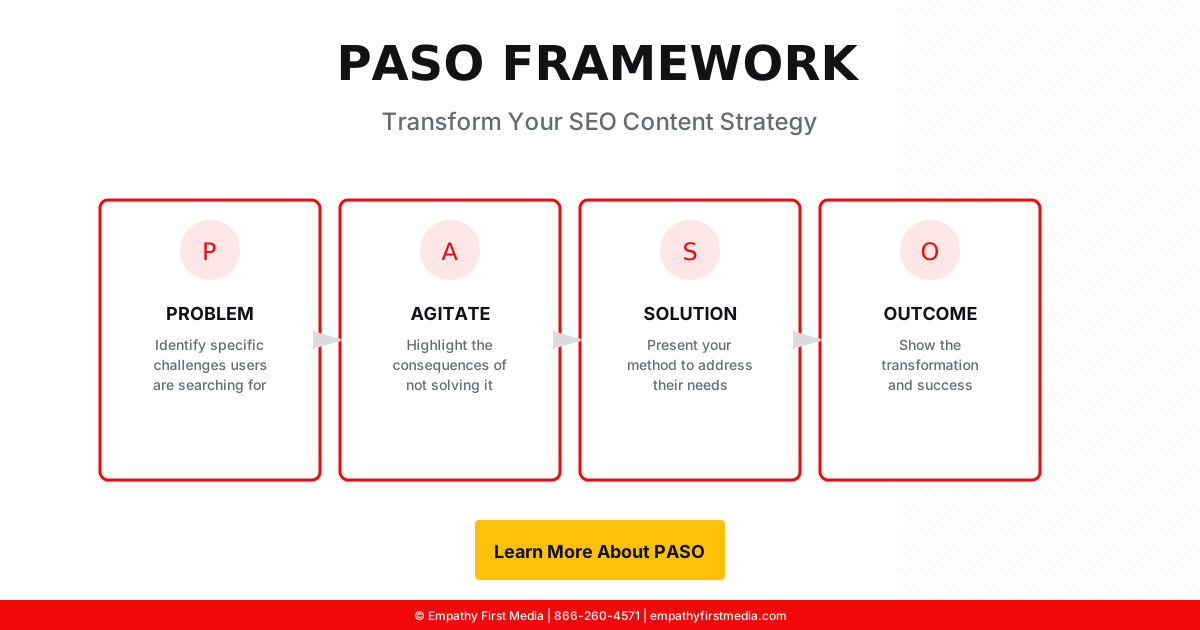
The PASO Framework is an enhanced version of the classic PAS (Problem-Agitate-Solution) copywriting formula that adds a crucial fourth element: Outcome.
Here’s how it breaks down:
Problem: Identify the specific challenge your audience faces
Agitate: Highlight the consequences and emotional impact of not solving the problem
Solution: Present your method for addressing the issue
Outcome: Paint a picture of success and transformation after implementing the solution
But here’s what makes PASO particularly powerful for SEO…
When you align this framework with search intent, you create content that not only ranks well but also guides readers through a complete transformation journey.
Think about it:
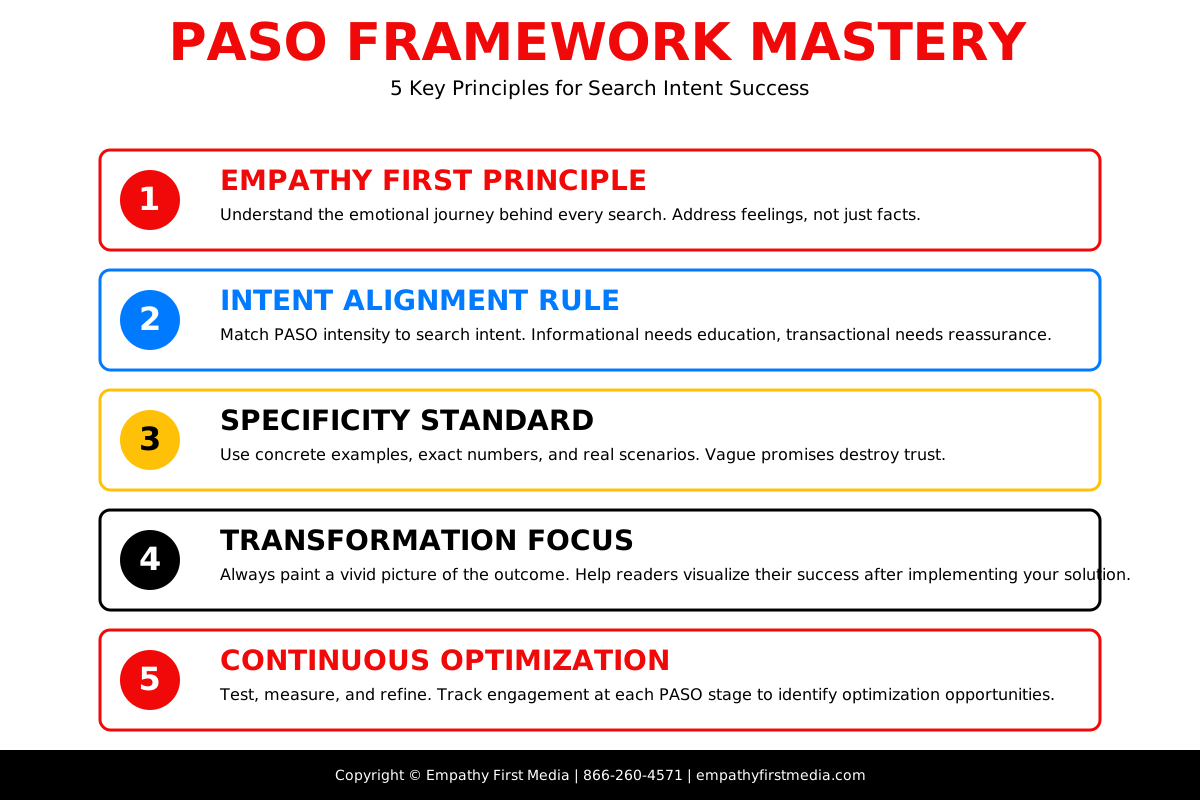
Every search query represents someone at a specific point in their problem-solving journey. By understanding where they are and what they need next, you can craft content that feels almost telepathic in its relevance.
Our content marketing services leverage this approach to create content that consistently outperforms traditional SEO strategies.
Understanding the Four Types of Search Intent
Before we can apply the PASO Framework effectively, we need to understand the fundamental types of search intent.
Google’s algorithms have become incredibly sophisticated at determining what users really want when they type in a query.
Here are the four primary types:
1. Informational Intent
Users are seeking knowledge or answers to specific questions. They’re in learning mode and want comprehensive, educational content.
Examples:
- “What is search intent?”
- “How to optimize for voice search”
- “Why is my website slo?w”
2. Navigational Intent
Searchers know exactly where they want to go. They’re using Google as a shortcut to reach a specific website or page.
Examples:
- “Empathy First Media login”
- “Facebook business page”
- “Google Analytics dashboard”
3. Commercial Investigation Intent
These users are comparing options and evaluating solutions. They’re not quite ready to buy but are actively researching.
Examples:
- “Best SEO tools 2025”
- “HubSpot vs Salesforce comparison”
- “Digital marketing agency reviews”
4. Transactional Intent
Ready-to-buy users who know what they want and are looking for the best place to get it.
Examples:
- “Buy SEO software”
- “Digital marketing services pricing”
- “Hire SEO consultant”
Understanding these intent types is crucial…
But knowing how to structure your content for each one? That’s where the PASO Framework becomes your secret weapon.
How PASO Transforms Each Search Intent Type
Let’s explore how to apply the PASO Framework to each search intent category for maximum impact.
PASO for Informational Intent
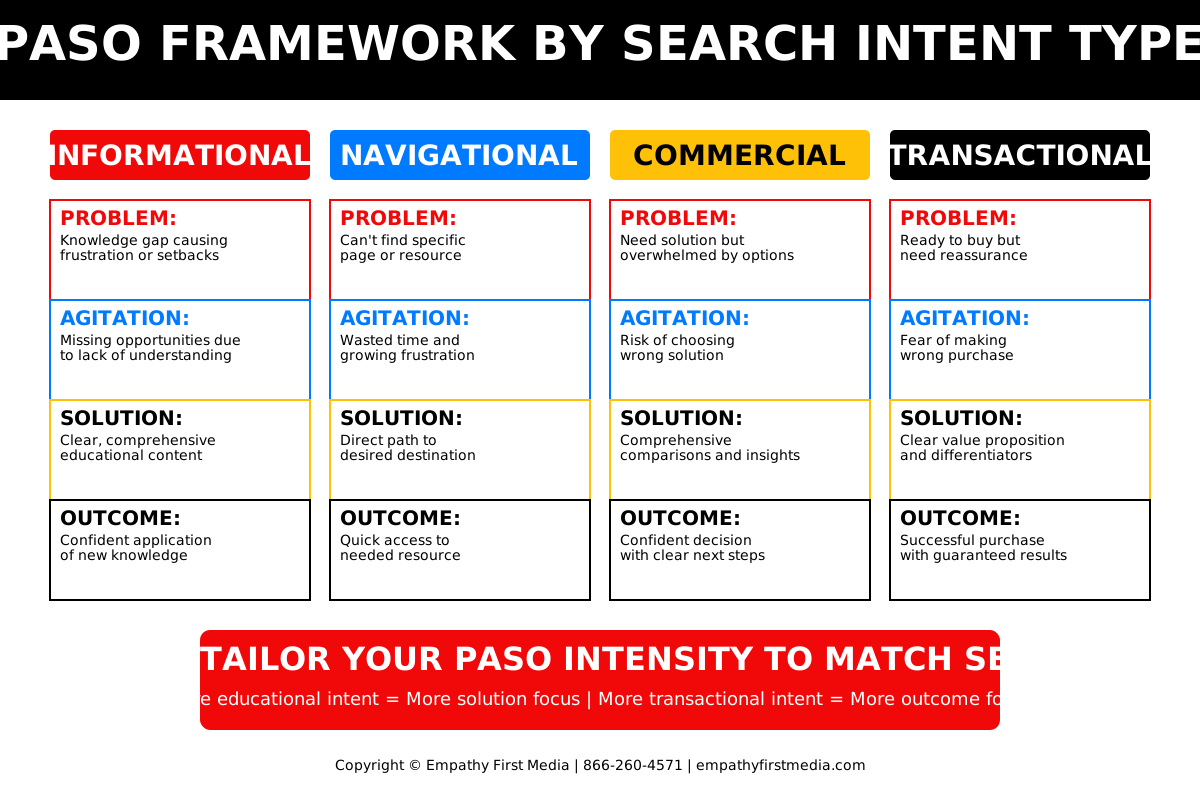
When users are seeking information, they have a knowledge gap that’s causing frustration or holding them back.
Problem: Start by acknowledging their knowledge gap or confusion
Agitate: Highlight what happens when this information isn’t understood
Solution: Provide clear, comprehensive information
Outcome: Show how this knowledge transforms their situation
Example for “What is technical SEO?”:
P: “You’ve heard technical SEO is important, but the jargon feels overwhelming.”
A: “Without understanding technical SEO, your perfectly written content might never be found.”
S: “Here’s a plain-English guide to technical SEO fundamentals.”
O: “With this knowledge, you’ll confidently optimize your site’s technical foundatio.n”
Our SEO services help businesses master both technical and content optimization.
PASO for Navigational Intent
Navigational searches require a different approach since users already know their destination.
Problem: Difficulty finding the exact resource or page they need
Agitate: Frustration from wasted time or wrong turns
Solution: Direct, clear navigation to their goal
Outcome: Quick access to exactly what they were seeking
This intent type benefits from minimal PASO application – focus on reducing friction.
PASO for Commercial Investigation Intent
This is where PASO truly shines. Users are problem-aware but solution-shopping.
Problem: Clearly define the challenge they’re trying to solve
Agitate: Explore the cost of choosing the wrong solution
Solution: Present comprehensive comparisons and insights
Outcome: Confident decision-making with clear next steps
Example for “Best email marketing platforms”:
P: “Choosing the wrong email platform can cripple your marketing efforts”
A: “Poor deliverability, limited features, or scaling issues cost thousands in lost revenue”
S: “We’ve tested 15 top platforms across 50+ criteria”
O: “Select the perfect platform for your specific needs and budget”
PASO for Transactional Intent
Users with transactional intent need reassurance more than education.
Problem: Risk of making the wrong purchase decision
Agitate: Consequences of choosing the wrong provider
Solution: Clear value proposition and differentiators
Outcome: Success stories and guaranteed results
Our paid search management team uses PASO principles to create high-converting landing pages.
Implementing PASO in Your Content Strategy
Ready to put the PASO Framework into action?
Here’s a step-by-step process for implementing it in your content strategy:
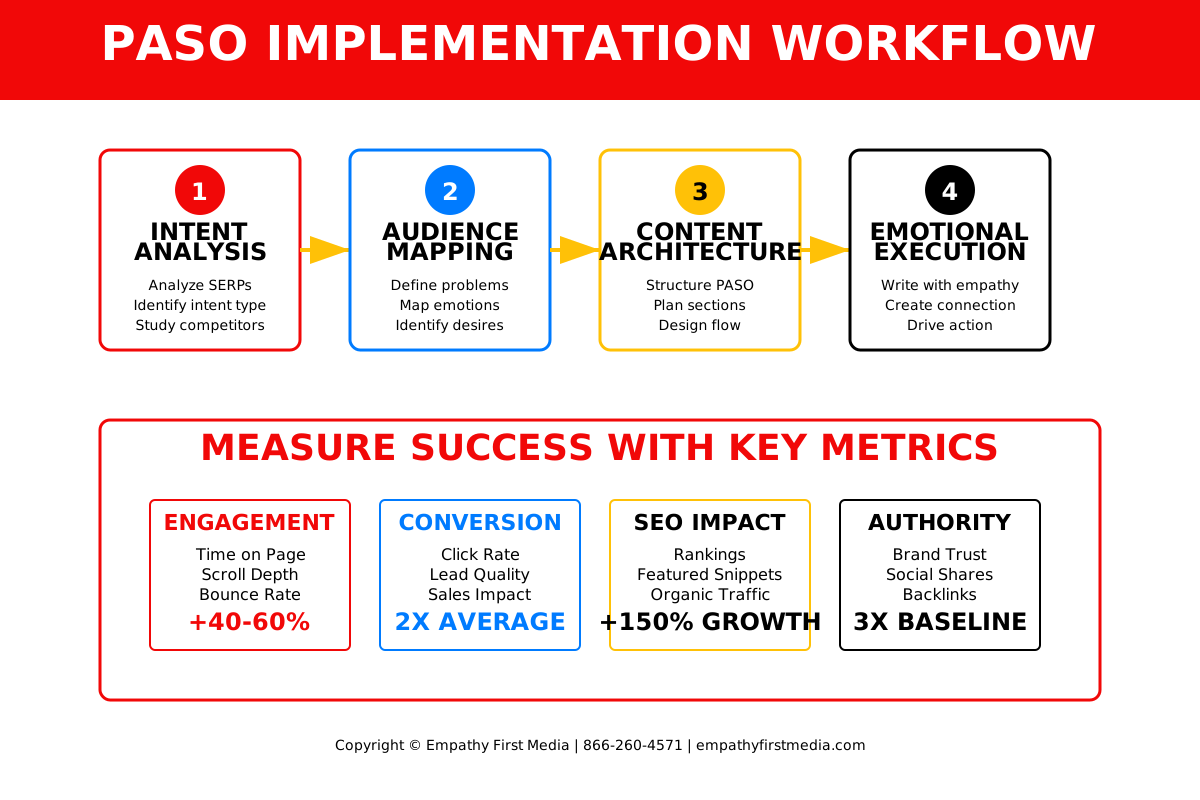
Step 1: Intent Analysis
Before writing a single word, analyze the search intent behind your target keywords.
Look at:
- Current top-ranking pages
- SERP features (featured snippets, People Also Ask)
- Search query modifiers
- User behavior signals
Tools like Google Search Console and our analytics services can provide valuable insights.
Step 2: Audience Mapping
Understand where your audience is in their journey.
Ask yourself:
- What problem brought them to this search?
- What emotions are they experiencing?
- What transformation are they seeking?
- What objections might they have?
This deep understanding forms the foundation of effective PASO implementation.
Step 3: Content Architecture
Structure your content to guide readers through the PASO journey naturally.
For blog posts:
- Hook with the problem (first 1-2 paragraphs)
- Agitate strategically (next 2-3 paragraphs)
- Present solutions comprehensively (main body)
- Paint the outcome vividly (conclusion + CTA)
For landing pages:
- Above-the-fold problem statement
- Social proof addressing agitation
- Clear solution presentation
- Outcome-focused testimonials
Step 4: Emotional Mapping
The power of PASO lies in its emotional resonance.
Map emotions to each stage:
- Problem: Recognition, concern
- Agitation: Urgency, fear of missing out
- Solution: Hope, confidence
- Outcome: Excitement, satisfaction
Our content creation team specializes in crafting emotionally resonant content that converts.
Real-World Examples of PASO in Action
Let’s examine how successful brands use PASO principles in their search-optimized content.
Example 1: Software Comparison Guide
Target Keyword: “project management software for agencies”
Intent: Commercial Investigation
Problem Section: Opens with the chaos of managing multiple client projects without proper tools
Agitation: Details missed deadlines, budget overruns, and client dissatisfaction
Solution: Comprehensive comparison of 10 top platforms with agency-specific features
Outcome: Case studies of agencies that transformed their operations
This structure keeps readers engaged while providing genuine value.
Example 2: How-To Tutorial
Target Keyword: “how to improve core web vitals”
Intent: Informational
Problem: Acknowledges that Core Web Vitals seem technical and overwhelming
Agitation: Explains how poor scores hurt rankings and user experience
Solution: Step-by-step optimization guide with tools and techniques
Outcome: Before/after metrics showing dramatic improvements
See how the PASO structure makes even technical content more compelling?
Advanced PASO Strategies for SEO
Want to take your PASO implementation to the next level?
Here are advanced strategies we use at Empathy First Media:
1. Dynamic PASO Based on User Signals
Use heatmaps and scroll tracking to optimize PASO element placement.
If users drop off during agitation, you might be overdoing it. If they leave during the solution, you might need stronger problem framing.
2. PASO in Meta Descriptions
Apply micro-PASO in your meta descriptions:
“Struggling with low email open rates? (P) Missing 65% of potential revenue? (A) Discover 7 proven subject line formulas (S) that doubled our clients’ engagement (O).”
3. Featured Snippet Optimization
Structure your solution sections to capture featured snippets while maintaining PASO flow.
Use:
- Clear subheadings
- Numbered lists
- Concise definitions
- Direct answers
4. Cross-Channel PASO Alignment
Ensure your PASO messaging is consistent across:
- Organic search content
- Paid advertising
- Email marketing
- Social media
This creates a cohesive user experience that reinforces your message at every touchpoint.
Measuring PASO Framework Success
How do you know if your PASO implementation is working?
Track these key metrics:
Engagement Metrics
- Time on page (should increase)
- Scroll depth (users should reach outcome section)
- Bounce rate (should decrease)
- Pages per session (should increase)
Conversion Metrics
- Click-through rate on CTAs
- Form submission rates
- Email sign-ups
- Sales qualified leads
SEO Performance
- Organic rankings for target keywords
- Featured snippet capture rate
- Click-through rates from SERPs
- Domain authority growth
Our analytics and reporting services help track these metrics comprehensively.
Common PASO Implementation Mistakes
Avoid these pitfalls when implementing the PASO Framework:
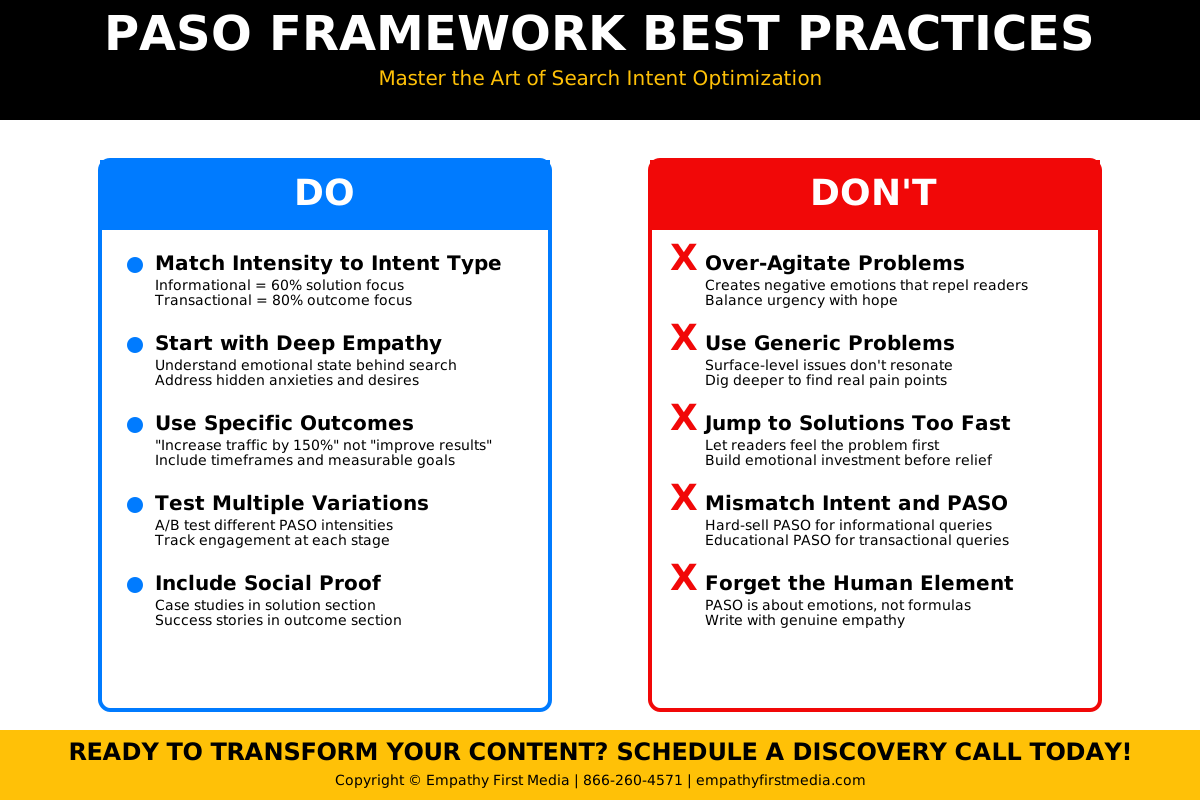
1. Over-Agitating the Problem
While agitation creates urgency, overdoing it can turn readers off. Strike a balance between creating awareness and maintaining trust.
2. Weak Solution Presentation
Your solution section needs to be comprehensive and credible. Don’t rush through it to get to the outcome.
3. Unrealistic Outcomes
Paint an achievable transformation picture. Overpromising damages credibility and trust.
4. Ignoring Search Intent
Forcing PASO where it doesn’t fit naturally (like pure navigational queries) can hurt user experience.
5. Missing Emotional Transitions
Abrupt shifts between PASO elements feel jarring. Use transitional phrases and storytelling to create smooth flow.
Future-Proofing Your PASO Strategy
As search evolves, your PASO implementation needs to adapt.
Here’s how to stay ahead:
Voice Search Optimization
Voice queries are more conversational and problem-focused. Adapt your PASO framework to address natural language patterns.
AI-Powered Search
With tools like ChatGPT and Perplexity gaining traction, structure your PASO content for AI comprehension:
- Clear problem statements
- Logical progression
- Factual solutions
- Measurable outcomes
Video Content Integration
Apply PASO principles to video content:
- Hook viewers with the problem
- Build tension through agitation
- Demonstrate solutions visually
- Show transformation stories
Mobile-First PASO
With mobile searches dominating, ensure your PASO flow works on small screens:
- Shorter problem statements
- Scannable agitation points
- Bullet-pointed solutions
- Visual outcome representations
Our mobile optimization ensures your PASO content performs across all devices.
Conclusion: Transform Your Content Strategy with PASO
The PASO Framework isn’t just another copywriting formula – it’s a strategic approach to creating content that truly serves your audience while achieving your business goals.
By aligning PASO with search intent, you create content that:
- Ranks higher in search results
- Engages readers more deeply
- Converts visitors into customers
- Builds lasting brand authority
Remember: Every search query represents a person seeking transformation. Your content should guide them from problem recognition through to their desired outcome.
At Empathy First Media, we’ve helped countless businesses implement the PASO Framework to achieve remarkable results. Our scientific approach combines data-driven insights with human psychology to create content that dominates search results and drives real business growth.
Ready to transform your content strategy?
Schedule Your Discovery Call today and let’s discuss how the PASO Framework can revolutionize your search visibility and conversion rates.
Frequently Asked Questions
What does PASO stand for in copywriting?
PASO stands for Problem, Agitate, Solution, and Outcome. It’s an enhanced version of the traditional PAS (Problem-Agitate-Solution) framework that adds a crucial fourth element – showing the transformation or outcome after implementing the solution. This additional component helps readers visualize success and creates stronger motivation to take action.
How is PASO different from other copywriting frameworks?
While frameworks like AIDA focus on attention and desire, PASO specifically addresses the emotional journey of problem-solving. The key differentiator is the Outcome component, which helps readers visualize their transformation after implementing your solution. This makes PASO particularly effective for complex B2B sales and service-based businesses where the transformation is as important as the solution itself.
Can I use PASO for all types of content?
PASO works best for content with commercial or informational intent where readers are actively seeking solutions to problems. It’s highly effective for blog posts, landing pages, sales pages, and email sequences. However, it’s less suitable for pure navigational queries or simple factual content where users just need quick information without emotional engagement.
How do I identify the right problems for my PASO content?
Start by analyzing your target audience’s search queries, support tickets, and frequently asked questions. Use tools like Google’s People Also Ask, Reddit discussions, and Quora to understand real problems your audience faces. The best problems for PASO content are those that have emotional weight and measurable consequences if left unsolved.
How long should each PASO section be?
The length depends on your content format and audience. For blog posts, aim for: Problem (10-15%), Agitate (15-20%), Solution (50-60%), Outcome (10-15%). For landing pages, keep sections shorter and more focused. The key is maintaining engagement throughout – if readers drop off during agitation, you’re likely overdoing it.
Can PASO work for technical or B2B content?
Absolutely. PASO is particularly effective for B2B content because business decisions often involve significant problems with measurable impacts. For technical content, focus on business outcomes rather than technical details in your problem and agitation sections. Save the technical depth for your solution section where readers are ready for details.
How do I avoid sounding manipulative when agitating problems?
Focus on educating rather than fear-mongering. Use real data, case studies, and logical consequences rather than emotional manipulation. The goal is to help readers understand the full impact of their problem, not to create artificial urgency. Always maintain empathy and position yourself as a helpful guide, not a fear-inducer.
Should I use PASO in my meta descriptions and titles?
Yes, but in micro-doses. A meta description might touch on problem and solution briefly: “Struggling with [problem]? Discover [solution] that [outcome].” Titles often work best focusing on the outcome or solution while implying the problem. The key is maintaining clarity within character limits while creating compelling click-through motivation.
How do I measure if my PASO content is working?
Track engagement metrics like time on page, scroll depth, and bounce rate to ensure readers complete the journey. Monitor conversion metrics including CTA clicks, form submissions, and ultimately, sales. Use heat mapping tools to see where readers spend time or drop off. A successful PASO implementation shows steady engagement through all four sections.
Can I combine PASO with other SEO strategies?
PASO works excellently with other SEO strategies. Combine it with topic clusters by creating PASO-structured pillar content, use it within your internal linking strategy to guide readers through problem-solution journeys, and apply it to featured snippet optimization by structuring your solution sections for direct answers. PASO enhances rather than replaces traditional SEO tactics.
External References on PASO Framework and Search Intent Optimization
- Google Search Quality Evaluator Guidelines – Google’s official documentation on creating helpful, reliable, people-first content that satisfies search intent (DA: 100)
- Search Engine Journal: Understanding Search Intent – Comprehensive guide on the four types of search intent and how to optimize for each (DA: 91)
- Moz: The Beginner’s Guide to SEO – Foundational resource covering search intent optimization and content strategy fundamentals (DA: 91)
- Content Marketing Institute: B2B Content Marketing Benchmarks – Research and insights on effective content frameworks for B2B audiences (DA: 86)
- Ahrefs: Search Intent Study – Data-driven analysis of how search intent impacts rankings and content performance (DA: 91)
- HubSpot: Psychology of Marketing – Resources on psychological frameworks in marketing and their application to content strategy (DA: 93)
- Nielsen Norman Group: Writing for the Web – User experience research on how people read and engage with web content (DA: 80)
- Backlinko: On-Page SEO Guide – Advanced strategies for optimizing content structure and user engagement signals (DA: 92)
