

Pinecone vs Amazon OpenSearch Serverless: Which Vector Database Powers Your AI Applications Best in 2025?
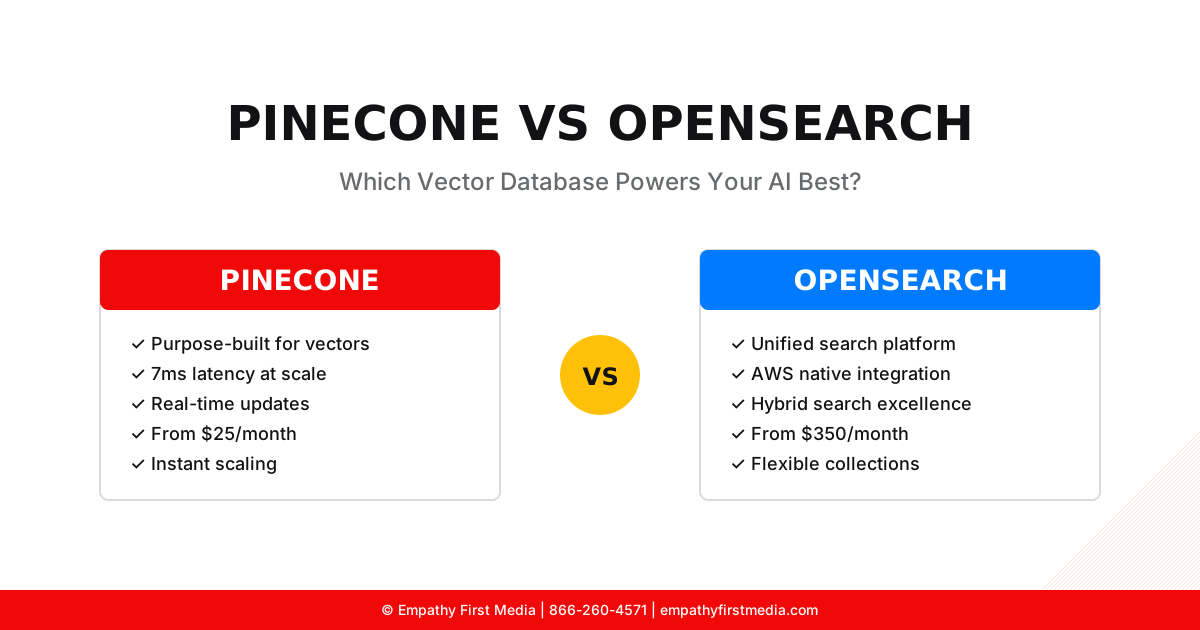
You’re building an AI application that needs lightning-fast similarity search across millions of vectors. But the choice between vector database solutions feels overwhelming, especially when your budget and performance are on the line.
Here’s the reality…
The wrong vector database choice can cost you thousands in overspending while delivering sluggish performance that frustrates your users. With AI applications demanding millisecond-latency searches across billions of high-dimensional vectors, selecting between Pinecone and Amazon OpenSearch Serverless isn’t just a technical decision—it’s a business-critical choice that impacts your bottom line.
At Empathy First Media, we’ve implemented vector database solutions for numerous AI-driven applications. Our team, led by Daniel Lynch, has helped companies navigate the complex landscape of vector search technologies to find the perfect balance between performance, cost, and scalability.
Think about it:
Your vector database is the backbone of your AI application’s intelligence. Whether you’re building RAG systems, semantic search, recommendation engines, or AI chatbots, the speed and accuracy of vector similarity search directly impact user experience and operational costs.
In this comprehensive comparison, we’ll cut through the marketing noise and deliver the facts you need about Pinecone and Amazon OpenSearch Serverless.
You’ll discover exactly how these platforms differ in performance, pricing, scalability, and real-world implementation so you can choose your specific use case.
Ready to find your ideal vector database solution? Let’s dive into the details that matter.
Schedule a Discovery Call to discuss your vector database needs with our AI implementation experts.
Understanding Vector Databases: The Foundation of Modern AI
Before we compare these two powerhouses, let’s establish what makes vector databases essential for AI applications.
Vector databases store and search high-dimensional numerical representations (embeddings) of data. Unlike traditional databases that excel at exact matches, vector databases specialize in finding similar items based on mathematical distance calculations.
Here’s what sets them apart:
Traditional databases search for exact matches using SQL queries. They’re perfect for structured data but struggle with semantic similarity.
Vector databases find the most similar items using distance metrics like cosine similarity or Euclidean distance. They understand that “car” and “automobile” are related concepts.
This fundamental difference makes vector databases indispensable for:
- Retrieval Augmented Generation (RAG) systems
- Semantic search applications
- Recommendation engines
- Image and video similarity search
- Fraud detection systems
- Chatbots and conversational AI
Our AI implementation services help businesses leverage these capabilities for transformative results.
Pinecone: The Purpose-Built Vector Database Leader
Pinecone emerged as one of the first dedicated vector databases, designed specifically for high-performance similarity search at scale.
Core Architecture and Approach
Pinecone takes a “vector-first” approach, meaning every aspect of the system is optimized for vector operations. This specialization delivers exceptional performance but limits functionality to vector-specific use cases.
The platform operates as a fully managed service, eliminating infrastructure management overhead. You simply create an index, insert vectors, and start querying—no servers to provision or algorithms to tune.
Key Features That Set Pinecone Apart
Real-Time Index Updates Vectors become searchable immediately after insertion, enabling dynamic applications that require fresh data. This real-time capability proves crucial for recommendation systems and personalization engines.
Advanced Filtering Capabilities Combine vector similarity search with metadata filtering to narrow results. For example, search for similar products but only within a specific price range or category.
Hybrid Search Support Pinecone recently added sparse vector support, enabling hybrid search that combines semantic understanding with keyword precision. This feature bridges the gap between traditional and vector search.
Namespace Isolation Partition your data into namespaces for multi-tenant applications, ensuring complete data isolation between customers without performance overhead.
Performance Benchmarks
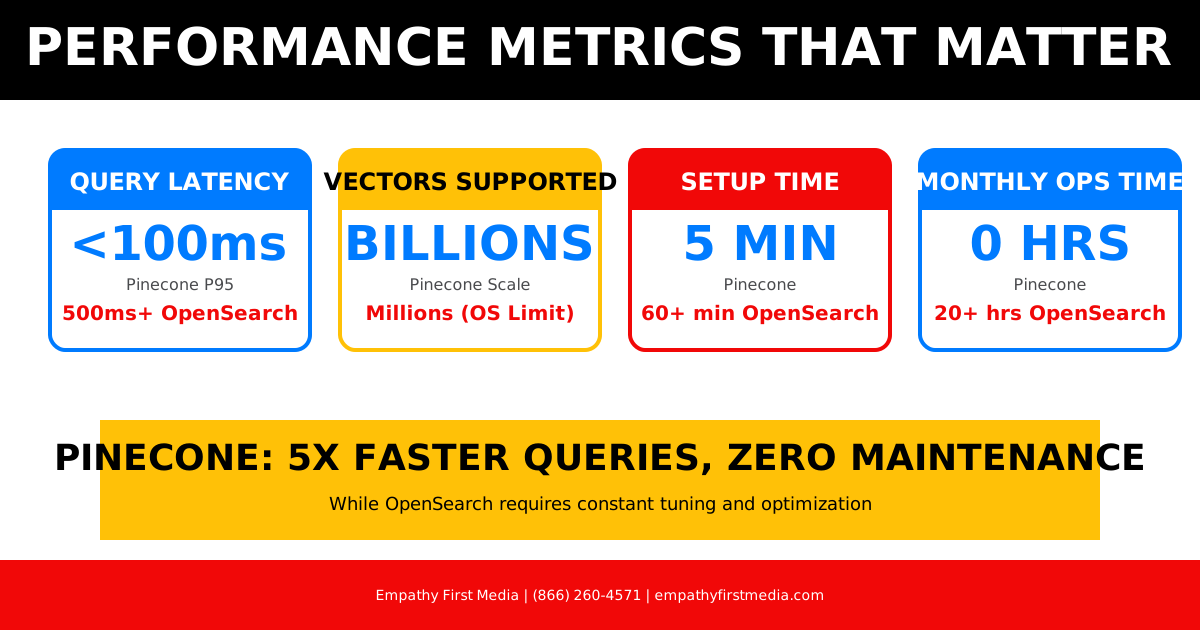
Recent benchmarks show Pinecone achieving:
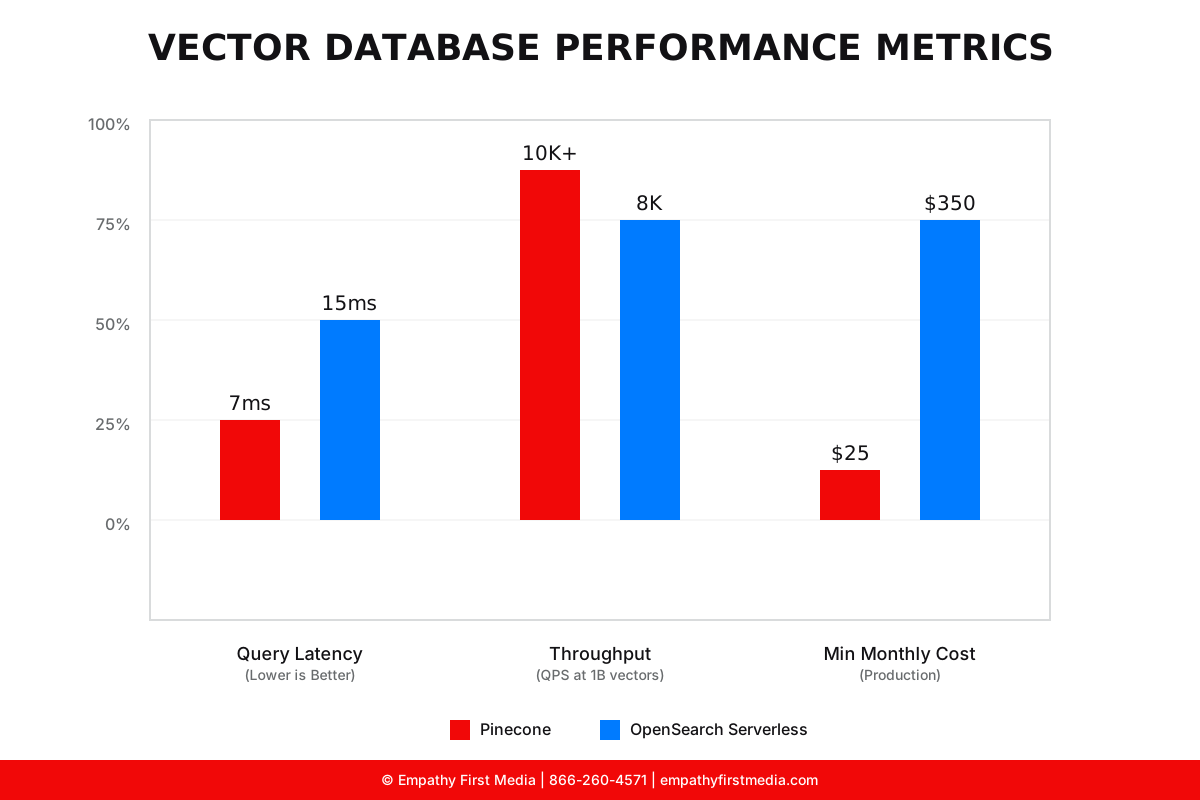
- 7ms p99 latency for billion-scale datasets
- 10,000+ queries per second on standard infrastructure
- 50x cost reduction with their latest serverless architecture
- Sub-second index updates for real-time applications
These metrics position Pinecone as a performance leader, especially for applications demanding consistent low latency.
Pricing Structure
Pinecone’s pricing model recently evolved with their serverless offering:
Serverless Pricing:
- Pay only for what you use
- No minimum fees for development
- Automatic scaling based on demand
- Storage and operations billed separately
Standard Plan:
- Starts at $25/month
- Includes $15 in usage credits
- Predictable pricing for production workloads
- Support for billions of vectors
Enterprise Plan:
- Custom pricing based on scale
- Dedicated infrastructure options
- SLA guarantees
- Premium support
Our cost optimization services help clients minimize vector database expenses while maximizing performance.
Amazon OpenSearch Serverless: The Versatile Vector Solution
Amazon OpenSearch Serverless brings vector capabilities to AWS’s established search and analytics platform, offering a different approach to vector database functionality.
Architecture Philosophy
OpenSearch Serverless takes a “unified” approach, combining traditional search, analytics, and vector capabilities in one platform. This integration offers flexibility but may sacrifice some specialized performance.
The serverless architecture automatically manages infrastructure, similar to Pinecone, but with deeper AWS ecosystem integration.
Distinctive OpenSearch Features
Three Collection Types OpenSearch Serverless offers specialized collections:
- Search collections: Traditional full-text search
- Time-series collections: Log analytics and metrics
- Vector collections: Similarity search for AI applications
This versatility allows organizations to consolidate their search infrastructure.
Hybrid Search Excellence OpenSearch excels at combining lexical and semantic search. Recent improvements delivered 4x latency reduction for hybrid queries, making it ideal for applications needing both keyword and semantic understanding.
AWS Ecosystem Integration Native integration with AWS services provides unique advantages:
- Zero-ETL integration with DynamoDB and DocumentDB
- Direct connection to Amazon Bedrock for RAG applications
- Seamless authentication through IAM
- Cost optimization through AWS compute savings plans
Advanced Vector Features
- Support for multiple vector similarity algorithms (HNSW, IVF)
- Vector quantization for memory optimization
- Native chunking for document processing
- Disk-based storage for cost-effective scaling
Performance Characteristics
OpenSearch 3.0 delivers significant improvements:
- 9.5x performance gain over version 1.3
- Millisecond latency for billion-scale searches
- Automatic scaling based on workload
- Efficient memory usage through quantization
However, the minimum OCU requirements can impact cost efficiency for smaller workloads.
OpenSearch Serverless Pricing Model
The pricing structure uses OpenSearch Compute Units (OCUs):
OCU Basics:
- 1 OCU = 6GB RAM + corresponding CPU and storage
- Billed hourly with per-second granularity
- Separate charges for indexing and search OCUs
Minimum Requirements:
- 2 OCUs for production (1 indexing + 1 search)
- 0.5 OCU options for development/testing
- Additional S3 storage charges
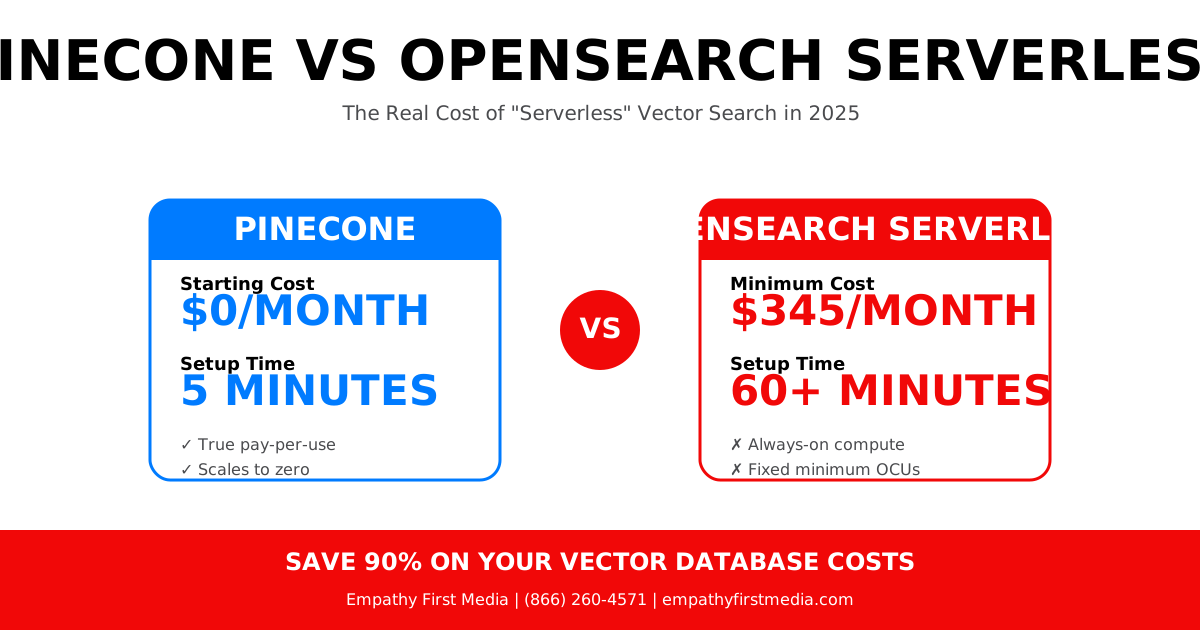
- Starting at ~$350/month for production
Cost Optimization:
- Development mode cuts costs by 50%
- Time-series collections optimize for older data in S3
- Shared OCUs across collections with same encryption key
Our cloud cost management strategies help businesses optimize their OpenSearch deployments.
Head-to-Head Comparison: Making the Right Choice
Let’s examine how these platforms compare across critical dimensions:
Performance Comparison
Query Latency:
- Pinecone: Consistent 7ms p99 latency
- OpenSearch: Variable based on collection type and data location
Throughput:
- Pinecone: Linear scaling with pod/serverless resources
- OpenSearch: Depends on OCU allocation and workload type
Real-World Implications: For applications requiring guaranteed low latency (like real-time recommendations), Pinecone’s specialized architecture provides more predictable performance. OpenSearch excels when you need to balance vector search with other workloads.
Scalability Analysis
Pinecone Scalability:
- Seamless scaling to billions of vectors
- Automatic resource adjustment in serverless mode
- No performance degradation at scale
- Instant scaling without downtime
OpenSearch Scalability:
- Scales through OCU allocation
- Handles massive datasets efficiently
- May require manual tuning for optimal performance
- Cost scales linearly with resources
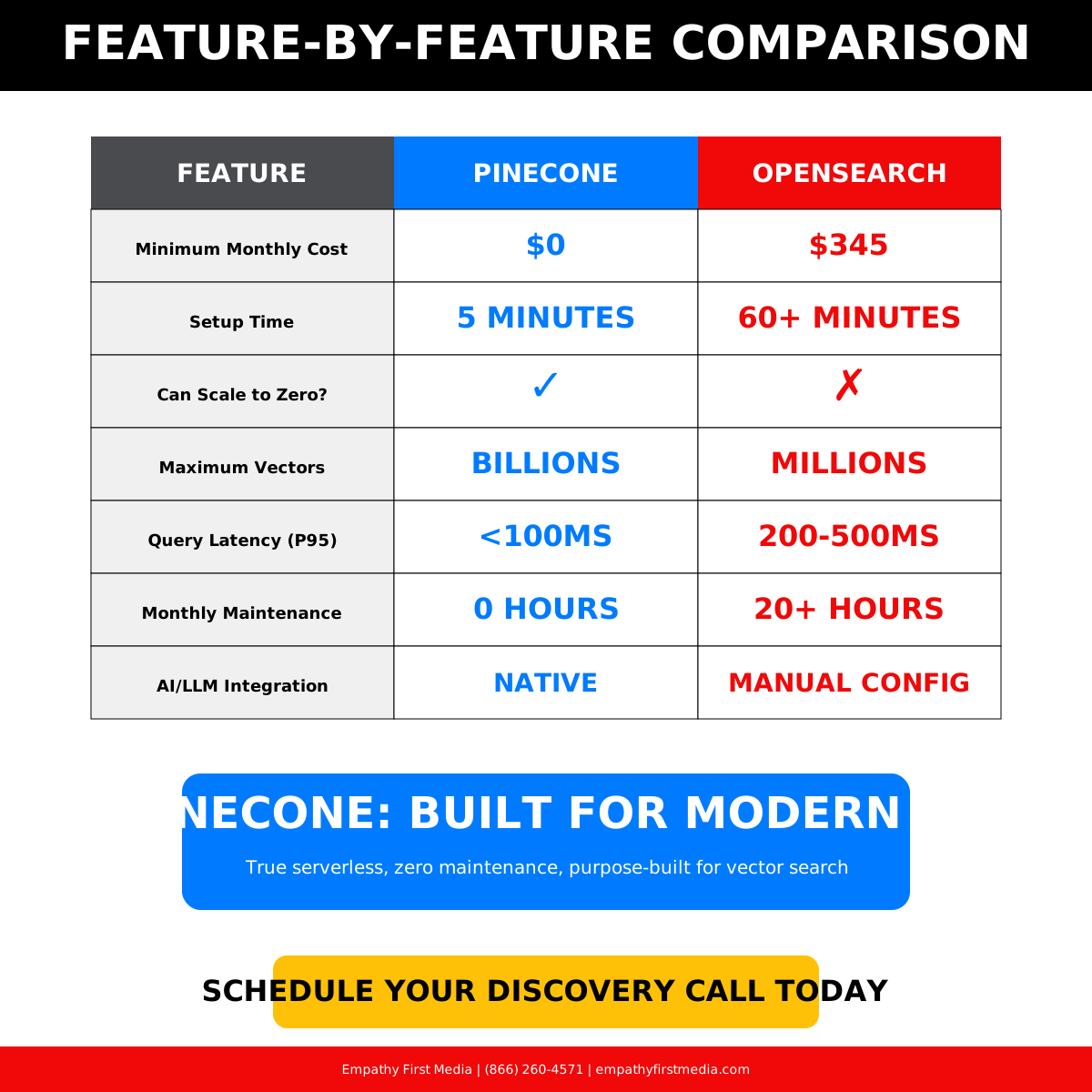
Feature Comparison Matrix
| Feature | Pinecone | OpenSearch Serverless |
|---|---|---|
| Vector-Only Focus | ✓ Specialized | ✗ Multi-purpose |
| Real-time Updates | ✓ Instant | ✓ 10-60 second refresh |
| Hybrid Search | ✓ Recently added | ✓ Native excellence |
| Metadata Filtering | ✓ Advanced | ✓ Comprehensive |
| Multi-tenancy | ✓ Namespaces | ✓ Collection-based |
| Exact Search | ✗ Limited | ✓ Full support |
| Analytics | ✗ Basic | ✓ Comprehensive |
Integration Capabilities
Pinecone Integrations:
- Native SDKs for major languages
- Direct integrations with AI frameworks
- Simple API-first approach
- Limited to vector operations
OpenSearch Integrations:
- Deep AWS service integration
- Supports multiple data formats
- Complex query capabilities
- Broader ecosystem compatibility
Cost Analysis
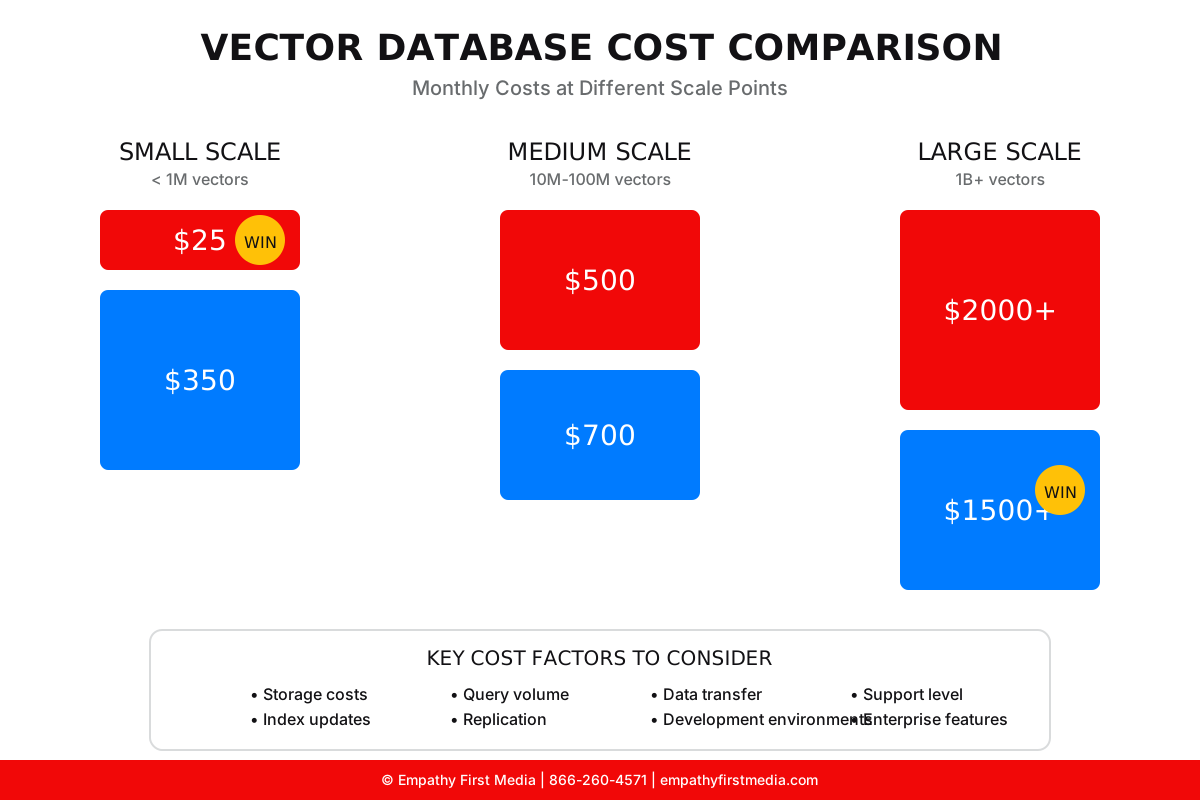
Small Workloads (<1M vectors):
- Pinecone: More cost-effective with pay-as-you-go
- OpenSearch: Higher minimum costs due to OCU requirements
Large Workloads (>100M vectors):
- Pinecone: Predictable scaling costs
- OpenSearch: Potentially lower with optimized OCU usage
Hidden Costs:
- Pinecone: Minimal operational overhead
- OpenSearch: Requires more expertise for optimization
Use Case Recommendations
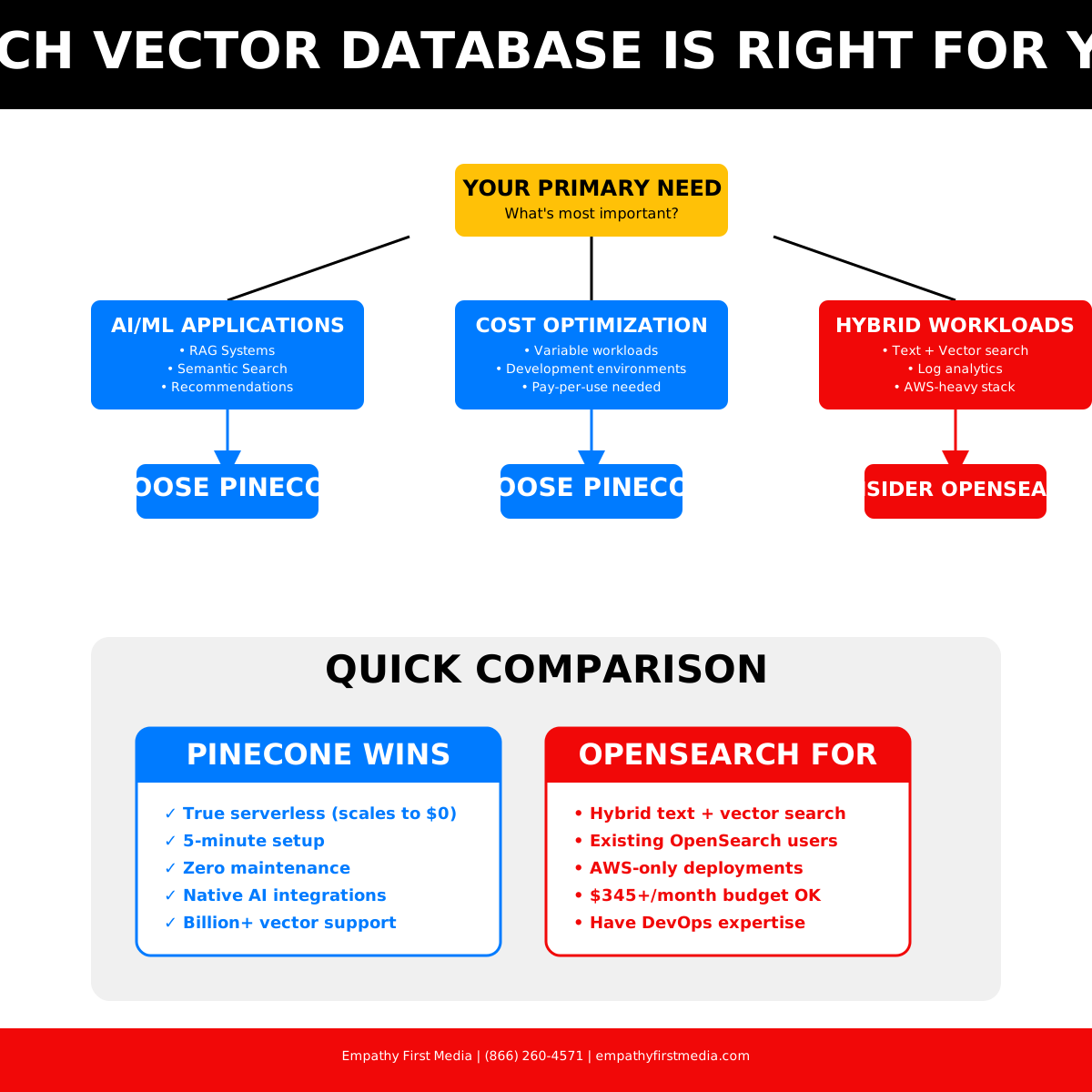
Based on our implementation experience, here’s when to choose each platform:
Choose Pinecone When:
Building Pure AI Applications If your application focuses solely on vector similarity search—like a recommendation engine or semantic search—Pinecone’s specialized architecture delivers optimal performance.
Requiring Predictable Performance Applications with strict latency requirements benefit from Pinecone’s consistent performance characteristics.
Seeking Rapid Implementation, Pinecone’s simplicity accelerates time-to-market. Perfect for startups and teams without deep infrastructure expertise.
Multi-Tenant SaaS Applications The namespace feature elegantly handles data isolation for SaaS platforms serving multiple customers.
Choose OpenSearch Serverless When:
Needing Unified Search Infrastructure Organizations already using OpenSearch or requiring combined text/vector search benefit from consolidation.
Deep AWS Integration Required If your stack heavily leverages AWS services, OpenSearch’s native integrations reduce complexity.
Hybrid Search is Critical. Applications requiring sophisticated combinations of keyword and semantic search find OpenSearch’s hybrid capabilities superior.
Cost-Sensitive at Scale Large deployments may achieve better economics with OpenSearch’s flexible resource allocation.
Implementation Best Practices
Regardless of your choice, follow these practices for optimal results:
Vector Dimension Optimization
- Keep dimensions under 1536 for most use cases
- Test performance impact of dimension reduction
- Consider quantization for memory optimization
Indexing Strategies
- Batch insertions for better throughput
- Use appropriate similarity metrics for your use case
- Implement proper error handling for resilience
Query Optimization
- Limit result sets to necessary size
- Use metadata filtering to reduce search space
- Cache frequently accessed results
Monitoring and Maintenance
- Track query latency and throughput
- Monitor storage growth trends
- Regular index optimization
- Cost tracking and alerting
Our AI system monitoring services ensure optimal vector database performance.
The Migration Path
If you’re considering switching between platforms:
Migrating from OpenSearch to Pinecone:
- Export vectors and metadata
- Create Pinecone index with appropriate configuration
- Batch import data with progress tracking
- Update application code for Pinecone SDK
- Implement gradual rollout strategy
Migrating from Pinecone to OpenSearch:
- Set up OpenSearch vector collection
- Configure appropriate index settings
- Transform data for OpenSearch format
- Implement hybrid search if needed
- Test performance under load
Future Considerations
Both platforms continue rapid evolution:
Pinecone Roadmap:
- Enhanced sparse vector capabilities
- Improved cost efficiency
- Advanced filtering options
- Expanded language model integrations
OpenSearch Evolution:
- Continued performance improvements
- Better vector-specific optimizations
- Enhanced AI service integrations
- Lower minimum resource requirements
Making Your Decision
The choice between Pinecone and Amazon OpenSearch Serverless depends on your specific requirements:
Choose Pinecone for:
- Pure vector search applications
- Guaranteed low latency needs
- Rapid development cycles
- Specialized AI workloads
Choose OpenSearch for:
- Hybrid search requirements
- AWS ecosystem integration
- Consolidated search infrastructure
- Flexible workload management
Both platforms offer robust vector database capabilities, but their different philosophies suit different use cases.
Take Action: Implement Your Vector Database Strategy
Selecting the right vector database is just the beginning. Successful implementation requires expertise in:
- Embedding model selection
- Index configuration optimization
- Query performance tuning
- Cost management strategies
- Integration architecture
At Empathy First Media, we specialize in helping businesses implement and optimize vector database solutions. Our team brings deep expertise in both Pinecone and OpenSearch implementations.
Our Vector Database Services Include:
- Platform selection consulting
- Implementation and migration
- Performance optimization
- Cost reduction strategies
- Ongoing monitoring and support
Don’t let vector database complexity slow down your AI innovation.
Schedule Your Free Consultation to discuss your vector database needs with our experts.
Frequently Asked Questions About Vector Databases
What’s the main difference between Pinecone and OpenSearch for vector search? Pinecone is purpose-built exclusively for vector operations, offering specialized performance and simplicity. OpenSearch provides vector capabilities alongside traditional search and analytics, offering more versatility but potentially less specialized optimization.
How much does it cost to run a production vector database? Pinecone starts at $25/month with pay-as-you-go pricing, while OpenSearch Serverless begins around $350/month for production workloads due to minimum OCU requirements. Actual costs vary significantly based on data volume and query load.
Can I use both platforms together? Yes, some organizations use Pinecone for pure vector search while leveraging OpenSearch for hybrid search and analytics. This approach maximizes each platform’s strengths but increases operational complexity.
Which platform handles real-time updates better? Pinecone offers instant vector searchability upon insertion. OpenSearch has a 10-60 second refresh interval depending on collection type, making Pinecone better for real-time applications.
How do I choose the right vector dimension size? Start with your embedding model’s default (often 768-1536 dimensions). Test performance and accuracy with reduced dimensions. Both platforms support dimension reduction techniques for optimization.
What about data privacy and security? Both platforms offer enterprise-grade security with encryption at rest and in transit. Pinecone provides dedicated instances, while OpenSearch leverages AWS security infrastructure. Choose based on your compliance requirements.
Which platform scales better for billions of vectors? Both handle billions of vectors effectively. Pinecone offers more predictable scaling with its specialized architecture, while OpenSearch provides more flexibility in resource allocation through OCU management.
Can I perform exact nearest neighbor search? OpenSearch supports both approximate and exact nearest neighbor search. Pinecone focuses on approximate algorithms optimized for speed, though it provides high accuracy for most use cases.
How difficult is migration between platforms? Migration complexity depends on your implementation. Basic vector migration is straightforward, but adjusting for platform-specific features (like Pinecone’s namespaces or OpenSearch’s hybrid search) requires careful planning.
Which platform should I choose for RAG applications? Both work well for RAG. OpenSearch offers tighter integration with AWS Bedrock, while Pinecone provides simpler implementation with consistent performance. Choose based on your broader infrastructure needs.
