

PR Meaning and Strategic Value for Modern Businesses
Have you ever wondered, “What is the meaning of PR?” or “What does PR stand for?”
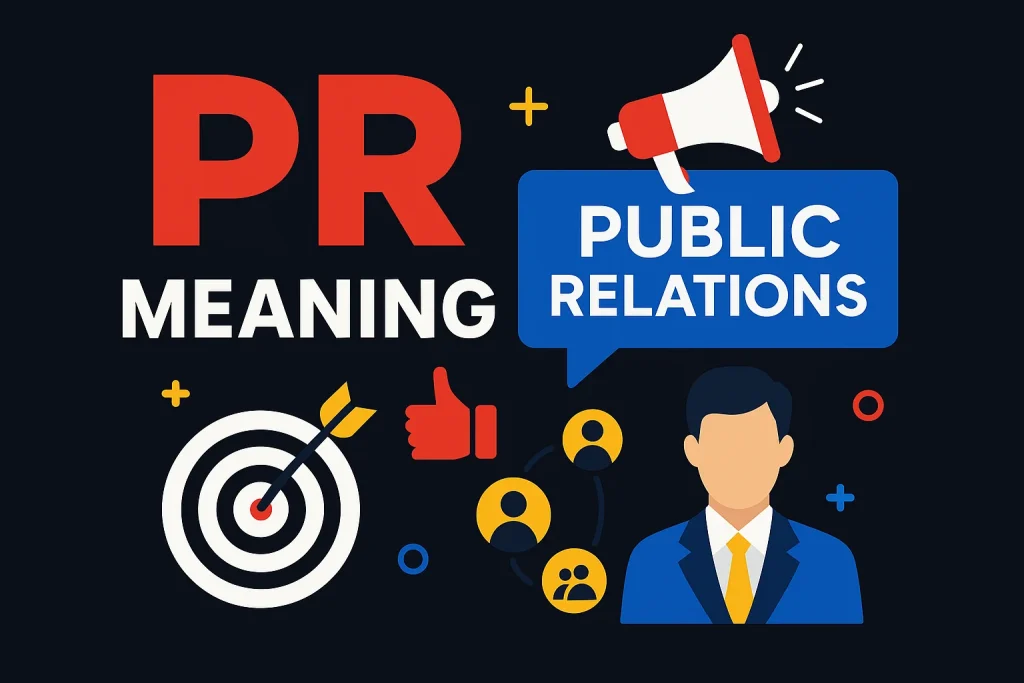
If so, you’re not alone. In today’s business world, understanding PR meaning – which stands for Public Relations – is more crucial than ever.
Modern businesses live in an age where a single tweet or news article can make or break a brand’s reputation overnight. This blog post will demystify public relations and explain what PR does for a company, why PR is important, and how it differs from marketing.
What is Public Relations (PR)? Definition & Meaning
Public Relations (PR) is all about managing how your company is perceived by the public. Simply put, PR involves strategic communication between an organization and its various audiences (customers, media, employees, investors, etc.) to build mutually beneficial relationships.
According to the Public Relations Society of America (PRSA), “Public relations is a strategic communication process that builds mutually beneficial relationships between organizations and their publics.”prsa.org In other words, PR is the art of storytelling and relationship-building on behalf of a brand.
At its core, PR stands for “Public Relations” – not to be confused with the term “press release,” which is one tool PR professionals use. Public relations encompasses a wide range of activities aimed at shaping public perception.
This means connecting with the “public” (anyone who might have an interest in or impact on your business) and managing your “relations” with those people.
It’s about influencing, engaging, and building trust with key stakeholders across many platforms in order to shape the narrative around your company.
In the modern business environment, PR has evolved beyond press conferences and newspaper clippings.
Today, PR professionals engage through media relations, social media conversations, events, and more to ensure their organization’s voice is heard clearly.
It’s not advertising – PR focuses on earned attention and credibility rather than paid promotions.
If marketing is about pushing a message out, PR is about building a positive image and fostering goodwill so that others pull your message into conversations.
What PR Actually Means in 2025
PR has changed dramatically over the past decade. The traditional definition focused on managing communication between organizations and their audiences to build a favorable image. Today’s PR landscape is much more complex and extends far beyond media relations and press releases.
The original definition vs. modern reality
Traditional public relations centered around journalist relationships, press releases, and media coverage. It operated through newspapers, television, radio, and magazines to build brand awareness.
The digital revolution has changed everything. PR in 2025 embraces a multi-channel approach that includes websites, social media, influencer partnerships, content marketing, SEO, and online community engagement. Recent studies show adults under 30 now trust information from social media nearly as much as news from traditional sources.
The core objective remains consistent—building brand awareness. But digital PR offers distinct advantages, including real-time data analysis, broader reach, and more interactive engagement with target audiences.
Why most businesses misunderstand PR
Many businesses operate with outdated perceptions of public relations. The biggest misconception is that PR is merely about pushing out news rather than creating meaningful conversations with stakeholders.
Companies often wrongly assume PR is completely separate from marketing. In reality, these disciplines are intrinsically connected as they both aim for positive responses from the public. PR doesn’t operate in isolation—it should be integrated with overall communication goals tied directly to business objectives.
Another frequent misunderstanding involves confusing PR with free advertising or believing journalists can be directed on what to write. Journalists don’t owe brands anything—their job is to report information and provide balanced perspectives for their readers.
Most significantly, businesses fail to recognize that PR looks vastly different than it did twenty years ago, with technology playing an increasingly pivotal role. This evolution requires new strategies that capitalize on technological advancements to reach broader audiences effectively.
PR’s evolution from press releases to digital authority
The journey from traditional PR to digital authority represents one of the most profound shifts in communications. Once primarily focused on securing media coverage, PR professionals now use digital platforms to communicate directly with their audiences, bypassing traditional media gatekeepers.
Social media platforms have become essential tools for PR professionals to share content, engage with audiences, and develop relationships—reaching more people on a more personal level than traditional media channels ever could.
Data-driven PR has emerged as a critical component of modern strategies. Analytics tools allow us to measure campaign impact, gain audience insights, and make more informed decisions—leading to improved results. By 2025, metrics tracking engagement rates, media coverage, and brand sentiment provide invaluable insights for PR professionals expected to deliver measurable outcomes.
Blogs have become vital components of the digital PR landscape. For businesses seeking to drive website traffic, blogs effectively create bonds between readers and brands. Likewise, podcasts have gained prominence, offering content that can be consumed anywhere, even without internet access.
Smart PR strategy in 2025 requires a multidisciplinary approach that integrates tactics from both traditional and digital realms. This integration allows organizations to build authority, manage reputation, and foster authentic connections with increasingly discerning audiences. We don’t just chase media placements—we create communication ecosystems that build lasting brand authority.
The Biggest PR Misconception: It’s Just Media Relations
The most persistent misconception about PR? That it’s primarily about chasing down reporters for media coverage. This limited view leads many business leaders to categorize public relations as just another tool in the marketer’s toolkit, no different from SEO or display advertising. The reality is far more nuanced.
Beyond journalist relationships
For decades, executives have believed that securing media placements constitutes the entirety of PR work. When most think of public relations, they picture press releases and journalist outreach. Media relations matters—but it’s just one piece of a much larger strategic puzzle.
PR professionals have historically viewed their discipline as the equal of marketing—a distinct strategic function. We position ourselves as the rightful keepers of corporate identity and brand reputation, with responsibilities extending far beyond securing headlines.
What most businesses miss is that PR should lead overall brand communications across multiple stakeholders:
- Investors and shareholders
- Employees and internal teams
- Partners and industry allies
- Community activists
- The general public and consumers
PR functions now include thought leadership development, content creation, reputation management, crisis prevention (not just response), and authority building. We serve as strategic communications advisors who provide insights on the potential consequences of business decisions before they impact an organization’s reputation.
The multi-channel nature of modern PR
Today’s PR landscape demands an omnichannel approach that’s authentic, relevant, targeted and personalized. This reflects how modern media consumption works—each person essentially lives in their own customized information environment.
We don’t just write press releases. Modern PR professionals manage diverse channels and tactics, including:
- Content marketing and thought leadership development
- Social media strategy and community management
- Email newsletters and direct stakeholder communications
- Video production and podcast development
- SEO integration and digital authority building
Limiting PR to media relations alone damages your reputation by failing to capitalize on the strategic insights and expertise that comprehensive PR offers. We describe modern PR as “building audiences and then building those audiences into superfans”, which requires expertise across multiple communication disciplines.
This multi-channel reality demands that we understand what your audiences seek to achieve, what inspires them, and who influences them. Through this deeper understanding, we map mutually beneficial touchpoints across various channels that earn trust and interest.
PR in 2025 represents an integrated communication strategy where each channel—social media, content and creative—works cohesively like an orchestra. Smart businesses recognize that even those receiving consistent media coverage shouldn’t rely solely on earned media for their PR efforts. By implementing balanced PR plans that integrate diverse strategies, you control your own narrative rather than depending entirely on third parties to tell your story.
The key takeaway? True PR expertise lies in engagement—with target audiences, journalists, and influencers—across a strategic mix of channels designed to build lasting relationships and authority. Your business deserves more than media placements. We create comprehensive PR strategies that deliver transformative business impact.
PR Activities and Services
What Does PR Do for a Company?
PR serves as the strategic conscience of your organization. It’s a multifaceted discipline that shapes how you communicate with various stakeholders—from customers and partners to journalists and the general public.
The complete picture extends far beyond media outreach to encompass several critical components that build and protect your most valuable intangible asset: reputation.
Now that we know what PR means, let’s talk about what PR professionals actually do. A common question business owners ask is, “What does PR do for a company?” In short, PR helps a company present itself in the best light and build a positive relationship with the public. Here are some key public relations activities and PR agency services that benefit businesses:
Media Relations:
Building relationships with journalists and media outlets is a cornerstone of PR. This involves writing and distributing press releases, pitching story ideas to reporters, and securing interviews or expert quotes. Effective media relations can result in your company being featured in newspapers, magazines, TV, radio, or blogs – earning media coverage that increases your visibility. (For example, our team at Empathy First Media helped Brio-Medical Cancer Clinic get featured on a Fox News segment as an expert voice on a health issue, reaching a nationwide audience and boosting the clinic’s credibility.)
Press Releases & Storytelling:
PR professionals craft compelling press releases and story pitches about company news, product launches, awards, or research findings. They tell your brand’s story in a way that resonates with the public and media. By turning routine updates into interesting narratives, PR helps humanize your brand and keep it in the news. If your company has a new innovation or initiative, PR ensures that story gets told widely and positively.
Brand narrative control
Your brand narrative forms the essential foundation of effective PR. This narrative goes beyond logos and marketing materials to encompass your core values, mission, and unique selling propositions that set you apart from competitors.
We help you develop this narrative by identifying your fundamental values and mission. Then we craft messages tailored specifically to your audience’s preferences and pain points. The most effective brand narratives highlight what makes you special while maintaining authenticity and consistency.
PR enables you to take control of your story instead of letting others define it. If you don’t control your PR narrative, someone else will. This control becomes particularly vital in today’s digital landscape where information spreads instantaneously.
Reputation & Brand Management
A huge part of PR is managing your brand reputation. PR teams monitor what’s being said about your company in the press and online (including social media and reviews) and engage with your audience to keep sentiment positive. If there’s misinformation or negativity, PR pros address it promptly and professionally. They also amplify positive news and customer testimonials. In essence, PR is the guardian of your brand’s public image.
We help you shape and manage your enterprise’s reputation, image, and credibility. This function serves as the cornerstone of business success, especially considering that 95% of customers trust corporations that are well-regarded. PR professionals act as guardians of public perception, strategically employing various tools, including:
- Media outreach and relationship building
- Strategic content creation
- Event management
- Digital presence optimization
- Stakeholder communications
Reputation management doesn’t simply react to public opinion—it actively shapes it through consistent, authentic communication that aligns with your values. We often describe ourselves as an organization’s ” conscience,” helping leaders make decisions that serve both company and community interests.
Crisis Communication:
PR steps in to handle crisis communication when something goes wrong – be it a product recall, a bad review going viral, or an industry controversy.
This means preparing statements, communicating with media and stakeholders, and taking control of the narrative during challenging times. A well-handled crisis can actually strengthen public trust (more on this later). Businesses that plan ahead with crisis communication protocols can weather storms with their reputations intact.
Many view PR primarily as a reactive function during crises. The complete picture includes proactive crisis prevention. Preparing before problems arise represents an essential aspect of modern PR strategy.
We help you identify potential risks and develop response strategies for various scenarios in advance. This preparation includes establishing crisis communication plans, training spokespersons, and maintaining strong relationships with key journalists and industry influencers.
Social listening tools enable us to detect potential issues before they escalate. By catching problems early, you can address concerns proactively rather than scrambling to manage full-blown crises.
Event Planning and Community Relations:
Public relations may involve organizing or participating in events that put the company in a positive spotlight. This could be press conferences, community service events, sponsorships, or trade shows. By engaging in the community and industry events, PR helps companies build relationships and goodwill. For instance, hosting a health awareness seminar or sponsoring a charity run can generate local media coverage and show your company’s values in action.
Internal Communications:
Good PR isn’t just outward-facing – it also means communicating well with your own employees. Many PR departments or agencies help craft internal newsletters, announcements, and culture-building campaigns. Employees are key ambassadors of your brand; keeping them informed and inspired is part of PR’s role in maintaining a consistent positive image.
Social Media and Influencer Outreach:
While social media is often seen as a marketing function, it heavily overlaps with PR. PR teams often manage or advise on a company’s social media presence to ensure it aligns with the overall brand voice and messaging. They may also engage with influencers or industry thought leaders (earned influencer mentions are a form of modern PR). By cultivating these relationships, PR extends your reach to online communities and helps control the conversation about your brand.
Authority building
Perhaps the most overlooked aspect of PR is its role in establishing and reinforcing authority. In 2025’s competitive landscape, authority building has become an indispensable PR function that impacts everything from customer acquisition to investor confidence.
We build your authority through securing coverage in respected publications, developing consistent messaging aligned with core values, and creating thought leadership content. Speaking engagements at industry conferences and webinars provide platforms for demonstrating your expertise directly to target audiences.
PR isn’t just about getting noticed. It’s about being respected. We position your organization as a trusted expert in your field. This positioning requires sustained effort across multiple channels but yields significant long-term benefits in trust, differentiation, and business growth.

What is the Difference Between PR and Marketing?
It’s easy to get confused about how public relations vs. marketing differ – after all, both aim to promote the company and both involve communications. However, PR and marketing have distinct goals and methods, and understanding the difference is important when planning your business strategy (and deciding whether you need a PR agency, a marketing agency, or both!). So, what is the difference between PR and marketing?
Core Purpose: The primary goal of marketing is to drive sales by promoting products or services. Marketing is fundamentally about selling – attracting new customers and persuading them to buy. In contrast, the primary goal of PR is to build a positive reputation for the company as a whole. PR is about earning goodwill and shaping the public’s perception of the brand, which indirectly supports sales but isn’t directly measured by sales numbers.
Audience: Marketing typically focuses on customers and prospects – the people who might purchase your product. Marketing campaigns are tailored to target consumer segments or business clients to generate leads and conversions. PR, on the other hand, speaks to a broader audience or “publics.” This includes customers, yes, but also includes employees, investors, the media, regulators, local communities, and more. PR practitioners craft messages for anyone who has an interest in or impact on the organization’s success, not just buyers.
Channels and Tactics: Marketing uses paid media and owned media. This means things like advertisements (paid), email campaigns, company websites, and social media marketing on company accounts (owned). The content, placement, and timing are largely controlled by the company. PR primarily uses earned media and shared channels. Earned media is coverage in external outlets (news articles, TV features, mentions by influencers) that you don’t pay for directly. PR also leverages speaking opportunities, events, and sometimes the company’s own social channels in a more conversational, non-promotional tone. In essence, marketing you pay for (advertising, promos) or publish yourself, whereas PR you pray for – you’re convincing others to tell your story.
Message Control vs. Credibility: Because marketing content is created and paid for by the company, marketing has high message control – you decide exactly what the ad says. However, audiences know an ad is self-serving, so they may view it with skepticism. With PR, you relinquish some control because a journalist or outsider is telling your story, but what you gain is credibility. A newspaper article or independent review feels more objective and thus often carries more weight with the public. There’s a popular saying: “Marketing is what you say about yourself; PR is what others say about you.” Both are valuable, but they work in different ways.
Metrics of Success: Marketing success is usually measured in immediate terms like clicks, conversions, sales, or ROI on an ad campaign. Did the promotion increase revenue? PR success is measured in slightly more abstract terms: media impressions, sentiment, share of voice, brand awareness levels, engagement, and the absence or mitigation of negative press. PR’s return on investment may be seen over a longer term – for instance, a stronger brand reputation leading to sustained customer loyalty and easier sales down the line, even if it’s not tied to a single campaign.
It’s important to note that PR and marketing complement each other. They are like two sides of the same coin – both essential to a healthy brand. Marketing drives short-term results and direct revenue, while PR drives long-term trust and brand equity. For example, if you’re opening a new location, your marketing team will run ads and promotions to bring people in the door, while your PR team will work to get a story in the local news about how your business is expanding and creating jobs. The advertising might get immediate customers in opening week, but the news story might earn you community respect and a lasting positive impression.
In a well-rounded strategy, PR and marketing work hand-in-hand. At Empathy First Media, we often integrate efforts so that our clients get the best of both worlds: marketing provides the steady drumbeat of leads and sales, and PR provides the amplifying megaphone of credibility and goodwill. Understanding their differences helps you allocate resources and expectations appropriately – you need both the sales boost and the reputation shield to truly grow a modern business.
PR in Action: Real-World Examples of Strategic PR Value
Nothing illustrates the value of PR better than real examples. Let’s look at a few brief case studies from Empathy First Media’s own client work to see how strategic PR makes a difference in the real world:
Brio-Medical Cancer Clinic
Establishing Expertise with Media Relations: Brio-Medical is an integrative cancer treatment clinic. They wanted to build credibility and reach more patients. Through our PR efforts, Brio-Medical’s medical director was featured on a Fox News segment discussing Legionnaires’ disease as a medical expert. This media exposure positioned Brio-Medical as a trusted authority in healthcare, reaching a nationwide audience. The Fox News feature not only educated viewers (potential patients) about Brio-Medical’s expertise, but also instilled confidence that this clinic is respected enough to be quoted on national TV. Following the coverage, Brio-Medical saw an uptick in inquiries from patients who mentioned seeing them in the news. This is PR at work – leveraging media relations to earn coverage that boosts brand awareness and trust.
Oasis of Hope Hospital
Building Trust Through Storytelling: Oasis of Hope is a holistic cancer treatment hospital in Tijuana, Mexico, with a unique approach that combines faith and medicine. They faced the challenge of being outside the U.S. mainstream and needed to assure potential patients of their legitimacy. Empathy First Media helped share Oasis of Hope’s story in a way that would resonate with their target audience. We secured a feature for Oasis of Hope in a prominent faith-based news outlet, highlighting patient success stories and the hospital’s compassionate care philosophy. The resulting article, which ran in a well-known Christian publication, painted a powerful narrative of hope and healing. It reached thousands of readers who were likely to trust a message coming from a respected third-party source. After this PR win, Oasis of Hope noticed increased interest from international patients, many citing the article that “introduced” them to the hospital. This case shows how storytelling and earned media can overcome skepticism, enhance brand reputation, and drive real business outcomes.
Sponaugle Wellness Institute
Shaping Narrative & Thought Leadership: Sponaugle Wellness Institute specializes in treating complex conditions like Lyme disease and mold toxicity. Such alternative wellness centers can sometimes face public skepticism. Through strategic PR, we worked with Sponaugle to highlight patient testimonials and the founder’s expertise in integrative medicine. We issued press releases about successful patient recoveries (including international patients who found hope at Sponaugle) and arranged for the medical director, Dr. Rick Sponaugle, to speak at prominent health conferences and be interviewed in health publications. By consistently putting out factual, humanizing stories and expert insights, the PR campaign helped shift the narrative from skepticism to hope. Sponaugle Wellness Institute built a reputation as a pioneering center that tackles tough health issues. As a result, the institute attracted patients from around the world and was frequently cited in discussions about Lyme treatment advancements. This example demonstrates PR’s power in reputation management: it can proactively shape public opinion and establish thought leadership, even in the face of initial doubt.
Powerhouse Forensics
Credibility in a Niche Industry: Powerhouse Forensics, a digital forensics and private investigation firm, needed to build credibility among legal professionals and businesses that might need its services. Traditional advertising alone wasn’t enough, because clients entrusting forensic work look for proven expertise and integrity. Empathy First Media implemented a PR strategy that involved publishing case study success stories (with client permission and anonymity where required) and pitching them to industry blogs and local business news. We also positioned the founder of Powerhouse Forensics as an expert source on cybersecurity and digital evidence – for instance, getting his commentary featured in an article about preventing data breaches. These PR efforts paid off when a high-profile legal case referenced Powerhouse Forensics’ analysis in court, and local media mentioned the firm in their case coverage. By appearing in these unbiased contexts, Powerhouse Forensics gained tremendous credibility. Potential clients who saw those stories developed trust that “these folks know what they’re doing.” The firm experienced growth in inbound leads, with many new clients saying they heard about Powerhouse Forensics through a news piece or professional referral, showing how PR can build a strong reputation that drives business.
Medical Bill Gurus
Thought Leadership and Consumer Awareness: Medical Bill Gurus is a company that helps patients and healthcare providers navigate complex medical billing and insurance issues. It’s a niche service that benefits from educating the public about medical billing pitfalls. Through PR, Medical Bill Gurus’ leadership (including our own team member at Empathy First Media who founded the service) engaged in thought leadership. We arranged interviews and contributed articles for healthcare magazines and financial blogs on topics like “patients’ rights in medical billing” and tips to avoid surprise bills. By sharing expert advice freely, Medical Bill Gurus built a reputation as the advocate for patients. One PR highlight was a story of a patient who saved thousands of dollars with the company’s help, which was picked up by a regional news outlet. This kind of positive press not only brought in thankful clients, but also opened doors with healthcare partners. It illustrates that PR can build authority and trust in a specialized field, demonstrating the real-world value of your services in human terms.
Medix Dental IT
Industry Recognition and Client Trust: Medix Dental IT provides IT and cybersecurity services specifically for dental practices. Their challenge was to stand out in both the dental industry and the IT services market. Our PR approach for Medix Dental IT focused on establishing them as the go-to experts in dental technology. We pitched and secured a feature in a dental industry journal about data security best practices for clinics, authored by Medix’s CEO. We also helped Medix Dental win a spot on a local business news list of “Top Innovators in Healthcare IT,” generating a press release and local media buzz. These PR successes gave Medix Dental IT industry recognition, which is invaluable for a B2B company. Existing clients felt reassured seeing their IT partner celebrated in the press, and prospective clients saw those accolades and felt, “If these guys are being recognized in the dental community, they must be reliable.” In the months following, Medix Dental reported that several new dental offices mentioned the articles or awards when signing up – clear evidence that PR can directly influence purchasing decisions by building a reputable brand image.
As these case studies show, strategic PR can deliver real, tangible results. Whether it’s national media exposure, increased inquiries and sales, or a stronger community reputation, each of these organizations gained something invaluable through public relations: public trust and visibility. Importantly, these wins were achieved not by huge advertising spends, but by expertly crafted stories, media know-how, and consistent messaging – the hallmarks of good PR. If you’re considering hiring a PR agency, look for one with success stories like these, because they demonstrate how PR might work for you, too.
Ready to Boost Your Brand’s Reputation?
In today’s fast-paced, information-saturated world, understanding PR meaning and leveraging it effectively can be a game-changer for your business. Public relations is not just a buzzword – it’s a strategic tool that can build your brand, protect it in crises, and open up new growth opportunities. From defining who you are in the eyes of the public to differentiating you from competitors, good PR works quietly in the background to elevate everything else you do.
If you’re a business owner, executive, or entrepreneur looking to strengthen your brand reputation and gain more positive visibility, it might be time to invest in a solid PR strategy. Why let competitors get all the press? With the right approach, you can take control of your narrative and start making headlines of your own.
Empathy First Media is here to help. As a full-service digital marketing and PR agency, we specialize in crafting and executing PR strategies that put empathy and authenticity first – because we believe genuine connections yield the strongest results. Whether you need to launch a PR campaign from scratch, refresh your brand’s image, or manage communications for a critical moment, our team of PR experts will guide you every step of the way.
Ready to harness the power of public relations for your company? Contact Empathy First Media today to schedule a consultation. Let’s work together to tell your story, build your brand’s reputation, and create the kind of buzz that drives your business forward. Your company’s next big headline could be just a phone call (or email) away!
.BOLD(CONTACT US to learn how Empathy First Media can elevate your brand with strategic PR.).
