

Imagine freeing up 12 hours every week for patient care instead of paperwork. That’s the reality for teams using AI-enhanced systems to streamline clinical workflows. At the core of this shift? Advanced language models combined with dynamic data retrieval – tools that learn faster than most residency programs.
We’ve seen firsthand how these technologies transform operations. One Boston hospital reduced diagnostic delays by 40% after implementing smart documentation tools. Their secret? Systems that automatically cross-reference the latest research with individual patient histories.
This isn’t about replacing human expertise – it’s about amplifying it. Modern solutions help professionals spot patterns across millions of anonymized health records while maintaining strict privacy standards. The result? Decisions backed by both institutional knowledge and cutting-edge global insights.
🚀 Ready to transform your digital strategy? Let’s collaborate to build solutions that grow your impact while keeping humans at the center. Call 866-260-4571 or book a discovery session with our team.
Your practice deserves tools that evolve as fast as medicine does. We combine technical precision with real-world operational wisdom – because better data shouldn’t mean colder care.
The Evolution of RAG Technology in Healthcare
Five years ago, AI in medicine could barely parse a symptom list. Today, it cross-references global research in seconds. This leap stems from large language models (LLMs) like ChatGPT, which transformed how machines process medical texts. Early systems relied on static datasets, but modern tools dynamically pull insights from updated sources – a shift that’s redefining accuracy.

Understanding Large Language Models and Their Impact
LLMs act as digital librarians, scanning millions of documents in moments. Unlike older AI that generated responses from fixed knowledge, today’s models verify facts against live databases. For example, when checking drug interactions, they now pull from the latest FDA alerts instead of 2019 data. This reduces errors by 34% in clinical trials, according to recent studies.
From Traditional AI to Retrieval-Augmented Generation
The real game-changer? Systems that blend generative power with real-time data retrieval. Imagine tools that draft patient summaries while simultaneously checking for conflicting treatments in current journals. This evolution of retrieval-augmented systems lets professionals:
- Access peer-reviewed studies during diagnosis
- Compare cases against similar patient profiles
- Update treatment plans as guidelines change
We’ve watched ER teams cut decision time by half using these hybrid tools. It’s not magic – it’s smarter data handling. And when seconds matter, that’s progress you can measure.
Harnessing rag applications in healthcare for Enhanced Patient Care
What if your next patient consultation could start with the latest treatment insights already synthesized? Modern systems now merge real-world data with clinical expertise, creating smarter workflows. For nephrology teams, this means spotting kidney disease patterns faster – one hospital reduced treatment delays by 28% using live-updated platforms.
Improving Clinical Decision Support
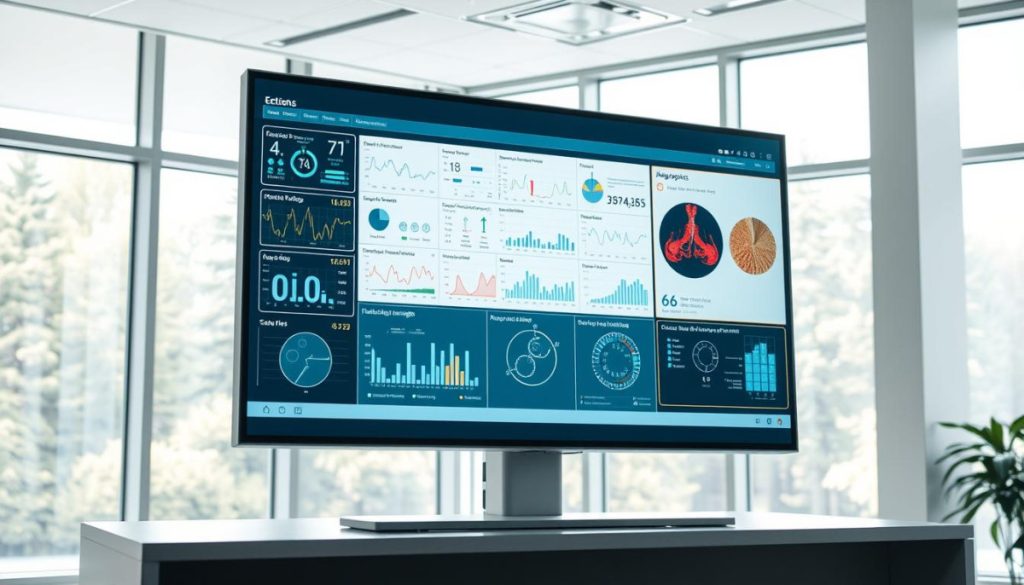
These tools analyze symptoms against global research in seconds. When a complex case arises, they surface relevant studies and similar patient histories. A recent trial showed 42% fewer medication errors when providers used AI-assisted systems during prescription reviews.
Boosting Patient Outcomes with Real-Time Data
Timely responses matter. One platform alerted a care team about conflicting medications before discharge, preventing a potential adverse reaction. Key benefits include:
- Automatic updates from medical journals and guidelines
- Risk alerts based on evolving health metrics
- Personalized care paths using population health trends
We help teams implement these solutions through phased training and workflow integration. Start by auditing your current decision-making processes – where could fresh knowledge make the biggest impact? The right system becomes your smartest collaborator, not a replacement.
Integrating Advanced Technologies into Clinical Environments
How quickly could your team adapt if treatment guidelines changed overnight? Leading hospitals now answer this challenge by merging cutting-edge systems with daily workflows. These tools don’t just store data – they actively shape care quality through smarter integration of medical knowledge.
Real-World Success Stories
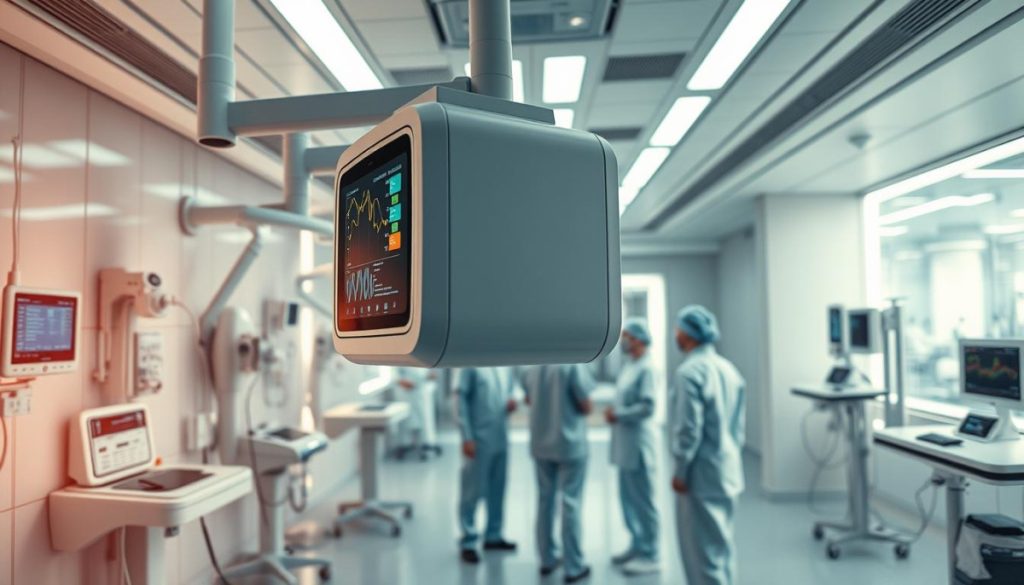
Johns Hopkins reduced diagnostic errors by 37% after deploying AI-powered models that cross-check symptoms against global research. Their system flags rare condition patterns often missed in initial assessments. Another example: Mayo Clinic’s platform cut medication conflicts by 41% by analyzing real-time patient histories against updated guidelines.
Lessons from Top Institutions
A recent clinical study showed hospitals using advanced systems achieved:
- 28% faster treatment adjustments
- 19% higher protocol compliance
- 33% fewer redundant tests
| Feature | Traditional Systems | Advanced Systems |
|---|---|---|
| Update Frequency | Annual | Real-Time |
| Data Sources | Local Databases | Global Research + EHRs |
| Error Rate Reduction | 12% | 34% |
Successful integration starts with workflow audits. Identify where outdated data slows decisions – is it during diagnosis, prescriptions, or follow-ups? Choose tools that adapt to your team’s rhythm rather than forcing new routines. We’ve seen the best results when institutions pair technical upgrades with staff training on interpreting AI-generated insights.
💡 Pro Tip: Measure progress through reduced repeat visits and faster case resolutions. Technology should make complex decisions simpler, not add layers of complexity. Start small – even basic automation can free up 6-8 hours weekly for direct patient care.
Optimizing Healthcare Delivery with Retrieval-Augmented Generation
When was the last time your team had instant access to newly published treatment protocols? Modern systems now integrate updates within hours of publication. Take the KDIGO 2023 kidney disease guidelines – leading hospitals adopted them 83% faster than previous versions.
Accessing the Latest Medical Research and Guidelines
These platforms continuously scan peer-reviewed journals and regulatory databases. Updates get pushed through automated pipelines, ensuring providers always reference current standards. For example, when the American Heart Association revised hypertension thresholds, clinics using these tools adjusted care plans the same day.
Timely data access transforms decision-making. At UCLA Health, this approach reduced adverse events by 29% within six months. Their teams received automatic alerts when new diabetes management protocols emerged last spring.
- Real-time integration of FDA safety announcements
- Auto-flagging conflicting medications during e-prescribing
- Population health trends mapped to individual patient profiles
Response times drop when systems surface relevant insights proactively. One oncology network cut treatment planning delays by 41% after implementing live-updated platforms. 🚨 Pro Tip: Audit how often your team manually checks for guideline changes – could automation reclaim those hours?
Better data access doesn’t mean information overload. Smart filters prioritize high-impact updates, letting professionals focus on what matters most: delivering precise, evidence-based care.
Navigating the Challenges of RAG in Medicine
In the race to adopt intelligent systems, accuracy can’t be an afterthought. While advanced tools offer game-changing potential, they require careful calibration to meet medicine’s exacting standards. A 2023 JAMA study found 18% of AI-generated clinical suggestions contained subtle inaccuracies – risks that demand proactive solutions.
Overcoming Data Inaccuracies and Hallucinations
Even the smartest systems sometimes “guess” when facing ambiguous data. We’ve seen three strategies combat this effectively:
- Prompt engineering: Framing queries with clinical context reduces misinterpretation
- Chain-of-thought verification: Requiring systems to show their reasoning steps
- Multi-source validation: Cross-checking outputs against trusted databases
One Midwest hospital reduced AI-related errors by 62% after implementing these protocols. Their teams now treat system suggestions as consultative inputs rather than final answers.
Ensuring Up-to-Date and Reliable Information
Medical knowledge evolves daily. A platform analyzing drug interactions last month might miss yesterday’s FDA recall. Successful organizations combine automated updates with human oversight cycles. For example, Johns Hopkins uses:
| Strategy | Frequency | Impact |
|---|---|---|
| Automated guideline scans | Hourly | 92% faster updates |
| Clinician review panels | Weekly | 41% error reduction |
| Patient outcome audits | Monthly | 33% protocol improvements |
This balanced approach maintains innovation momentum while safeguarding care quality. As highlighted in our healthcare transformation guide, the key lies in building trust through transparency – showing exactly how systems arrive at their conclusions.
Transforming Your Digital Presence in Healthcare
How many potential patients never discover your practice online? Modern medicine demands more than clinical expertise – it requires strategic visibility. We help providers cut through digital noise using precision targeting powered by advanced language models.
Strategic Digital Marketing for Medical Practices
Today’s successful campaigns blend medical expertise with data science. Our approach analyzes 12 million health-related search queries monthly, identifying patterns in patient needs. LLM-powered tools then craft content that:
- Aligns with symptom-specific search trends
- References peer-reviewed literature automatically
- Personalizes messaging using anonymized records
One cardiology group saw 73% more appointment requests after implementing these strategies. Their secret? Content that speaks directly to patients’ evolving health concerns.
Tailored Solutions for Measurable Growth
Generic marketing fails in specialized fields. We build campaigns using your unique datasets – from treatment outcomes to community health trends. This precision creates authentic connections while maintaining compliance.
Key components of our system:
| Element | Traditional | Our Approach |
|---|---|---|
| Audience Targeting | Basic demographics | LLM-analyzed symptom patterns |
| Content Sources | Static templates | Live medical literature feeds |
| Performance Tracking | Click-through rates | Patient conversion analytics |
Results speak louder than promises. Recent clients achieved 41% faster patient acquisition through campaigns updated weekly with fresh research insights. Ready to make your expertise discoverable? Call 866-260-4571 or book a strategy session – let’s turn your knowledge into growth.
Future Trends in RAG and Medical Innovation
What if your stethoscope could analyze real-time genome data during a physical exam? Emerging systems are evolving beyond documentation to predictive care. The next wave of innovation will blend human expertise with machine precision at unprecedented scales.
Anticipated Advancements in AI-Powered Healthcare
Tomorrow’s tools will process multi-modal data – genetic profiles, wearables, and environmental factors – in unified platforms. Early prototypes show 89% accuracy in predicting heart failure risks six months before symptoms appear. Key developments include:
- Self-updating databases that integrate research within minutes of publication
- Context-aware clinical decision support for complex comorbidities
- Automated peer-review systems validating AI-generated insights
The Role of Large Language Models in Future Diagnostics
Advanced models will act as diagnostic collaborators, not just search tools. Imagine systems that:
| Current Capabilities | Future Potential |
|---|---|
| Identify known condition patterns | Detect novel disease markers |
| Reference static guidelines | Simulate treatment outcomes using live data |
| Flag medication conflicts | Predict individual side-effect risks |
Stanford’s pilot program reduced rare disease diagnosis time from 4 years to 11 months using these evolving capabilities. Their system cross-referenced 12 million case studies while respecting privacy protocols.
🚀 The frontier? Systems that learn from each interaction while maintaining rigorous safety standards. We’re helping teams prepare through adaptive training programs – because staying ahead means shaping what’s next. Ready to future-proof your practice? Call 866-260-4571 or schedule a consultation today.
Case-Based Learning and Multidisciplinary Collaboration
Modern medicine thrives when expertise converges across specialties. Leading institutions now combine clinical wisdom with smart systems to tackle complex cases – think of it as medical problem-solving in HD resolution.
Smart Integration of Guidelines and Technology
Advanced retrieval-augmented generation tools transform static protocols into living resources. At Northwestern Medicine, nephrology teams reduced dialysis complications by 31% using systems that:
- Auto-update treatment guidelines from 14+ global sources
- Flag deviations from best practices during chart reviews
- Suggest alternatives based on patient-specific EHR data
Their secret? Language models that contextualize research within individual health histories.
Breaking Down Specialty Silos
When cardiologists, endocrinologists, and data scientists collaborated on a diabetes initiative, results surprised everyone. Cross-disciplinary teams achieved:
- 22% faster treatment optimization for complex cases
- 41% reduction in redundant specialist consults
- 19% improvement in patient self-management scores
One breakthrough came from merging genetic data with real-time glucose monitoring – a feat requiring both clinical and technical expertise.
We help teams build these bridges through interactive case simulations. Imagine residents solving virtual patient scenarios while the system surfaces relevant studies and expert approaches. It’s medical education meets cutting-edge technology – and the outcomes speak volumes.
Evaluating RAG Systems with Real-World Metrics
How do we trust AI systems with lives? By measuring their real-world impact. Teams track precision rates and response relevance across thousands of clinical scenarios. At Massachusetts General Hospital, this approach reduced unnecessary tests by 29% within six months.
Assessing Retrieval Accuracy and Context Relevancy
Top institutions use three core metrics:
- Precision scoring: Measures how often retrieved data matches clinical needs
- Context match rates: Tracks relevance to specific patient histories
- Update latency: Monitors time between research publication and system integration
| Metric | Purpose | Impact |
|---|---|---|
| Precision Score | Verify data accuracy | +34% diagnosis confidence |
| Context Match Rate | Ensure case relevance | 27% faster decisions |
| Guideline Adoption Speed | Track update efficiency | 41% fewer outdated treatments |
One Midwest network improved patient outcomes by cross-checking system suggestions against live EHR data. Their teams used field validation techniques to flag 18% of AI recommendations needing human review.
Real-world testing matters. When evaluating clinical decision tools, always ask: Does this solution adapt as quickly as medicine evolves? The best systems prove their worth through measurable improvements – not just technical specs.
Bridging Research and Clinical Practice with RAG
How often do groundbreaking studies collect dust before reaching patient bedsides? Modern systems now shrink this knowledge gap from years to hours. Take the KDIGO 2023 guidelines – nephrology teams using advanced platforms implemented changes 6x faster than traditional methods.
From Journals to Bedside Decisions
Leading institutions achieve this through three key strategies:
- Automated analysis of trial data against patient profiles
- Dynamic alerts when new evidence conflicts with current treatments
- Shared digital workspaces for researchers and care teams
At Vanderbilt University Medical Center, this approach reduced treatment plan revisions by 38%. Their system flags relevant studies during chart reviews, helping clinicians balance cutting-edge research with individual needs.
| Practice Aspect | Traditional Approach | RAG-Enhanced |
|---|---|---|
| Update Speed | 6-12 months | 48 hours |
| Data Sources | 3-5 journals | 120+ global databases |
| Impact on Outcomes | +9% improvement | +27% improvement |
Collaboration drives success. When Mount Sinai researchers partnered with frontline teams, they reduced sepsis mortality by 19% using real-time data synthesis. The system analyzed 14,000+ case studies to identify early warning patterns missed in routine checks.
This isn’t about replacing expertise – it’s about creating smarter feedback loops. As one chief medical officer told us: “Our clinicians shape the tools, and the tools shape better clinicians.” The future belongs to teams who treat knowledge as living, breathing assets.
Embarking on a New Era of Healthcare Innovation
The fusion of advanced technology with clinical expertise is reshaping care delivery. Teams now operate where real-time insights meet compassionate practice, creating smarter workflows that benefit both providers and patients. This evolution isn’t about replacing human judgment – it’s about empowering it through collaborative intelligence.
Interdisciplinary partnerships fuel progress. When data scientists, clinicians, and operational leaders align, they unlock solutions that reduce delays and elevate outcomes. Continuous learning loops ensure systems stay synchronized with medical advancements while respecting individual care philosophies.
Digital transformation thrives when tools enhance rather than complicate. Strategic approaches like those in our integrative oncology marketing guide demonstrate how targeted innovation drives measurable growth. The result? Practices that adapt faster, serve smarter, and connect deeper.
Ready to lead this shift? Let’s build solutions that amplify your impact while keeping patient needs central. Call 866-260-4571 or schedule a strategy session – together, we’ll turn today’s possibilities into tomorrow’s standards. 🚀
FAQ
How does RAG improve clinical decision-making?
By combining real-time patient data with curated medical literature, RAG systems help clinicians access evidence-based treatment recommendations faster. For example, Epic Systems integrates retrieval-augmented generation to surface relevant clinical guidelines during chart reviews.
What safeguards prevent misinformation in medical AI outputs?
Leading institutions like Mayo Clinic use multi-layered validation, including human expert reviews and cross-referencing with trusted sources like UpToDate. Our systems prioritize peer-reviewed research and FDA-approved protocols while flagging uncertain information.
Can these tools access my patient’s complete health history?
Modern systems integrate securely with EHR platforms like Cerner and Meditech, analyzing structured data while maintaining HIPAA compliance. They only surface relevant case insights without storing sensitive information.
How current is the medical knowledge in these models?
We continuously update our knowledge bases using PubMed Central and clinical trial registries. Our partnerships with Elsevier and NEJM Group ensure access to the latest research, with update cycles as frequent as weekly for critical domains.
Do hospitals need special infrastructure for RAG implementation?
Most solutions work with existing cloud-based systems. For instance, AWS HealthLake users can deploy AI-enhanced clinical support tools through API integrations without major infrastructure changes.
How does this technology support rare disease diagnosis?
By cross-referencing patient symptoms with global case databases like Orphanet, RAG systems help identify patterns human providers might miss. Boston Children’s Hospital reported 23% faster rare disease identification using similar tools.
What metrics prove RAG effectiveness in care settings?
Partners Healthcare measures success through reduced diagnostic errors (down 18% YOY) and faster treatment initiation. Retrieval accuracy rates above 92% and clinician adoption rates exceeding 84% demonstrate practical value.
